
U.S. Treasury Secretary demands World Bank reverse oil, gas, and nuclear energy restrictions
Scott Bessent called for lifting the World Bank's 2019 ban on upstream oil and gas financing and urged expanded nuclear energy support through a new trust fund, while also pushing for reforms on critical minerals mining and lending policies.

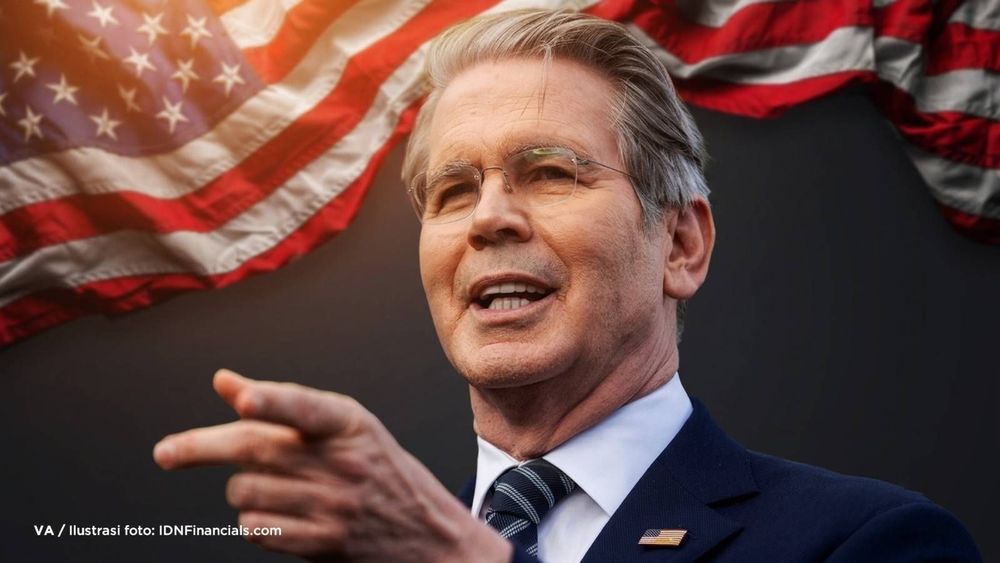
U.S. urges World Bank to fund nuclear energy
U.S. Treasury Secretary Scott Bessent has called on the World Bank to overturn multiple longstanding policies, including its prohibition on financing upstream oil and gas projects that has been in place since 2019. In a statement delivered to the steering committees of the World Bank and International Monetary Fund on Wednesday, October 14, Bessent also urged support for nuclear energy development, deep-sea mining for critical minerals, and reforms to project procurement rules.
The demands were issued through written communications as Bessent did not attend the IMF and World Bank annual meetings in Bangkok in person. Deputy Treasury Secretary Francis Brooke and Under Secretary for International Affairs Erin Browne led the U.S. delegation instead.
Oil and Gas Policy Reversal
Bessent argued that the World Bank should adopt a technology-neutral approach to energy policy and eliminate restrictions on oil and gas projects. The World Bank Group instituted its prohibition on upstream oil and gas financing in 2019, with only narrow exceptions for natural gas in the poorest countries where there is a clear benefit for energy access.
"The World Bank cannot claim to respect national sovereignty if it refuses from the outset to finance upstream oil and gas projects without first assessing their merits," Bessent stated.
The institution has since dropped its 45 percent climate-finance lending target while maintaining the oil and gas restrictions, allowing exceptions only where energy needs are urgent and renewable options are not immediately available.
Nuclear Energy Expansion
On nuclear energy, the U.S. Treasury Department announced it would make an initial contribution to a new World Bank-managed Nuclear Energy Assistance Trust Fund. The fund aims to help countries prepare for future investments in nuclear power plants. This initiative follows the passage of the International Nuclear Energy Financing Act of 2025 by the U.S. Congress, which directs the Treasury Secretary to advocate for establishing such trust funds at the World Bank and other international financial institutions.
The World Bank has already begun shifting its stance on nuclear energy. In April 2025, World Bank President Ajay Banga announced an "all of the above" approach to energy projects in poor countries, including natural gas, geothermal, hydroelectric, solar, wind, and nuclear power. The institution restarted its engagement with nuclear energy financing in June 2025 after years of avoiding the sector, and has since reached an agreement with the International Atomic Energy Agency to access technical expertise, support existing reactors, and assess the potential of small modular reactors.
Critical Minerals and Deep-Sea Mining
Bessent also called on the World Bank to expand its role in mining and processing critical minerals, including support for deep-sea mineral extraction. The World Bank could help develop this nascent sector by providing information and guidance to countries interested in pursuing deep-sea mining, according to the U.S. Treasury Department.
On the same day as Bessent's statement, World Bank President Banga announced the institution has set a goal of quintupling its critical minerals financing to 19 billion dollars over the fiscal 2026-2030 period, compared with 3.6 billion dollars in fiscal 2021-2025. However, the Bank's metals plan calls for a "precautionary approach" to deep-sea mining, suggesting caution about the emerging industry.
World Bank projections estimate that production of lithium and cobalt must increase by more than 500 percent by 2050 to meet Paris Agreement targets, with global demand for cobalt and nickel potentially exceeding available terrestrial sources by four times by mid-century.
Lending Reforms and IMF Analysis
Beyond energy policy, Bessent urged the World Bank to accelerate the phasing out of lending facilities for countries with stable economies, specifically naming China and Poland. The World Bank has already agreed to phase out lending to both countries by 2031. In June 2026, the institution reached an agreement with China setting a hard ceiling of 2 billion dollars in total lending through 2031. A similar agreement was reached with Poland on June 16, 2026, providing 6.75 billion dollars through 2031 before graduation from IBRD lending.
Bessent also called for reforms to project procurement rules to ensure they do not promote subsidies or favor industrial policies that distort competition. He urged the World Bank to improve procurement processes to encourage greater competition and enhance project quality.
For the IMF, the U.S. has demanded broader analysis of global economic imbalances, including coverage of policies and practices that do not follow market mechanisms, as well as exchange rate movements. The statement emphasized that the IMF should speak out more actively on these issues to maintain its role in global economic discussions.
As the largest shareholder and funder of the World Bank, the United States holds significant influence over the institution. The World Bank's active energy infrastructure portfolio in the developing world exceeds 40 billion dollars in projects, making it one of the largest funders of energy infrastructure in developing countries.