
Indonesia's Bahlil Defends 8% Gas Export Cut to Singapore as Contract-Compliant
Indonesia has cut pipeline gas deliveries to Singapore by 31 million standard cubic feet per day, but Energy and Mineral Resources Minister Bahlil Lahadalia said on October 29 that the reduction does not breach supply contracts. Singapore's gas importer will consult its suppliers to assess whether a breach has occurred.

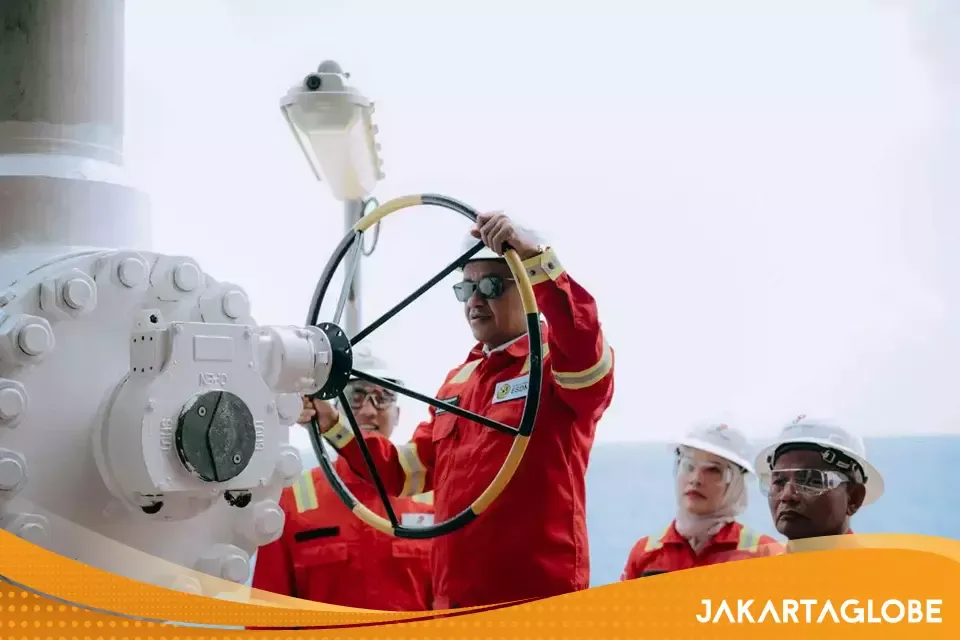
Contract limits and Singapore's response
Speaking at the Presidential Palace in Jakarta, Bahlil described the cut as approximately 8% of a previously reported export volume of 409.5 million standard cubic feet per day. He said a reduction reaching 10% would violate the contracts.
"We have not exceeded the minimum contractual limit, so there is actually no problem," he told reporters. He maintained that Indonesia would honor its supply obligations to Singapore while making adjustments allowed by the agreements.
Singapore's Minister for Energy, Trade and Industry Tan See Leng said local importer Gas Supply would ask its suppliers whether the reductions constitute a contractual breach and seek commercial remedies if necessary. At Singapore International Energy Week on October 26, 2026, Tan also warned that resource nationalism that undermines existing contracts could discourage energy investment.
The current supply contracts extend through the end of 2028, according to Singapore's Ministry of Trade and Industry and The Straits Times.
Bahlil separately raised force majeure, a contract provision that can excuse nonperformance in certain circumstances, without saying Indonesia had invoked it. "We respect contracts. But force majeure circumstances can arise, can't they? Well, we'll see," he said, according to The Straits Times.
Different measures of the reduction
The percentage depends on the comparison period. While Bahlil used the previously reported export volume to arrive at about 8%, Bloomberg calculated that the same daily cut equals roughly 14% of Indonesia's average pipeline-gas exports to Singapore last year. That calculation, reported by The Star, used energy ministry data compiled from SKK Migas reports.
Singapore's Energy Market Authority offered a separate assessment based on information from the country's natural gas importers: a reduction of 17 BBTUD over 18 days. The authority said that amounts to less than 2% of Singapore's daily gas demand, which exceeds 1,000 BBTUD.
Rystad Energy analyst Prateek Pandey also put the cut at about 2% of Singapore's daily demand and said it was unlikely to significantly affect the country's energy security for now. In his assessment, Singapore's diversified supplies make the reductions manageable unless they deepen or field production is affected.
Pandey said the larger test would come as existing contracts begin expiring in 2028. He also said Indonesia would need infrastructure investment to redirect more gas to domestic consumers.
Gas redirected to Indonesian users
The Indonesian government says it is prioritizing domestic power plants and industrial users amid production constraints. The Energy and Mineral Resources Ministry attributed declining output at several wells to scheduled maintenance and said some available gas had consequently been reassigned to domestic customers.
SKK Migas head Djoko Siswanto detailed two parts of the diversion: 15 million standard cubic feet per day from Natuna redirected to a state utility unit in Batam, and another 16 million from Sumatra allocated to electricity needs in Batam, Bintan and Sumatra.
Earlier in October 2026, a 16-hour blackout in Batam affected more than 411,000 customers. After the outage, the government replaced the chief executive of state-owned electricity utility PT Perusahaan Listrik Negara, according to Bloomberg reporting published by The Star.
Bahlil also questions where LNG shipments end up
Indonesia supplies Singapore with liquefied natural gas as well as pipeline gas. Bahlil said Indonesia had shipped 148 LNG cargoes, but did not specify the period covered by that figure.
He suggested that some Indonesian LNG delivered to Singapore might be traded onward rather than consumed there. He supplied no evidence identifying particular cargoes that had been re-exported.