
Indonesia Launches Village Biomass Pilot to Supply Coal-Fired Power Plants
Indonesia launched a pilot in Serang, Banten, on October 31, 2026, that will bring village-owned enterprises into the biomass supply chain for coal-fired power plants. Villages and Disadvantaged Regions Development Minister Yandri Susanto said purchases of agricultural and industrial waste by state utility PLN could create jobs and raise rural incomes.

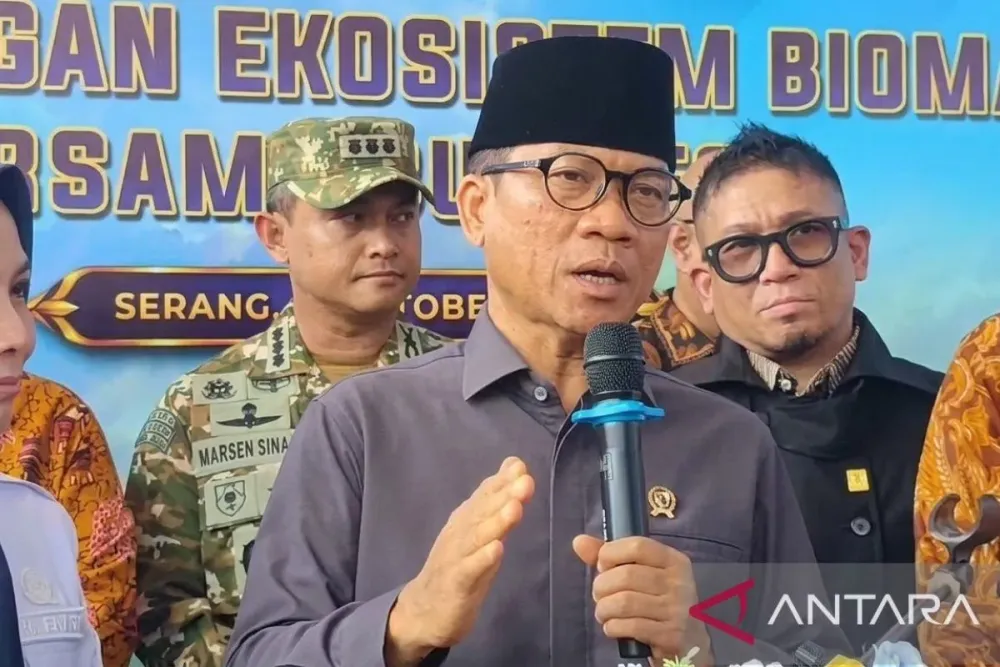
Salira Village to make the first delivery
The pilot will begin with biomass from Salira Village in Serang Regency destined for the Suralaya power plant, according to Jawawa, citing DETIK. Village-owned enterprises, known as BUMDes, will supply the fuel.
The launch came after the ministry and PT PLN (Persero) signed a memorandum of understanding. A cooperation agreement was also reached with PLN subsidiary PT Energi Primer Indonesia, or PLN EPI.
Speaking in Serang, Susanto pledged his ministry's full support for buying biomass directly from village communities. He presented PLN's co-firing program, which uses biomass alongside coal, as a way for the government to advance economic equity in rural areas.
He linked the initiative to the sixth priority in President Prabowo Subianto's eight-point Asta Cita mission: development from the grassroots and village level to promote economic equity and eradicate poverty.
A market for village waste
Partnerships with PLN give materials such as sawdust, rice straw and coconut shells a guaranteed buyer and stable prices, Susanto said. Waste previously regarded as worthless could thus become a source of employment and household income.
"This means sustainable economic activity is taking place, residents are employed, earn an income, and the surrounding environment becomes cleaner," he said. Susanto also said waste-to-energy technology could improve village living standards and strengthen social cohesion.
Longer-term purchasing arrangements are another part of PLN EPI's supply strategy. Sirkularium reported in July 2026 that the company had introduced biomass contracts lasting up to five years. The arrangements are intended to give farmers, cooperatives and processors enough revenue certainty to invest in collecting and processing biomass, rather than relying on spot-market sales.
Supply estimates and expansion targets
At the launch, Susanto cited PLN EPI's estimate of about 8.3 million metric tons of potential biomass supply. Around 2.5 million metric tons had been used so far, he said, with usage expected to reach about 3 million metric tons. He described that amount as very small compared with PLN's needs. The ministry was still identifying which of Indonesia's 75,266 villages could supply power plants.
PLN EPI Director Rakhmad Dewanto separately said on October 31 that PLN Group had used 2.4 million metric tons of biomass mixed with coal in 2026. He attributed a reduction of 2.4 million metric tons of CO2 emissions to that use and said collaboration with surrounding communities also supported local economic development.
The village pilot joins an established co-firing program. PLN EPI figures published by Sirkularium in July showed that 52 coal-fired power plant locations, representing 18,154 MW of combined capacity, were using biomass as of mid-2026.
The July reporting put cumulative biomass supply for co-firing during 2023-2026 at 4.77 million tons. Sawdust accounted for 54.6% of that supply and woodchips for 22.4%. It also reported PLN EPI's supply targets of 3.65 million tons in 2026 and 4.07 million tons in 2027, with an ambition to reach 10 million tons by 2030.
Collection networks and fuel quality
PLN EPI's director of biomass, Hokkop Situngkir, has argued that expansion depends on more efficient supply chains and standardized fuel quality, rather than overcoming a shortage of raw material. He cited national biomass potential of 83.4 million tons annually, including 42.8 million tons in Sumatra and 18.9 million tons in Kalimantan, according to Sirkularium.
The company has been developing collection infrastructure, including hubs in Tasikmalaya and Ciamis, West Java. Those facilities are designed to gather residues from nearby farms and carry out preliminary processing before the material is sent to power plants.
PLN EPI's broader biomass ecosystem plan is linked to a 12.22-gigawatt new-and-renewable-energy target for 2025-2029. The plan projects associated investment of roughly Rp 1.682 trillion and about 760,000 green jobs throughout the supply chain.