
Indonesia Plans New Sumatra Oil Storage With a 60-Day Capacity Target
Indonesia wants to triple its oil storage capacity to the equivalent of 60 days of supply by building large crude storage facilities across several sites in Sumatra, Energy and Mineral Resources Minister Bahlil Lahadalia said Tuesday.

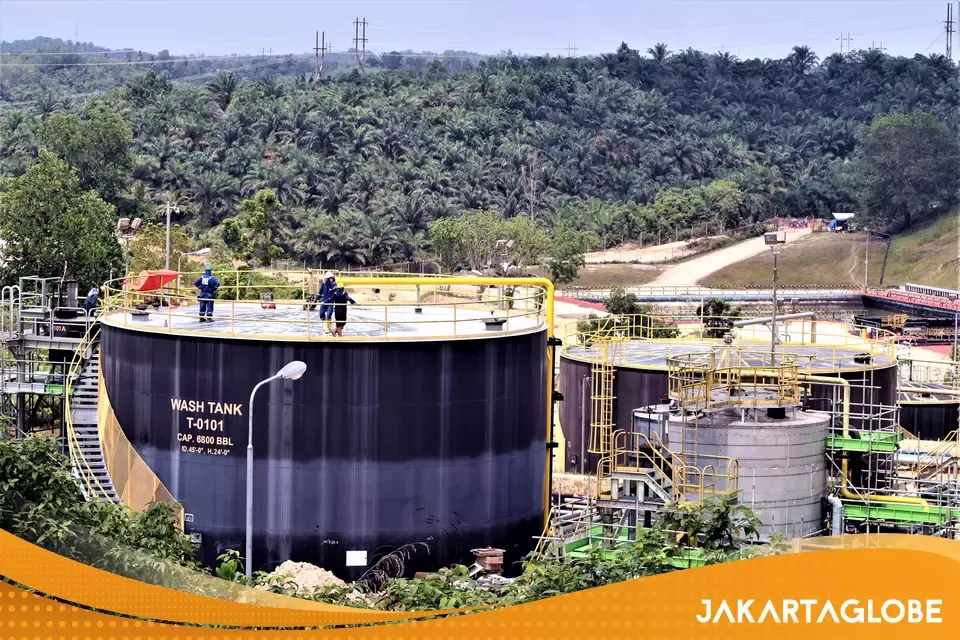
More room for imported crude
Speaking after meeting President Prabowo Subianto at the Presidential Palace in Jakarta, Bahlil said the facilities would provide space for larger volumes of imported crude. Indonesia currently has capacity for approximately 20 days of supply, limiting its buffer against import disruptions. The expansion would give the country more flexibility to handle shortages and international oil market volatility.
The 60-day target is a step toward a longer-term ambition. "We will try to reach the international minimum standard of three months of stock coverage. If we cannot fully achieve that, we should at least get close to it," Bahlil said.
That benchmark refers to the International Energy Agency's requirement for member countries to maintain stocks covering at least 90 days of net oil imports, not 90 days of domestic demand. The European Union uses the higher of two thresholds: 90 days of net imports or 61 days of domestic consumption.
Operational stocks and crisis reserves
Indonesia's roughly 20-day reserve is not a state strategic petroleum reserve dedicated to emergencies, according to Pintu News. It consists of operational stocks held by businesses such as PT Pertamina, which use and replenish those supplies continuously to keep daily fuel distribution running.
Separately, Presidential Regulation No. 96/2024 sets a Petroleum Buffer Reserve target of 10.17 million barrels. A 2026 peer-reviewed study in the ESDM journal Scientific Contributions Oil and Gas estimates that this would cover only about 12 days of crude imports.
The study recommends a 30-day minimum reserve as an immediately achievable goal. It considers 60 days feasible over the medium term if Indonesia increases both replenishment rates and storage capacity; a 90-day reserve would require substantial investment and more diversified supplies.
Ministry of Energy and Mineral Resources figures cited by CNBC Indonesia put the country's 2024 fuel consumption at 82.9 million kiloliters, or approximately 227,136 kiloliters a day.
Site assessments planned by year-end
The government has finished a feasibility study and intends to start evaluating possible construction sites by the end of 2026, Bahlil said. Earthquake exposure and other natural disaster risks in parts of Sumatra will be major considerations, alongside security conditions around each location.
"One of the factors we are considering is ensuring that the locations where we build these storage facilities are not highly vulnerable to disasters. This is a matter of safety," he said.
Bahlil gave no figures for the facilities' capacity in barrels or their expected cost. He also did not specify when construction would begin or when the facilities would be completed.
Emergency storage in the international context
IEA figures cited in a March 2026 report put oil reserves at about 206 days for Japan and 214 days for South Korea. The same report listed France at 122 days, Germany at 130, the United Kingdom at 120 and the Netherlands at 413.
The IEA's State of Energy Policy 2026 report links disruptions caused by the Middle East conflict to renewed emergency-storage efforts. It says those disruptions prompted a March 11, 2026, collective action decision making 400 million barrels from IEA emergency reserves available to the market.
The report also says the disruption prompted announcements of new or expanded emergency storage capacity, notably in Indonesia and Vietnam.