
Maluku Police strengthen volcanic emergency preparedness amid heightened regional activity
Authorities in Maluku Province have intensified coordination efforts to prepare for potential transportation and logistics disruptions caused by volcanic eruptions, following recent activity across the archipelago.
Maluku Police strengthen volcanic emergency preparedness amid heightened regional activity
Law enforcement authorities in Maluku Province are intensifying preparations for potential disruptions to critical transportation and logistics systems as volcanic activity continues across the Indonesian archipelago. The initiative comes amid a surge of eruptions in recent months that have already demonstrated the vulnerability of the province's island-based infrastructure.
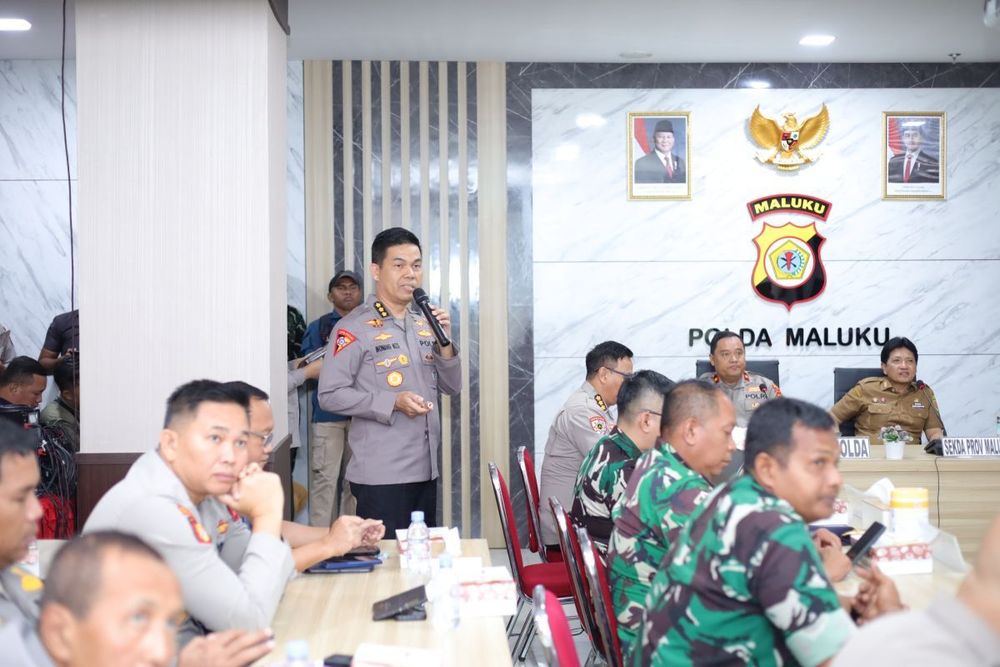
Maluku Deputy Police Chief Brig. Gen. Arif Budiman announced the expanded preparedness measures during an interagency coordination meeting held Wednesday in Ambon, the provincial capital located on Ambon Island. The meeting brought together representatives from multiple government agencies and emergency services to develop comprehensive response protocols.
The archipelago province, composed of over 600 islands with 92.4 percent of its area covered by sea and a population of approximately 1.35 million, faces unique challenges when volcanic activity disrupts air and maritime routes. Most islands in the province are mountainous, with some containing active volcanoes that pose ongoing hazards to communities.
"For an archipelago like Maluku, disruptions to air and sea transport can significantly affect public mobility and essential supplies. We must prepare mitigation measures early rather than wait for the situation to worsen," Budiman stated at the meeting.
The timing of the coordination meeting reflects immediate concerns following a 48-hour period from September 6-8 during which Mount Ibu, Mount Semeru, and Mount Ili Lewotolok erupted in quick succession across Indonesia. Mount Ibu in North Maluku has been particularly active throughout 2026, with multiple eruptions recorded in August and September.
The region has already experienced the deadly consequences of volcanic activity this year. In May, Mount Dukono on Halmahera Island in North Maluku Province erupted, killing at least three hikers and disrupting transportation routes with significant ash emissions that persisted for days.
Recent events elsewhere in Indonesia have illustrated the scale of potential disruptions. The eruption of Mount Anak Krakatau on September 5 led to the closure of eight airports nationwide, disrupting over 2,300 flights and affecting more than 340,000 passengers.
Multi-Agency Response Framework
The preparedness strategy encompasses several key components, according to officials at the coordination meeting. Authorities are strengthening early-warning and communication systems, developing transport contingency plans, ensuring healthcare readiness, checking personnel and support equipment, and improving coordination among agencies.
Participating organizations included the Indonesian military, regional government representatives, Indonesia's Meteorology, Climatology, and Geophysics Agency (BMKG), the national search and rescue agency Basarnas, the Regional Disaster Management Agency (BPBD), and transportation and health agencies. BMKG, which monitors volcanic activity and issues early warnings for natural disasters including eruptions, earthquakes, and tsunamis, plays a central role in the technical assessment of volcanic threats.
Budiman emphasized that response planning must be grounded in verified scientific data.
"All mitigation measures must be based on information and data from authorized technical agencies. Successful response efforts cannot be determined by one institution. All elements must work together," he said.
Continuous Evaluation Mandate
Senior Commissioner Monang M.Z. Simanjuntak, Chief of the Maluku Police Operations Bureau, stressed the importance of ongoing assessment and preparation.
"Personnel readiness, support equipment, communication channels and interagency coordination must be continuously evaluated. Every potential situation must be addressed using accurate data and information," Simanjuntak explained.
Indonesia's vulnerability to volcanic hazards stems from its location along the Pacific Ring of Fire, where the nation has over 120 active volcanoes that experience frequent eruptions. This geological reality makes disaster preparedness a constant priority for authorities across the archipelago nation.
The coordination meeting represents part of a broader national effort to strengthen disaster response capabilities, with regional agencies like BPBD operating within the framework established by the National Agency for Disaster Countermeasure (BNPB), which coordinates prevention, mitigation, emergency response, and recovery efforts across Indonesia.