
Mount Anak Krakatau's 25-Hour Continuous Eruption Ends, Alert Level Remains High
Indonesia's Geological Agency confirms the end of a 25-hour eruption episode at Mount Anak Krakatau in the Sunda Strait, with activity returning to Strombolian-type eruptions while the volcano remains at Level III alert status.
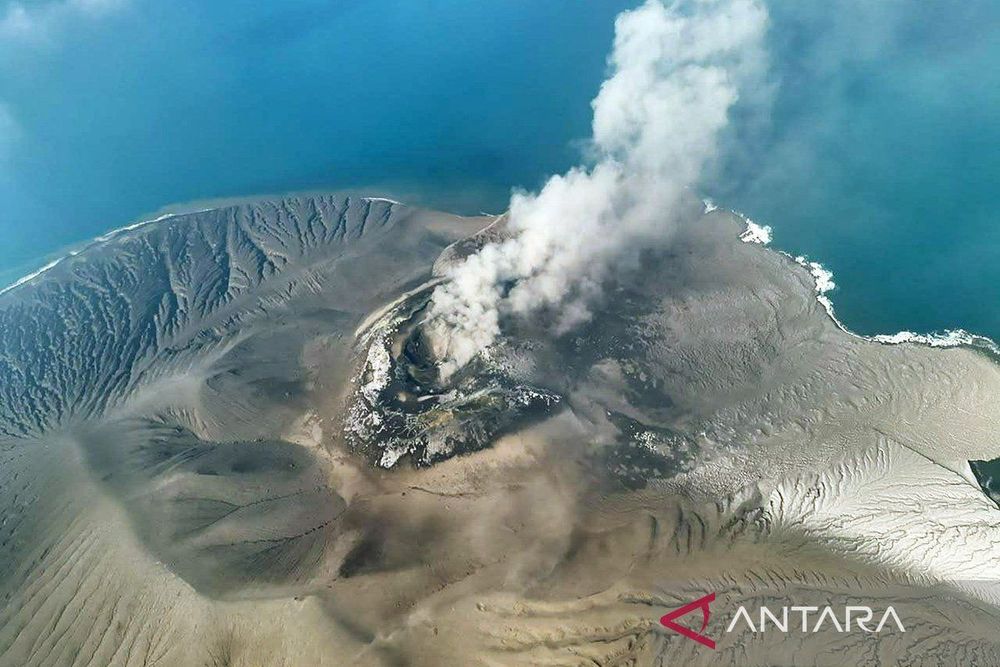
Mount Anak Krakatau's 25-Hour Continuous Eruption Ends, Alert Level Remains High
The Geological Agency at Indonesia's Ministry of Energy and Mineral Resources has confirmed that Mount Anak Krakatau's continuous eruption episode concluded after 25 hours of sustained activity. The episode, which began at 11:07 p.m. local time on Friday, September 4, officially ended at 12:04 a.m. on Sunday, September 6, according to agency head Lana Saria.
Mount Anak Krakatau, located in the Sunda Strait between the islands of Java and Sumatra, emerged from the sea in the 1920s within the caldera created by the catastrophic 1883 Krakatoa eruption. That historic event, one of the most powerful volcanic explosions in recorded history, killed approximately 36,000 people primarily through tsunamis, produced the loudest sound ever documented—heard up to 4,800 kilometers away—and ejected approximately 25 cubic kilometers of material into the atmosphere, causing global temperatures to drop by 1.2°C for five years.
Following the end of the prolonged eruption, volcanic activity has transitioned back to Strombolian characteristics, marked by three recorded Strombolian eruption earthquakes. These eruptions, characterized by moderate bursts of expanding gases that eject incandescent lava in cyclical or nearly continuous small explosions, typically register as Volcanic Explosivity Index 1 or 2 events and are considered relatively mild compared to larger explosive eruptions.
Seismic Activity and Monitoring Data
Between September 6 and 7, instrumental observations recorded three eruption earthquakes, nine emission earthquakes, 93 low-frequency earthquakes, 98 hybrid or multi-phase earthquakes, four continuous tremor earthquakes, and one shallow volcanic earthquake. The Real-time Seismic Amplitude Measurement graph, which had spiked significantly on Saturday, has shown a declining trend since Sunday.
Tiltmeter deformation data from Tanjung Station indicated slight inflation since early August 2026, while readings from Lava93 Station showed a constant pattern. The Geological Agency interprets the return to Strombolian activity as evidence that the long continuous eruption phase has concluded, though officials warn that the probability of subsequent eruptions remains high.
Alert Status and Safety Recommendations
Based on comprehensive evaluation of the data, the Geological Agency has maintained Mount Anak Krakatau's activity level at Level III, or Alert status—the second-highest level in Indonesia's four-tier volcanic alert system. Level III indicates significant volcanic hazards and recommends evacuation of areas near the crater, while Level IV, the highest designation, signals imminent major eruption.
Saria emphasized that the public, tourists, and climbers should avoid approaching or engaging in activities within a three-kilometer radius of the active crater. The directive carries particular weight given the volcano's history: on December 22, 2018, a major flank collapse of Anak Krakatau triggered a tsunami that caused at least 437 fatalities on the coasts of Java and Sumatra, making it the deadliest volcanically-induced tsunami since the 1883 Krakatau eruption. That collapse removed approximately 50 percent of the volcano's subaerial extent and reduced its height from 338 meters to approximately 110 meters.
Coastal residents in Banten and Lampung provinces are advised to remain calm and not believe unverified reports about potential tsunamis from the current eruption. Authorities recommend wearing masks during outdoor activities to prevent respiratory problems from exposure to volcanic ash. The eruption has already forced the closure of eight Indonesian airports, prompting officials to open five alternative hubs to maintain air connectivity.
Indonesia, located on the Pacific Ring of Fire where multiple tectonic plates meet, has approximately 120-130 active volcanoes—the highest number in the world. Despite losing two-thirds of its volume in the 2018 collapse, Anak Krakatau has continued to grow and rebuild itself at one of the fastest rates documented for any volcano, averaging approximately 4 meters per year since its emergence in 1929.