
DPR Speaker demands coordinated government action on Anak Krakatau eruption impact
Puan Maharani calls for integrated disaster response prioritizing public safety as Mount Anak Krakatau's eruption disrupts health, education, transport and economic activities across multiple regions in the Sunda Strait area.
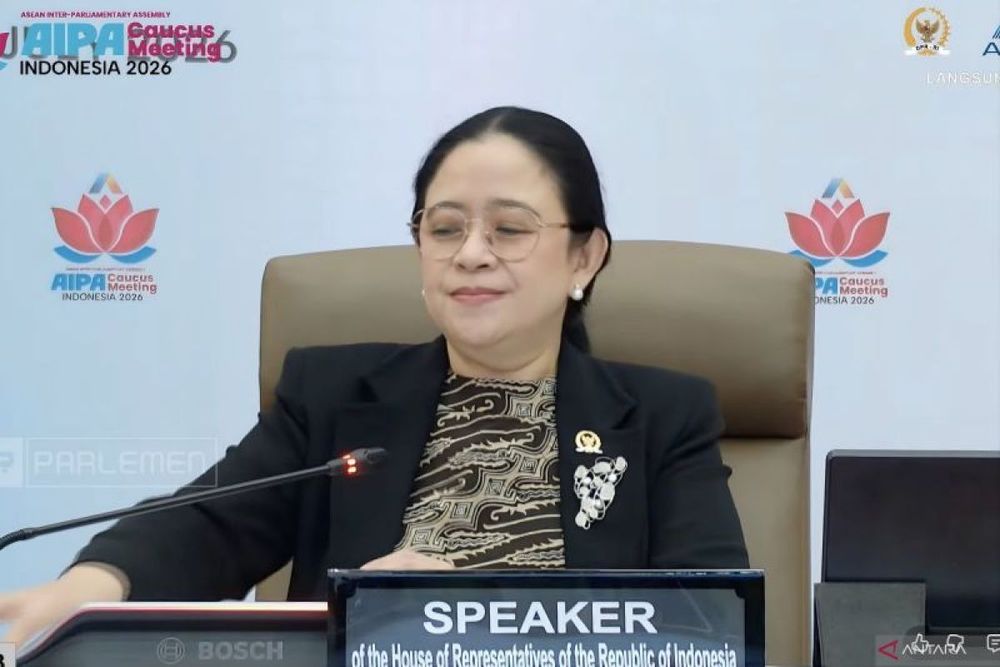
DPR Speaker demands coordinated government action on Anak Krakatau eruption impact
Indonesia's House of Representatives Speaker Puan Maharani has demanded coordinated government action to address the impact of Mount Anak Krakatau's recent eruption, emphasizing that public safety must remain the paramount concern in all response measures.
Speaking on Monday, Maharani, who is the first woman to hold the speakership since taking office in 2019, stressed that ministries and agencies must work together to ensure affected communities receive necessary support. The volcano's eruption in the Sunda Strait has caused widespread disruption to health services, education, transportation networks, and economic activities across several regions.
Eruption details and impact
The eruption began around 16:20 UTC on September 4, 2026, with a major explosive event at 00:50 WIB on September 5 that propelled volcanic ash up to 15 kilometers above sea level. The resulting ash cloud forced the closure of eight airports, including Soekarno-Hatta International Airport, disrupting over 270,000 passengers and causing more than 1,500 flight cancellations across the region.
Maharani called for comprehensive disaster mitigation measures and adequate supplies of masks and health facilities for those in need.
Disasters cannot be prevented, but their impact on the people can be minimised through a faster response from the state.
The volcano, located within Ujung Kulon National Park in South Lampung Regency, Lampung Province, has been at elevated alert status since July 2, 2026, when authorities raised it to Level III (Siaga/Standby) in Indonesia's four-tier volcanic alert system and established a 3-kilometer exclusion zone around the active crater.
Historical context
Mount Anak Krakatau emerged above sea level in 1929 within the caldera left by the catastrophic 1883 Krakatau eruption, which killed more than 36,000 people in one of the deadliest volcanic events in recorded history. The volcano demonstrated its continued danger in December 2018, when a flank collapse triggered a tsunami that struck the coasts of Java and Sumatra without warning, killing 437 people and injuring thousands along the Sunda Strait coastlines.
Call for unified response
The DPR Speaker emphasized that central and regional governments must function as a unified system to ensure residents receive equal protection regardless of their province.
There must not be a case where one region is well prepared with adequate stock and services, while another leaves its people lacking basic necessities in facing the volcanic eruption disaster.
She particularly highlighted the need to protect daily laborers, small traders, fishermen, and micro, small, and medium enterprise operators whose income has ceased due to activity restrictions.
Safety policies must be accompanied by protection, so families are not forced to choose between avoiding exposure or continuing to work to meet their needs.
With 136 eruptions recorded in 2023 alone, Anak Krakatau stands as one of Indonesia's most active volcanoes. The country maintains 127 active volcanoes, the highest number in the world, due to its location on the Pacific Ring of Fire, making robust disaster response systems essential for national safety.
The Geological Agency at the Energy and Mineral Resources Ministry confirmed that the continuous eruption episode ended after 25 hours, though volcanic activity remains under close observation due to persistently high seismicity levels.