
Yasuo Fukuda, former Japanese prime minister and advocate of peace, dies at 90
Former Japanese Prime Minister Yasuo Fukuda died in Tokyo on Monday, October 26, 2026, at age 90. During his 2007-2008 premiership, he pursued closer ties with China and carried forward his father's anti-war doctrine. Nikkei reported that he died of heart failure.

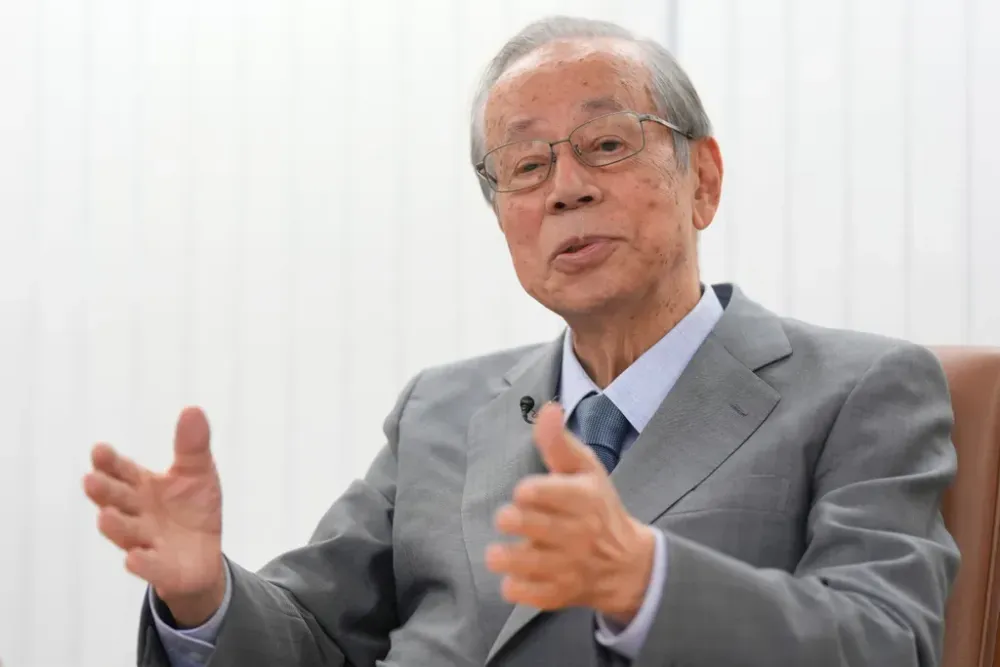
Tributes in Japan and China
Fukuda's family held a private funeral, and a public memorial service will follow at a later date, Kyodo News reported on October 26.
Prime Minister Sanae Takaichi paid tribute to his experience and outlook, according to The Japan Times. "I express my gratitude for his contributions to the country and the people of Japan," she wrote on X.
Beijing mourned him as a longtime friend whose work helped sustain relations with Tokyo. Chinese Foreign Ministry spokesperson Guo Jiakun offered condolences and said: "He is a true statesman. Japanese leaders could learn from Fukuda's example."
One of the central diplomatic events of Fukuda's premiership was Chinese President Hu Jintao's state visit in May 2008. It was the first trip to Japan by a Chinese head of state in a decade, according to AFP. The two governments issued a joint statement committing to mutually beneficial cooperation in their strategic interests.
Fukuda remained involved in diplomacy after leaving office. AFP reported that his 2014 talks in China with President Xi Jinping helped prepare the way for a summit between Xi and Shinzo Abe during Abe's second term.
A diplomatic legacy amid renewed tensions
In recalling Fukuda's approach, Guo cited his view that the four political documents between Japan and China established the principles for their relationship and that neither country should turn back, NHK reported. Guo urged Japan's current leaders to reflect deeply, describing Fukuda's stance as an example of the integrity and responsibility of an older generation of Japanese politicians, according to NHK and AFP.
The South China Morning Post described the relationship at the time of his death as facing its gravest test since diplomatic normalization in 1972. AFP reported that ties had deteriorated after Takaichi suggested in 2025 that Japan could intervene militarily if Taiwan came under attack.
Historical grievances have also repeatedly strained Japan's relations with China and Korea. They include World War II, Japan's occupation of Korea in the early 20th century and its occupation of parts of China from 1937 to 1945.
The Fukuda Doctrine and ties with Indonesia
Fukuda's commitment to peace drew on the doctrine his father, Takeo Fukuda, introduced in Manila in August 1977. The Fukuda Doctrine rejected militarism, called for "heart-to-heart," or "kokoro to kokoro," relations with Southeast Asian countries and placed Japan alongside ASEAN as an equal partner. Yasuo continued that approach during his time in office.
In Indonesia, Heru Santoso Eto, chairman of the Indonesian Friendship Foundation, remembered Fukuda as an important advocate for closer relations between Jakarta and Tokyo. The foundation brings together descendants of hundreds of Japanese soldiers who fought for Indonesia during its 1945-1949 War of Independence.
"Yasuo Fukuda is a statesman and a friend who exemplifies humility and sincerity. We meet at least twice a year to discuss Indonesia-Japan relations," Heru said.
From the oil industry to the prime minister's office
An economist who graduated from Waseda University in Tokyo, Fukuda worked for an oil company for two decades, including two years in the United States. He left that career in 1976 to serve as political secretary to his father, who had become prime minister.
Takeo served from 1976 to 1978. With Yasuo's accession in 2007, they became Japan's first father and son to hold the premiership; no other child of a Japanese prime minister has held the office before or since Yasuo.
Yasuo entered the Diet in 1990 and was Cabinet Secretary from 2000 until his resignation in 2004. His career also included controversy over off-the-record remarks suggesting that revealing women's clothing could invite sexual violence.
He succeeded Shinzo Abe in September 2007, taking charge of a government facing a divided Diet in which the opposition could block legislation. He joked that he appeared to have drawn the short straw. Frustration with legislative obstruction preceded his resignation in September 2008, making him Japan's second prime minister to step down after just over a year in office.
At home, his record included compensation for people who contracted hepatitis C through contaminated blood products. He also personally apologized to those affected. Following a series of food safety scandals, he initiated the creation of a consumer rights protection agency, which formally opened in 2009, after his departure from office.
Fukuda withdrew from politics entirely in 2012. His surviving son, Tatsuo, is a politician who has been discussed as a possible future prime minister.