
Paris Court Allows October 31 Protest in City Center; Police Plan Appeal
Demonstrators can return to central Paris on Saturday, October 31, after an administrative court overturned a police ban, according to a Friday report by BFMTV carried by ANTARA. The ruling permits another large-scale protest by a movement that has spread across France since September.

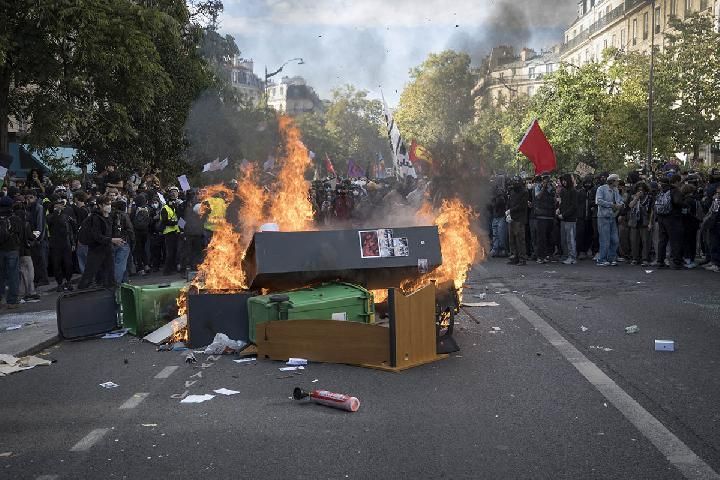
Court reverses restrictions on central Paris
The ban had barred city-center demonstrations by the Yellow Vests movement and the General Confederation of Labour (CGT) trade union. Police had proposed the eastern suburbs as an alternative location.
Interior Minister Laurent Nuñez said police would appeal. He also announced a nationwide deployment of 70,000 police officers and gendarmes for October 31, matching the number mobilized on October 24, The Rio Times reported.
The latest ruling contrasts with the court's decision a week earlier. On October 24, judges upheld the authorities' restrictions just hours before a demonstration was scheduled to start, forcing it to move to the outskirts of Paris.
From school grievances to nationwide protests
The demonstrations began in mid-September with high school students in the Paris suburbs demanding better school facilities and infrastructure. Residents angered by rising prices later joined, broadening the movement and taking it beyond the Paris region.
The Council on Foreign Relations traces the movement's beginnings to a September 17 teachers' strike over staff shortages at Antoine de Saint-Exupéry High School in Créteil, southeast of Paris. Teachers, students and parents blocked the entrance; footage circulated on social media before protests reached high schools elsewhere in France.
The government responded to the student movement by assigning 3,000 additional substitute teachers, withdrawing a proposed introduction of tuition fees for certain technical programs and preparatory classes, and opening an online platform where young people could raise concerns.
Violence and restrictions followed the October 17 turnout
The Interior Ministry identified October 17 as the largest demonstration so far, with about 550,000 participants. The Council on Foreign Relations reported a nationwide estimate of 550,000 to 800,000, including 110,000 in Paris. Security forces tried to disperse protesters with tear gas, stun grenades and water cannons.
According to the council's account, rioting affected several cities. In Marseille, rioters stormed city hall; in Limoges, they set the town hall on fire. Looting hit about 3,000 shops, ranging from French luxury brands to small local businesses. More than 1,000 police officers suffered injuries. Authorities arrested 2,700 people, and more than 200 were jailed.
Local and national authorities subsequently imposed curfews, including in central Paris, and banned protests in some areas.
Another 410,000 to 800,000 people demonstrated nationwide on October 24, sometimes despite local bans, the council reported. That day's protests were calmer than those on October 17, but evening clashes still occurred and arrests exceeded 1,000.
Election backdrop and further education proposals
The unrest is unfolding ahead of France's April 2027 presidential election. The Council on Foreign Relations cited an October 7 poll showing support for the movement among 55 percent of French respondents. Polling after October 17 put Marine Le Pen still in the lead with more than 30 percent support, while Jean-Luc Mélenchon moved into second place at 17 percent.
On October 26, the government proposed additional education measures. These included changes to the Parcoursup university-admissions platform by 2027 and its complete replacement by 2028.