
Indonesia Says It Respects Student Protests as Police Block Access to Jakarta Rally Site
Indonesia's government defended students' right to demonstrate on Youth Pledge Day, October 28, 2026, while citing its record on fires, the economy, education and legal reform. Thousands joined the Jakarta protest, where police prevented demonstrators from reaching the Bundaran HI roundabout.

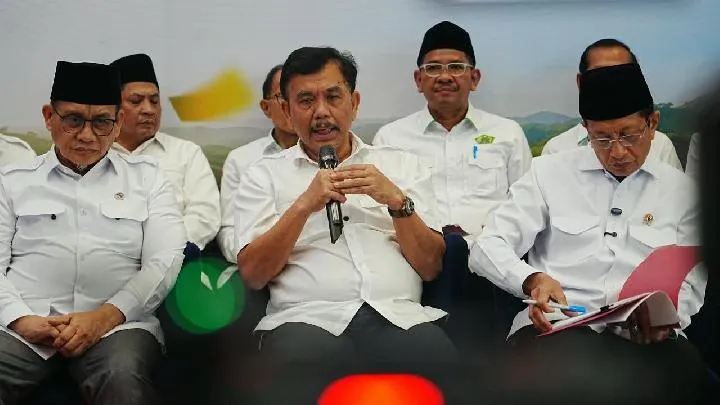
Government pledges to hear criticism
Syahganda Nainggolan, head of the Government Communications Agency (Bakom), said in a statement received Wednesday that criticism and public oversight have an essential place in national life.
"The government respects and values the aspirations voiced by students, including through demonstrations, as part of efforts to safeguard democracy," he said.
Syahganda acknowledged the students' concerns about the environment, economic stability, education, legal reform, governance, human rights and democracy. He said unresolved challenges remain and that students' demands help guide policy improvements.
Organizers and police restrictions
The University of Indonesia Student Executive Board (BEM UI) organized the Jakarta action with the Committee to Save the People's Sovereignty, known as Komite SADAR. The protest used the hashtag #IndonesiaSadar, or Indonesia Awake.
According to Tempo English, the committee brings together student leadership bodies from nine universities: UI, Bandung Institute of Technology (KM ITB), Padjadjaran University, Diponegoro University, Semarang State University, Gadjah Mada University (KM UGM), UPN Veteran Yogyakarta, Airlangga University and Brawijaya University.
The Straits Times reported that thousands turned out for the action at Bundaran HI. Smaller demonstrations took place in Yogyakarta, Bandung in West Java, Malang in East Java and Padang in West Sumatra. Reuters also reported a student rally in Makassar, South Sulawesi.
Police barred demonstrators from reaching the Jakarta roundabout. Channel NewsAsia reported a heavy security presence, and minor scuffles broke out when some protesters tried to get through barricades.
Amnesty International Indonesia called on police to remove the demonstration ban. Describing Bundaran HI as a public space, the group said the restriction "lacks legal justification, necessity, proportionality, and accountability."
Fire response and corporate accountability
Komite SADAR's first demand was for the government to designate the ongoing forest and land fires a national disaster, hold corporations responsible for environmental damage and integrate agrarian governance.
In its response, the government cited both field operations and criminal investigations. Syahganda said 72,303 joint personnel had been deployed in six provinces as of October 25. Authorities had recorded 391 police reports, with 244 individuals and 14 corporations named as suspects.
He presented those figures as evidence that the response included legal action against suspected offenders as well as efforts to manage the fires.
Spending, living costs and the economy
The coalition's second demand challenged what it described as politically motivated, wasteful spending through populist programs. It specifically named Free Nutritious Meals (MBG) and the Red and White Village/Subdistrict Cooperatives (KDKMP).
Channel NewsAsia reported that the free school meals program's 2026 budget stood at 229 trillion rupiah, about $12.6 billion, after an earlier allocation of 268 trillion rupiah. Officials overseeing the program said on July 21 that additional cuts remained possible.
Protesters also cited rising gasoline prices and fuel scarcity alongside a decision made in late September to reduce energy subsidies. Under that decision, subsidies would fall from 376.8 trillion rupiah in 2026 to 261 trillion rupiah in 2027, according to Channel NewsAsia.
Syahganda cited annual economic growth of 5.45 percent for the first half of 2026. Investment realized between January and September totaled Rp1,539.2 trillion and employed 2.19 million workers, he said. He acknowledged that growth also needs to bring better purchasing power, higher-quality jobs and more equal opportunities.
The protests came two years into President Prabowo Subianto's presidency. Channel NewsAsia, citing surveys by Saiful Mujani Research and Consulting (SMRC), reported that his approval ratings had declined steadily since late 2025.
Education access and school investment
Lower higher-education costs and equitable access to basic public services formed the coalition's third demand.
The government said its education budget was set to increase to Rp824 trillion in 2027 from Rp757.82 trillion in 2026. The planned funding is intended to broaden access, support school revitalization and advance digitalization.
Syahganda said more than 55,451 schools underwent revitalization during 2025 and 2026, while digital programs reached over 368,000 institutions. He also said the government was supplying electricity to 2,389 schools and internet connections to 8,152 schools that lacked those services, with the aim of making learning technology more equitably available.
Legal reform, rights and dialogue
The coalition's fourth demand called for an end to the use of laws for political advantage and stronger action against corruption, collusion and nepotism, known as KKN. Its fifth called for restored freedom of expression, human rights tribunals for past violations and an end to the militarization of civilian spaces.
Syahganda said Prabowo's administration remained committed to fighting corruption. He cited the Forest Area Control Task Force (Satgas PKH), saying it had saved the state Rp52 trillion and brought more than 6.2 million hectares of forest under regulation by October 6.
The task force also closed an illegal gold-mining operation run by PT Kristalin Eka Lestari in Nabire on October 22. Syahganda described the closure as enforcement against illegal mining and an effort to protect forests and ensure compliance with natural-resource regulations.
On human rights and democracy, he reiterated the government's support for peaceful expression. He pointed to the inauguration of the Ibu Marsinah Museum in May 2026 and Prabowo's public dialogues, including the 12-hour "President Answers" forum.
Syahganda said protecting democracy requires openness to criticism, respect for differing views and safeguards for constitutional rights. He pledged continued dialogue and said development, law enforcement and governance should serve the public's interests.