
Maruli Simanjuntak Pledges Multi-Agency Approach to Border Economic Development as New BNPP Chief
General Maruli Simanjuntak, newly appointed head of Indonesia's National Border Management Agency, outlined plans to coordinate military units and government ministries to boost economic conditions in border and remote regions while resolving territorial disputes.

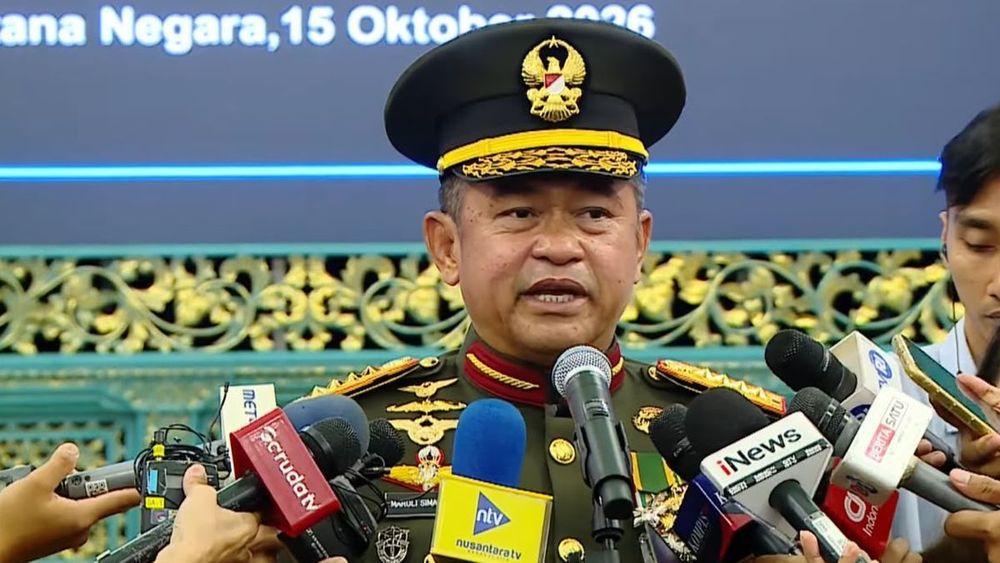
As Head of BNPP, Maruli Opens Opportunities to Involve the Military and Ministries to Enhance Economy in Border Areas
General Maruli Simanjuntak emphasized a comprehensive approach to managing Indonesia's border and remote areas following his inauguration as head of the National Border Management Agency (BNPP) by President Prabowo Subianto on Thursday, October 15, 2026. The appointment comes alongside his role as Deputy Commander of the Indonesian National Armed Forces (TNI), replacing General Tandyo Budi Revita, who was simultaneously appointed Chief of Staff of the Indonesian Army.
In his first statements after the inauguration ceremony at the Presidential Palace in Jakarta, Maruli outlined an expanded vision for border management that extends beyond traditional security concerns to encompass economic development for communities in these strategically important regions.
"Actually, it's not solely up to the military. The agency already exists, and its organization is in place. By adding on, besides managing the border, why not enhance the economic conditions of the local population?"
The National Border Management Agency, established in 2010 under Presidential Regulation No. 12 of 2010 in accordance with Law No. 43 of 2008 concerning State Territory, operates primarily as a coordinating body directly accountable to the President. Its authority focuses on budget planning, policy coordination, and evaluation rather than direct enforcement operations.
Maruli's mandate extends to the management of not only border areas but also remote regions, with the agency's expanded designation as BNPPDT (Badan Nasional Pengelola Perbatasan dan Daerah Terpencil). This broader scope addresses persistent challenges these areas face, including inadequate infrastructure, high poverty rates, limited access to education and health services, and lower Human Development Index scores compared to non-border regions.
Coordination Strategy Across Government Agencies
The new BNPP chief emphasized that improving conditions in border areas need not require substantial new funding but rather better coordination among existing government resources.
"We don't always need funding to do this. We can help coordinate with the Ministry of Villages and possibly assist other ministries to improve the livelihoods of people in these regions."
This approach builds upon existing policy frameworks, including Presidential Instruction No. 1 of 2021, which specifically targeted accelerated economic development programs in border areas such as the Motaain border area in Belu Regency.
Military Resources for Development
Maruli also indicated potential involvement of military units currently assigned to border security in economic development initiatives. Indonesia deploys Border Security Task Forces (Satgas Pamtas) along its frontiers, comprising static, territorial, and mobile units that guard posts and patrol borders with neighboring countries.
"Yes, that's something we will consider later. In those regions, there are infantry battalions that we will utilize. There may also be the Air Force active in coastal areas and the Navy. As I am in the position of Deputy Commander, I will also assist in coordination."
Maruli's previous experience as Chief of Staff of the Indonesian Army from November 29, 2023, until his current appointment positions him to leverage military resources effectively in his new coordinating role.
Territorial Boundary Challenges
Despite the emphasis on economic development, Maruli stressed that clarifying Indonesia's territorial boundaries remains a core priority. Indonesia shares land borders with three countries—Malaysia, Papua New Guinea, and Timor-Leste—and maritime borders with 10 countries including India, Australia, Singapore, Thailand, Vietnam, and the Philippines.
The nation still faces unresolved land and sea border issues at more than 30 locations with neighboring countries. With Timor-Leste alone, approximately 4% of land borders remain unresolved, requiring ongoing discussions and coordination with relevant parties.
"It is essential to ensure proper border management. This way, we can clearly assert our borders with neighboring countries."
The dual appointment reflects the government's integrated approach to border management, combining security imperatives with economic development objectives in strategically important but historically underserved regions of the archipelago.