
Indonesia Launches Powerful Agrarian Reform Agency Amid Scrutiny of Law and Leadership
President Prabowo Subianto installed Dedi Prasetyo as head of Indonesia's National Agrarian Reform Agency (BRAN) on October 1, 2026, before technical rules for its structure and operations had been issued. The appointment followed the rapid passage of an agrarian reform law that Tempo says leaves major questions about presidential power, judicial authority and customary land rights.

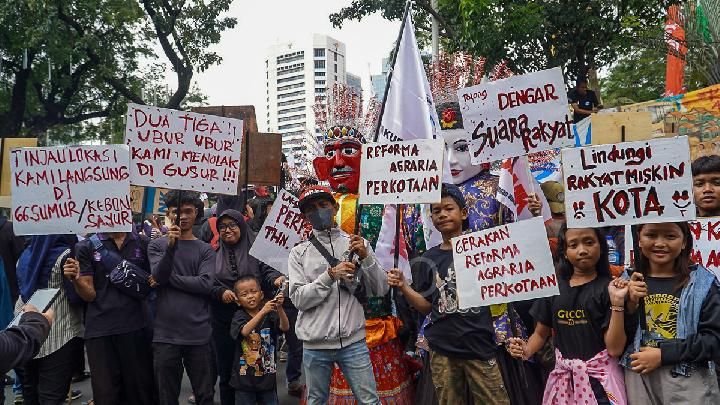
Broad powers, disputed safeguards
The circulating draft places BRAN directly under the president and gives it authority to determine which land and beneficiaries qualify for agrarian reform. It also empowers the agency to decide land disputes, revoke administrative decisions and set "corrective policies" covering the area, boundaries and legal status of land.
Tempo argues that these provisions would allow an administrative agency to override court rulings. Because land-status decisions bear on ownership, concessions, state assets and livelihoods, the publication warns that such authority creates opportunities for abuse and should not supersede the courts.
Reporting by Mongabay Indonesia and IndoView describes additional powers under the law: BRAN can designate Priority Locations for Agrarian Reform (LPRA), temporarily halt land administration and licensing on disputed land, and work to de-escalate violence. Its decisions retain their legally binding status even when government bodies or businesses disregard them.
The legislative process drew scrutiny as well. The House formally proposed the Agrarian Reform Governance Law on September 8, 2026, and passed it with the government on September 22. During first-stage deliberations on September 21, the House said it had consulted 55 parties. Tempo argues that the number alone does not establish meaningful public participation.
The draft was not publicly released, although two versions circulated. Tempo identified numerous irregularities in those versions and characterized the process as part of a broader pattern of hurried, closed-door lawmaking.
Dedi's appointment and planned organization
Dedi, a former deputy chief of the National Police, took charge of BRAN less than two weeks after the law passed. His appointment was authorized by Presidential Decree No. 105/P of 2026, dated September 30, 2026. Tempo criticized the decision to install him before the agency's technical regulations were ready, saying the president appeared to be building an exceptionally powerful body without clear oversight or accountability.
Although Dedi had left the deputy chief's post, Mongabay Indonesia reported that he remained an active high-ranking police officer as of October 2026. The civil society coalition Koalisi Masyarakat Sipil untuk Keadilan Agraria challenged the appointment, arguing that it conflicts with Constitutional Court ruling No. 114/PUU-XXIII/2025. Under that ruling, active police officers must resign or retire before accepting positions outside the police.
On October 1, Dedi outlined a proposed leadership structure consisting of a head, two deputy heads, a main secretary and four deputies. He said he would work with the State Secretariat Ministry and the Ministry of Administrative and Bureaucratic Reform to assess candidates for those positions.
Land redistribution requirements
The law requires holders of cultivation rights, known as Hak Guna Usaha (HGU), and plantation business permits to give up at least 20% of the relevant land area for agrarian reform, according to Mongabay reporting republished by Genocide Watch. If they do not transfer the land, they may instead meet the obligation through a payment or profit-sharing arrangement equivalent to 20% of profits.
The legislation also establishes criminal penalties for misuse of land designated for agrarian reform (TORA). The maximum penalties are eight years in prison or a fine of up to 200 million rupiah.
Tempo places these provisions against the purpose of the 1960 Basic Agrarian Law: addressing unequal land ownership and breaking with the colonial legal legacy. The publication argues that redistribution should reduce concentrated ownership, rather than provide a justification for state seizures or transfers of land control through a presidential agency.
Customary rights remain a concern
The circulating draft identifies Indigenous communities as agrarian reform subjects, but does not explicitly establish their collective rights to customary territories. Tempo distinguishes eligibility to benefit from a government program from legal protection of the land communities already hold under customary systems.
Those rights arise from communities' histories, social relationships and systems of governance. The 1960 Basic Agrarian Law recognizes customary land rights and gives customary law a foundational role in national agrarian law. Tempo warns that treating Indigenous communities as subjects of state control could instead force them to prove their rights to land on which they depend.
Passage of the new law also prompted renewed demands from Indigenous rights advocates for a separate Indigenous Peoples Bill, according to the Mongabay report republished by Genocide Watch. First placed on the priority legislative list in 2010, that bill has remained in legislative limbo for more than 16 years.
Long-running conflicts and early plans
The Agrarian Reform Consortium (KPA) documented 3,575 outbreaks of agrarian conflict across Indonesia from 2015 through 2025. Its records also counted 3,245 instances of criminalization of agrarian rights defenders, 1,366 people assaulted, 80 killed and 107 shot.
At a meeting in Jakarta on October 23, 2026, the National Commission on Human Rights (Komnas HAM) pressed BRAN to address unresolved land conflicts. Commission chair Anis Hidayah said some disputes had persisted for at least five years. The institutions moved toward a memorandum of understanding, which Dedi called the first step since BRAN's establishment.
The National Development Planning Ministry (Bappenas) expressed support for BRAN at a November 2 meeting. CNN Indonesia reported that the discussion included the Land Bank Agency's (Badan Bank Tanah) plan to redistribute about 23,000 hectares to agrarian reform subjects in 2027, with BRAN coordinating implementation.