
KPK Explains Governance Role of Two Officials Moving to Indonesia's Nutrition Agency
Indonesia's Corruption Eradication Commission (KPK) says assigning two officials to the National Nutrition Agency (BGN) is intended to strengthen anti-corruption safeguards and help track reforms to the Free Nutritious Food Program (MBG). One of the officials said he was still awaiting appointment after leaving the KPK.

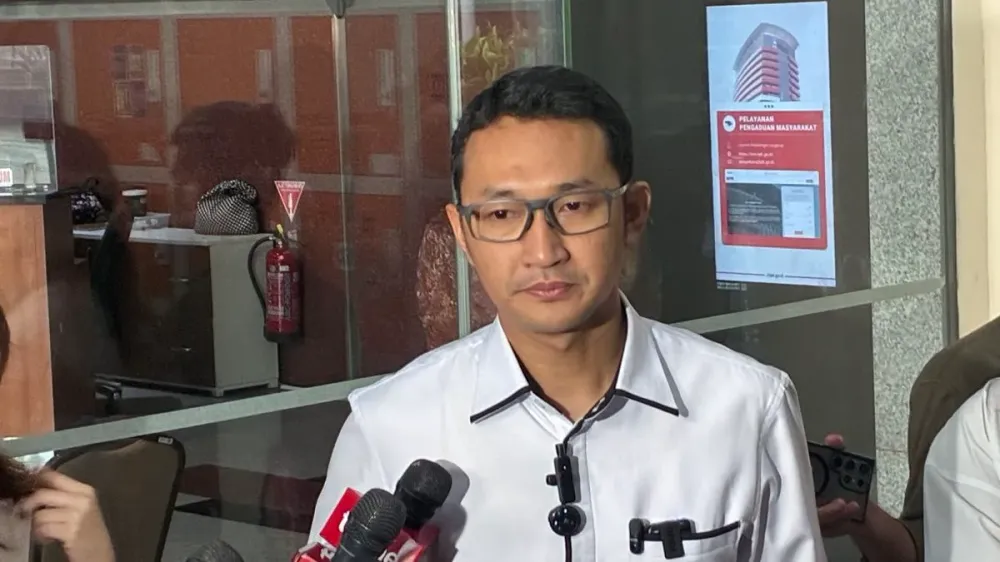
Transfers through the Attorney General's Office
The officials are Mungki Hadipratikno, the KPK's director of Asset Tracing, Evidence Management, and Execution (Labuksi), and Haerudin, head of the Supervisory Board Secretariat. KPK Chairman Setyo Budiyanto said they had been honorably discharged from the commission and returned to their original institution, the Attorney General's Office, for service at BGN.
Speaking at the KPK ACLC Building in South Jakarta on November 3, 2026, Setyo described the moves as an opportunity for a change of role after more than 10 years at the commission. He cited both their long service and their origins at the Attorney General's Office.
Mungki said that day that administrative processing at the National Civil Service Agency (BKN) was still underway. "As of November 1, I have been honorably discharged from KPK and returned to the Attorney General's Office. For BGN, I am still waiting for the appointment schedule," he told reporters.
Following up on corruption-risk assessments
In a November 5 statement, KPK spokesperson Budi Prasetyo said the assignments were meant to help BGN build governance grounded in integrity and anti-corruption principles. He said BGN was already working on recommendations arising from the KPK's assessment of corruption risks in MBG.
The personnel moves are intended to support closer cooperation between the agencies, particularly in checking how BGN follows through on those recommendations, Budi said. "Thus, prevention efforts do not stop at identifying potential risks but continue to involve specific and sustainable system improvement measures," he said.
Budi said the KPK considers early governance safeguards essential to making strategic government programs effective, properly targeted and free of corruption, allowing communities to receive their full benefits.
BGN had also sought KPK oversight before the personnel moves. At KPK headquarters in South Jakarta on July 7, 2026, BGN Deputy Head Agustina Arumsari said the agency had asked the KPK's Directorate of Prevention and Monitoring to oversee MBG management to prevent budget leakage. According to Tempo.co, she said the commission had provided 10 recommendations addressing vulnerabilities in implementation.
Earlier findings and recommended safeguards
The appendix to the KPK's 2025 Annual Report, released April 17, 2026, detailed eight potential corruption risks identified by its Monitoring Directorate and seven recommendations for MBG, according to Jawawa/ANTARA and Tempo.co.
Those recommendations called for comprehensive, binding implementation rules at least at the level of a Presidential Regulation, a stronger role for local governments, and clear standard operating procedures and service standards for choosing Nutrition Fulfillment Service Unit (SPPG) partners. The KPK also recommended bringing health agencies and BPOM into food-safety oversight and establishing measurable indicators of program success, supported by baseline measurements.
The report cited an increase in MBG's budget from Rp71 trillion in 2025 to Rp171 trillion in 2026. The KPK warned that regulation, governance and monitoring had not kept pace with the program's size and funding, leaving it exposed to accountability problems, conflicts of interest, inefficiency and potential corruption.
BGN's later budget and coverage figures
A September 17, 2026, BGN press release put the agency's total 2026 budget ceiling at Rp229.75 trillion following spending adjustments. MBG received an allocation of Rp218.77 trillion, representing 98.86% of the Rp221.30 trillion National Nutrition Fulfillment Program budget.
BGN said MBG spending had reached Rp139.77 trillion by September 16, or 63.89% of its available allocation. About Rp79 trillion remained unspent for the rest of the year.
The same release reported that MBG had reached 56.99 million beneficiaries as of August 31, equivalent to 76.45% of its 2026 target of 74.56 million. BGN reported a remaining gap of 17.56 million beneficiaries. It described the coverage figure as provisional while governance improvements continued and said it had removed 1,653 educational institutions from the beneficiary list as part of refocusing the program.