
Constitutional Court Faces Petition to Extend DPRD Terms Until 2031 Amid Election Separation
Six petitioners have requested the Constitutional Court extend regional legislature terms from 2029 to 2031 to prevent a legislative vacuum caused by the separation of national and local elections.

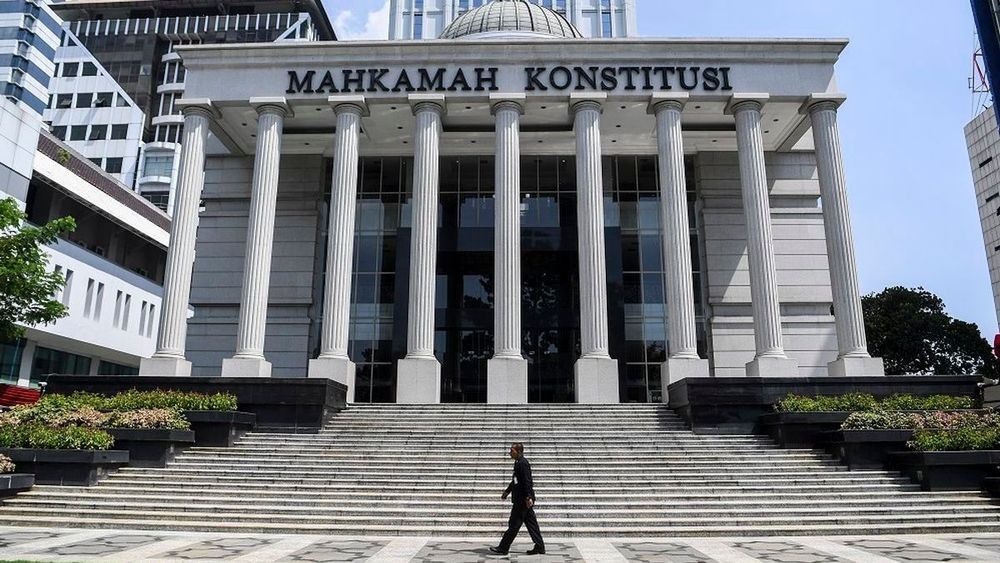
MK Requested to Extend DPRD Terms from 2024–2029 to 2031 Due to Separation of Elections
JAKARTA — The Constitutional Court is reviewing a petition that could extend the terms of Indonesia's 19,882 regional legislative council (DPRD) members by two years, a consequence of the court's earlier decision to separate national and local elections starting in 2029.
Six petitioners, including Muhammad Zulfan Raghibie, Jaif Saputra, and M. Khairu Mamnun, filed the request on Monday (13/10/2026) seeking amendments to the MD3 Law to prevent what they describe as an impending constitutional crisis.
The issue stems from Constitutional Court Decision Number 135/PUU-XXII/2024, which ruled that regional elections must be held between two and two-and-a-half years after the presidential inauguration. This timeline places the next local elections in 2031, two years after the current DPRD members' constitutional terms expire in 2029.
Breaking with Nearly a Decade of Practice
The decision represents a significant shift from Indonesia's electoral policy. Since December 2015, when 269 regions participated in the country's first simultaneous local elections designed for administrative efficiency and cost savings, Indonesia has conducted multiple rounds of synchronized voting across national and regional levels. The system continued through 2017, 2018, and 2020, culminating in the largest simultaneous regional elections across all provinces on 27 November 2024.
DPRD members elected in the February 2024 legislative elections and inaugurated in August-September 2024 were constitutionally guaranteed five-year terms under Law Number 17 of 2014, last amended in 2019. Without transitional provisions, their mandates would end in 2029 with no mechanism to fill the seats until new elections in 2031.
Legal Vacuum Concerns
The Constitutional Court's original ruling, which granted a petition by the Association for Elections and Democracy (Perludem), an independent civil society organization founded in 2005 by former election supervisors, aimed to prevent regional issues from being overshadowed when provincial and regency/city DPRD elections were combined with presidential and national parliamentary contests.
However, the decision created unintended consequences. Legal experts warn of two potential scenarios: either a two-year vacancy in regional representation affecting 2,372 provincial seats and 17,510 regency/city seats, or unconstitutional term extensions lacking clear legal basis.
"In the petition, there is a discrepancy regarding the articles in question, particularly limited to Article 318 Paragraph (4) and Article 367 Paragraph (4) of the MD3 Law, which regulates the terms of office for provincial and local DPRD," said Muhammad Nazri, representing the petitioners during the preliminary hearing.
Proposed Solution
The petitioners are requesting the Constitutional Court declare that Articles 318 and 367 of the MD3 Law conflict with the 1945 Constitution unless interpreted to extend DPRD terms until newly elected councils from the 2031 local elections are sworn in.
Specifically, they seek to amend the language from "The term of provincial DPRD members is five years" to "The term of provincial DPRD members resulting from the 2024 elections is five years and ends when the provincial DPRD resulting from the 2031 local elections swears in anew." An identical modification is requested for regency and city-level councils.
Evidence suggests some provinces have already begun implementing similar extensions. Documentation indicates that certain jurisdictions have established exceptions for 2024-2029 DPRD members, extending their terms until 2031 in anticipation of the new electoral timeline.
The Constitutional Court has not indicated when it will rule on the petition, which affects legislative representation across Indonesia's provinces, regencies, and cities.