
Indonesia partners with Chinese firms to accelerate waste-to-energy development
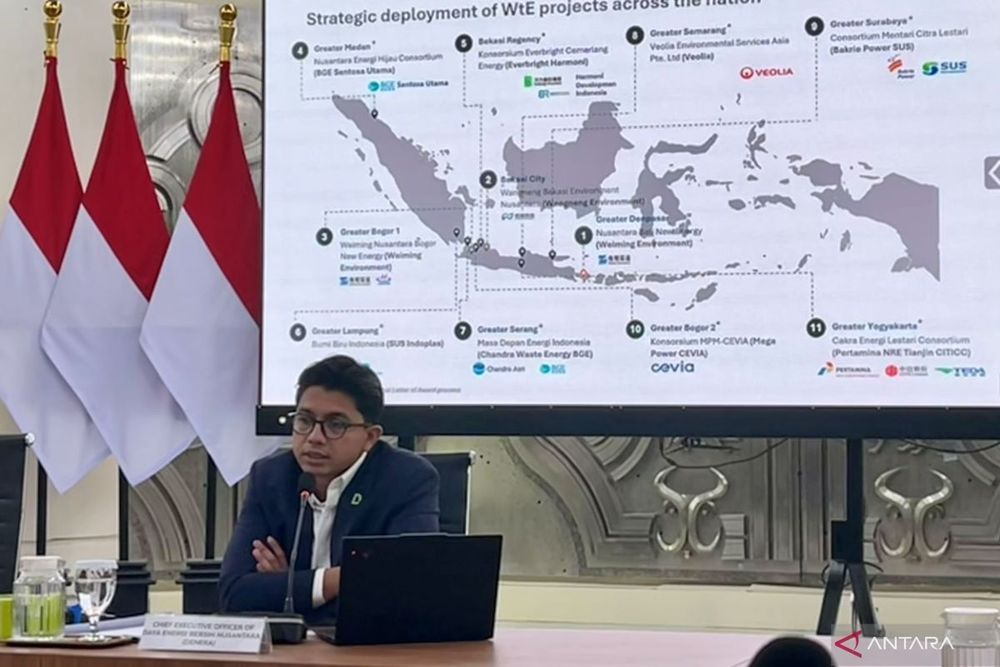
PT Denera, Indonesia's clean energy subsidiary, is collaborating with Chinese companies to rapidly deploy waste-to-energy technology across the country as the nation faces mounting waste management challenges and aims for 100 percent waste management by 2029.
Indonesia partners with Chinese firms to accelerate waste-to-energy development
Indonesia is leveraging international expertise, particularly from Chinese companies, to build its national waste-to-energy infrastructure as the country confronts a mounting waste crisis. PT Daya Energi Bersih Nusantara (Denera), the clean energy subsidiary of Danantara Indonesia established in April 2026, announced the partnerships during a press conference in Jakarta on Monday.
The urgency of the initiative is underscored by Indonesia's waste management challenges. The country's national waste is projected to reach 51.8 million tons in 2026, with approximately 75 percent still managed improperly. Greater Jakarta alone, home to 42 million people, produces up to 14,000 tonnes of waste daily, and approximately eight landfill sites serving the region are now close to or entirely full.
Fadli Rahman, CEO of PT Denera, explained that Chinese partners were selected for their proven track record and ability to deliver projects swiftly. China operates over 1,000 waste-to-energy incineration plants, accounting for nearly half of the global total and representing about two-thirds of global waste-to-power generation capacity. The country's total treatment capacity now surpasses that of the United States, Europe, and Japan combined.
Over the past 20 years, they have been very active not only in building but also in developing the latest waste-to-energy technology at the highest standard.
Rahman emphasized that China's technology development is comparable with other countries in terms of quality and cost, but Chinese companies distinguish themselves through their commitment to rapid project deployment. The speed of implementation is critical given Indonesia's waste emergency, Rahman noted, adding that Chinese partners are committed to building as soon as possible and staying as long as possible.
Initial project awards and international participation
The first bidding phase for three waste-to-energy installation projects was awarded to two Chinese companies. Zhejiang Weiming, a Shanghai Stock Exchange-listed firm established in 2001 that operates 41 waste-to-energy facilities with a combined daily incineration capacity of approximately 12,500 tons, won contracts for sites in Bogor and Denpasar. Wangneng Environment secured the contract for the Bekasi site.
Rahman reported that cooperation between the Chinese companies and their local partners has been strong as the first three sites enter the development stage, ensuring smooth progress toward completion and eventual operation.
Despite Chinese companies winning the initial tender phase, the Denera CEO stressed that waste-to-energy investment opportunities in Indonesia remain open to all international partners. The second phase of the bidding process for eight sites attracted bidders from South Korea, Japan, India, and Singapore, in addition to China. The eight selected partners ultimately comprised four domestic consortia and four international consortia, led by two French and two Chinese companies.
Regulatory pressure and ambitious targets
The waste-to-energy push comes amid increasing regulatory enforcement. As of April 2025, the Indonesian central government officially ordered the closure of 343 landfills and threatened jail time for noncompliant local officials under enforcement of the 2008 law banning open dumping. This regulatory pressure has intensified the need for alternative waste management solutions.
Denera is working to ensure that all waste-to-energy facilities in Indonesia are developed in accordance with European Union standards, which requires inputs and resources from multiple partners, Rahman said. The company was formed as a holding company consolidating all waste-to-energy project investments and operations across Indonesia.
Indonesia aims to manage 100 percent of its waste by the end of 2029, with the proportion of waste managed in 2026 targeted at 63.41 percent, according to the National Medium-Term Development Plan for the 2025-2029 period. The aggressive timeline reflects the government's recognition of the waste crisis as a national priority requiring rapid deployment of advanced infrastructure.
Danantara Indonesia, Denera's parent organization, was established on February 24, 2025, as Indonesia's second sovereign wealth fund under Law No. 1 of 2025, modeled after Singapore's Temasek.