
Indonesia's research agency calls for long-term technology planning in mining downstreaming
BRIN head Arif Satria warns mining industry against short-term technology investments, urging companies to forecast innovations through 2035-2040 to protect Indonesia's position as the world's dominant nickel producer.
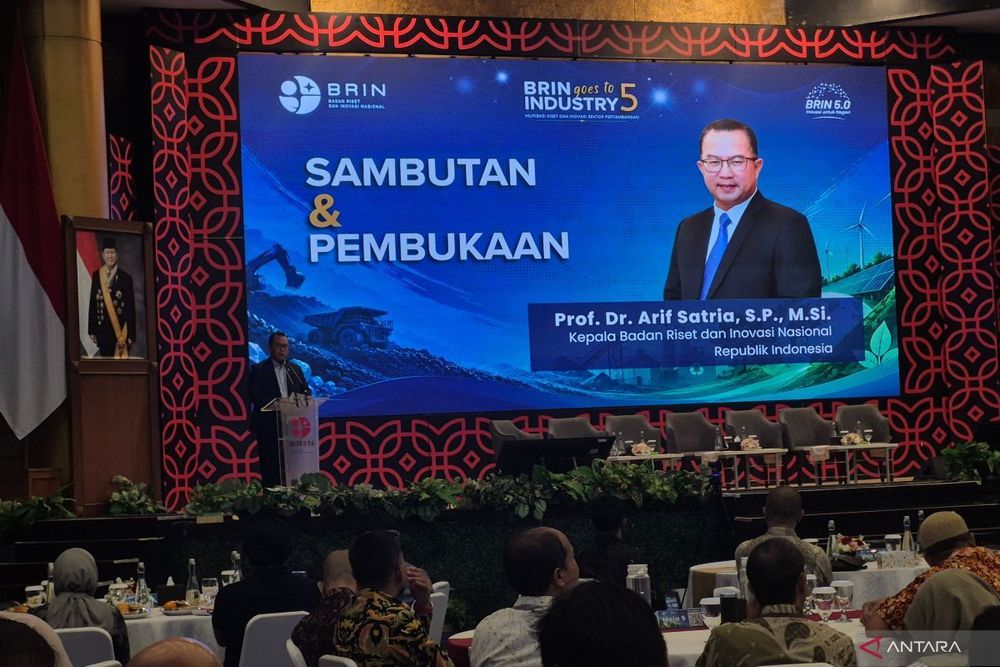
BRIN urges future-oriented technology for mining downstream industry
Indonesia's National Research and Innovation Agency has called on the mining industry to adopt forward-looking technology strategies that extend decades into the future, warning that short-term investments risk becoming obsolete before facilities even begin operations.
Speaking at the fifth BRIN Goes To Industry forum in Jakarta on Tuesday, agency head Arif Satria emphasized that Indonesia's position as the world's dominant nickel producer—accounting for 61.3 percent of global mine production in 2024, up from just 16 percent in 2017—makes strategic technology planning critical for maintaining long-term competitiveness.
"We must not carry out industrialization and investment based on short-term technologies. Building a factory or industrial facility takes two to three years, and by the time it is completed, the technology may already be obsolete because new technologies have emerged," Satria said at the forum themed "Downstreaming Research and Innovation in the Mining Sector."
The warning comes as Indonesia aggressively pursues mineral downstreaming policies designed to shift from raw material exports to domestic processing. The country implemented a nickel ore export ban in January 2020 and followed with a bauxite export ban in June 2023, forcing mining companies to develop domestic refining capabilities.
Resource management and strategic reserves
Indonesia's commitment to sustainable resource management was underscored by the government's decision to slash the national nickel mining quota from 272 million tons in 2024 to 150 million tons in 2025—a reduction of 120 million tons aimed at preserving the country's estimated 55 million tonnes of nickel reserves, which represent approximately 42 percent of global reserves.
Satria explained that the accelerating pace of global technological advancement requires mining companies to project industry developments through at least 2035 and 2040.
"We need to use AI, experts, and the ability to analyze global trends so that we can understand what technologies are likely to be used in the future," he remarked.
The agency, established as a cabinet-level body in April 2021 by consolidating 48 governmental research bodies with over 14,000 employees, is positioning itself as the primary institution to support technology forecasting for Indonesian industries.
Economic significance and investment patterns
The stakes are substantial for Indonesia's economy, which grew 5.11 percent in 2025. The mining and quarrying sector contributed 8.75 percent of GDP, while manufacturing accounted for 19.07 percent. Mining sector exports alone reached approximately 51.5 billion U.S. dollars in 2023.
Current investment patterns show nickel mining accounting for roughly 9 percent of downstreaming sector investment in 2024 and 2025, while the electric vehicle ecosystem represented just 0.1 percent in 2024—suggesting significant room for expansion in higher-value manufacturing.
The opening of Indonesia's first electric vehicle battery cell plant by Hyundai and LG in July 2024 demonstrated concrete progress in linking mineral extraction with advanced component manufacturing domestically, exemplifying the type of downstream value addition that requires careful long-term planning.
Through closer collaboration between research institutions and mining companies, Satria expressed confidence that Indonesia's mineral downstreaming efforts would become more effective and enhance the country's global competitiveness while keeping pace with rapid technological innovations in advanced economies.
The BRIN head previously announced the agency is preparing future technology forecasts to serve as references for shaping the country's industrialization strategy and increasing the competitiveness of domestic research in an increasingly complex global technology landscape.