
Indonesia launches 1-GWp Bali solar project to eliminate diesel power plants
Indonesia's government unveiled a 1-gigawatt solar power initiative for Bali that aims to phase out all diesel generators on the island, part of a broader 100-GW national program requiring US$62 billion in investment.
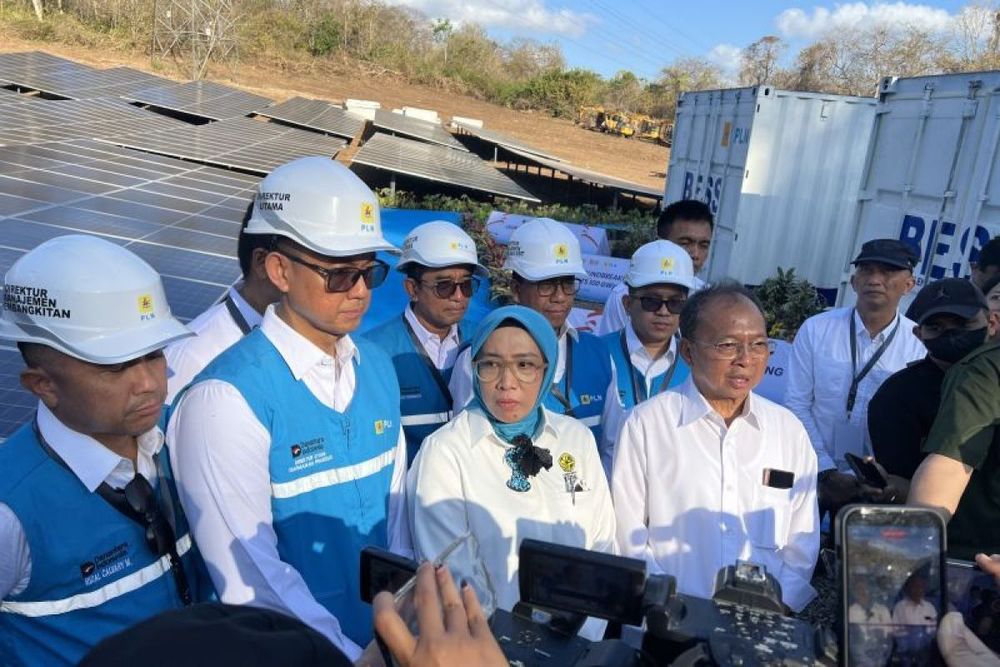
Bali's 1-GWp solar power push to phase out diesel plants: Govt
Indonesia's Ministry of Energy and Mineral Resources announced that a 1-gigawatt peak (GWp) solar power plant initiative will eliminate diesel power plants across Bali, marking a significant step in the country's renewable energy transition.
Director General of Renewable Energy and Energy Conservation Eniya Listiani Dewi stated that the complete implementation of the 1-gigawatt project is expected to phase out all diesel generators on the island. She made the announcement following the groundbreaking event for Indonesia's 100 GWp Solar Power Project in Gilimanuk, Bali, on Tuesday, August 25, 2026.
The solar power development in Bali will be divided into five clusters. The Gilimanuk facility, one of the ongoing projects, will have a capacity of 300 megawatt-peak (MWp) and feature a 1,000 MWh Battery Energy Storage Storage System (BESS). Spanning approximately 321 hectares, the facility is targeted to generate 470 GWh of energy and save 151,000 kiloliters of fuel annually.
National solar expansion program
The Bali project is part of Indonesia's ambitious 100-GW solar power program, which was first announced in August 2025. The initiative represents a massive expansion from the country's current solar capacity of approximately 1.5 GW, requiring an estimated investment of Rp1,140 trillion (US$62 billion).
President Prabowo Subianto, accompanied by Energy and Mineral Resources Minister Bahlil Lahadalia, officially launched the 100 GWp solar power strategic program at the Java-Bali Sea Crossing Monument in Gilimanuk. The ceremony was connected virtually with three other locations: Gajah Mungkur Floating Solar Power Plant in Wonogiri, Central Java; Sembur Village Solar Power Plant in Batam, Riau Islands; and Rengit Island Solar Power Plant in Bangka Belitung.
The national program is expected to deliver substantial economic and environmental benefits. According to government projections, the solar power projects will save Rp73.9 trillion (US$4 billion) annually in fuel subsidies by reducing reliance on diesel fuel. The initiative is also expected to reduce greenhouse gas emissions by 140.16 million tons of CO2.
Addressing Bali's growing energy demands
Bali's electricity demand has grown significantly in recent years, rising from 3.2 TWh in 2011 to 5.8 TWh in 2019, closely tracking the island's tourism expansion as visitor numbers nearly doubled from 9 million to 17 million over the same period. Currently, Bali receives approximately 30% of its electricity supply from Java through undersea cables, with the remainder generated by local diesel, gas, and coal plants.
Dewi expressed optimism that rooftop solar projects will be accelerated across Bali. She cited Governor I Wayan Koster's statement that all hotels on the island will be equipped with rooftop solar panels, supporting the transition to renewable energy.
The Gilimanuk power plant and BESS are part of the government's strategy to replace fossil fuel-fired power plants with solar energy. The facility is targeted to begin operations in 2028.
Broader energy transition context
The solar expansion comes as Indonesia works to increase its renewable energy share, which reached only 13.1% of the electricity mix in 2023, falling short of the government's 17.9% target for that year. The focus on Java and Bali is strategic, as these islands account for approximately 80% of Indonesia's total electricity consumption.
The initial phase of the 100 GW program includes approximately 5.2 GWp of projects, with several facilities already under construction, including the 92 MWp Saguling plant (44% complete) and 133 MWp Karangkates plant (56% complete), demonstrating the program's immediate implementation across multiple locations nationwide.