
President Prabowo directs BRIN to accelerate energy sovereignty and aerospace research
President Prabowo Subianto has instructed Indonesia's National Research and Innovation Agency to intensify strategic research in energy, food security, health, and aerospace technologies as the nation pursues greater self-reliance and technological independence.
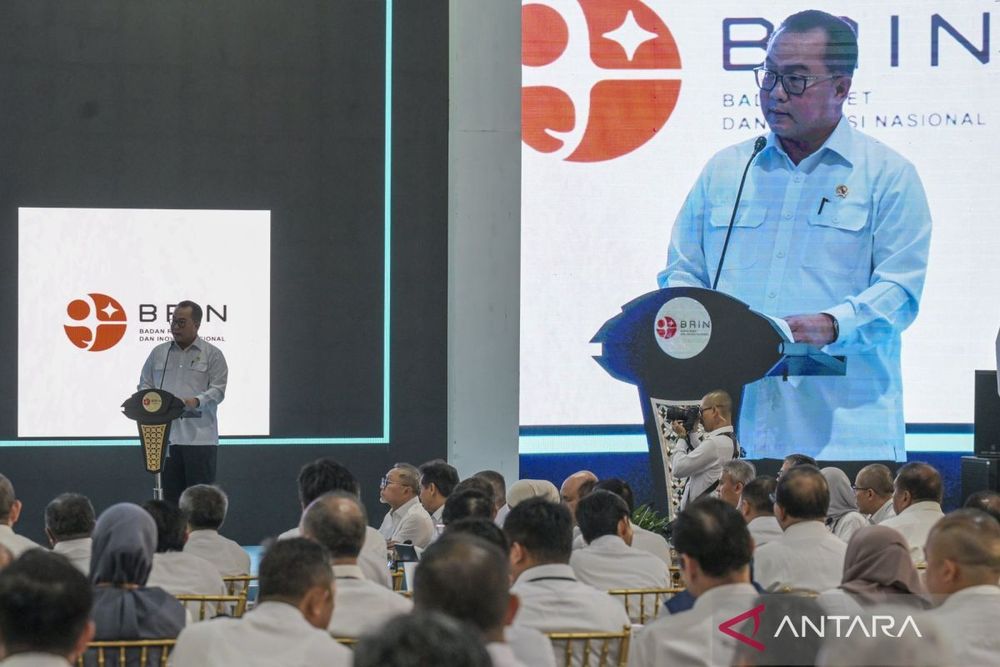
Presidential directive on strategic research priorities
President Prabowo Subianto has directed the National Research and Innovation Agency (BRIN) to accelerate strategic research across energy, food security, health, and aerospace sectors as Indonesia intensifies its push toward technological self-reliance and reduced foreign dependency.
Following a meeting between the President and BRIN researchers in Jakarta on Thursday, BRIN Head Arif Satria outlined the administration's priorities for developing technologies that can bolster Indonesia's resilience against evolving global challenges, particularly in energy security.
"BRIN has been instructed to continue studying pathways toward energy sovereignty and self-reliance because we cannot depend on foreign countries," Satria stated after the discussion.
Biodiesel policy evaluation and energy transition
The President specifically tasked BRIN with conducting comprehensive assessments of various national energy policy scenarios, including the implementation of B60 and B100 biodiesel blends, as well as E30 bioethanol. Indonesia officially launched its B50 biodiesel mandate in July 2026, with the government projecting savings of approximately 170 trillion rupiah ($9.4 billion) this year through reduced diesel imports. The B40 mandate, implemented in early 2025, had already demonstrated significant economic benefits, saving Rp 130.2 trillion ($7.7 billion) in foreign exchange throughout 2025 as diesel imports declined by 3.3 million kiloliters.
Energy Minister Bahlil Lahadalia has indicated that Indonesia may advance to B60 biodiesel by 2028 if geopolitical tensions persist and oil prices remain elevated, with testing of higher blend mandates continuing through the second half of 2026.
"We have been asked to comprehensively assess the implications of implementing B60, B100, and E30 so that the government has a solid scientific basis for future energy policies," Satria explained.
Adsorbed Natural Gas technology development
President Prabowo expressed particular interest in BRIN's Adsorbed Natural Gas (ANG) technology, which the agency developed through collaborative research with 2025 Nobel Laureate in Chemistry Susumu Kitagawa. The technology employs metal-organic framework (MOF) materials to store compressed natural gas at pressures below 30 bar, substantially lower than conventional CNG systems.
According to Satria, large-scale implementation of this innovation could reduce Indonesia's reliance on liquefied petroleum gas imports while cutting annual energy subsidy expenditures by an estimated Rp 26 trillion (approximately $1.6 billion).
Aerospace advancement and N219 aircraft program
In the aerospace sector, President Prabowo highlighted the continued development of the N219 aircraft, a collaborative project between BRIN and state-owned manufacturer PT Dirgantara Indonesia (PTDI). The 19-passenger twin-engine propeller aircraft, which made its maiden flight in August 2017 and received certification from Indonesian civil aviation authorities in December 2020, was designed specifically for short take-off and landing operations on remote, semi-prepared airstrips across Indonesia's archipelago.
Developed in collaboration with LAPAN (now integrated into BRIN), the aircraft features a domestic component level of 44.69 percent and was entirely designed by Indonesian engineers. PTDI is currently developing an amphibious variant of the N219, funded by the National Development Planning Agency with a budget of at least Rp 300 billion ($19.85 million), with certification targeted for 2026.
Nuclear technology and food security applications
Beyond energy and aerospace, the President showed keen interest in broader applications of nuclear technology. BRIN has developed radiopharmaceutical technology for cancer diagnosis and treatment, food irradiation technology designed to extend the shelf life of export commodities, and various other innovations supporting healthcare and food security objectives.
Established in April 2021 as a cabinet-level government agency, BRIN integrated 48 previously separate governmental research bodies into a single entity directly under the President. The agency gained membership in the International Science Council in September 2021, reflecting its integration into global research networks.
According to Satria, President Prabowo's sustained focus on these research initiatives demonstrates the administration's commitment to strengthening Indonesia's scientific and technological capabilities as the foundation for national sovereignty. Since taking office as Indonesia's eighth president in October 2024 after winning the February election with approximately 58.6 percent of the vote, Prabowo has consistently emphasized technological development as a national priority.
"He always says that mastering technology is a matter of national dignity," Satria remarked, characterizing the President's vision for Indonesia's research and innovation agenda.