
Indonesia shifts EV incentives to national brands as part of 2027 industrial strategy
The Indonesian government announced it will prioritize national brands in electric vehicle incentive allocations, a policy integrated into the 2027 Macroeconomic Framework aimed at accelerating the automotive sector's green transition and strengthening domestic manufacturing capacity.
Indonesia shifts EV incentives to national brands as part of 2027 industrial strategy
Indonesia's decision to prioritize national brands in electric vehicle incentive allocations represents a strategic pivot aimed at strengthening domestic manufacturing and accelerating the automotive sector's energy transition, according to the Institute for Development of Economics and Finance (Indef).
The policy, announced by Industry Minister Agus Gumiwang Kartasasmita on July 30, is formally integrated into the 2027 Macroeconomic Framework and Fiscal Policy Principles (KEM-PPKF), which designates national car and motorcycle development as a National Priority Work Program under the country's broader industrialization agenda.
Indef Executive Director Esther Sri Astuti described the incentive restructuring as a positive step toward encouraging public adoption of environmentally friendly vehicles, though she emphasized the need for supporting measures to maximize its impact.
The shift comes as Indonesia builds on proven domestic manufacturing capabilities. A national electric motorcycle program led by state defense firm PT LEN reached a distribution milestone of 3,000 units nationwide by April 2026, completing phase one with phase two contracts nearing finalization. Additionally, nine domestic manufacturers currently produce electric buses and trucks, with several locally produced electric buses achieving domestic component levels exceeding 40 percent.
Building on existing momentum
Indonesia's EV market has shown robust growth, expanding by 49 percent in the first three quarters of 2025, with electric vehicles reaching 18 percent of total vehicle sales—slightly above the ASEAN average of 17 percent. This growth followed earlier incentive policies covering value-added tax and luxury goods sales tax, which Astuti noted had driven a 152-percent surge in demand.
Since January 1, 2026, EV incentives have applied only to vehicles produced or assembled locally that meet a minimum Domestic Component Level (TKDN) requirement of 40 percent, with qualified vehicles enjoying a reduced 1 percent VAT rate. The government has yet to clarify whether the new national brand criteria will apply strictly to Indonesian-owned firms or also cover foreign manufacturers with high TKDN.
The policy adjustment comes as Minister Kartasasmita has urged automakers to fulfill Rp21.2 trillion ($1.17 billion) in investment pledges under Indonesia's Low Carbon Emission Vehicle program, citing a shortfall in realized capital. Nine global automotive brands have committed to producing EVs in Indonesia: Geely, BYD, Citroen, VinFast, Great Wall Motor, Volkswagen, Xpeng, Maxus, and AION.
Infrastructure and investment priorities
Astuti highlighted Indonesia's progress in developing high-quality human resources in the automotive industry, pointing to EV projects initiated by universities. Diponegoro University has successfully produced electric vehicles for limited campus use, demonstrating domestic technical capacity.
The government plans to establish a 412-hectare national car industrial area in Subang, West Java, which entered the pre-feasibility study and prototype pre-design phase in 2026. Funding for the initiative is expected to involve sovereign investment agency Danantara alongside private sector partners.
Astuti emphasized the need to attract investment in EV supply chains, particularly battery manufacturing. Indonesia aims to produce EV batteries with a total capacity of 140GWh per year by 2030, which would account for between 4 to 9 percent of global demand. The country holds a strategic advantage as the world's largest nickel reserve holder with an estimated 21 million tons—22 percent of global reserves—and is the world's top producer of the metal critical for battery production.
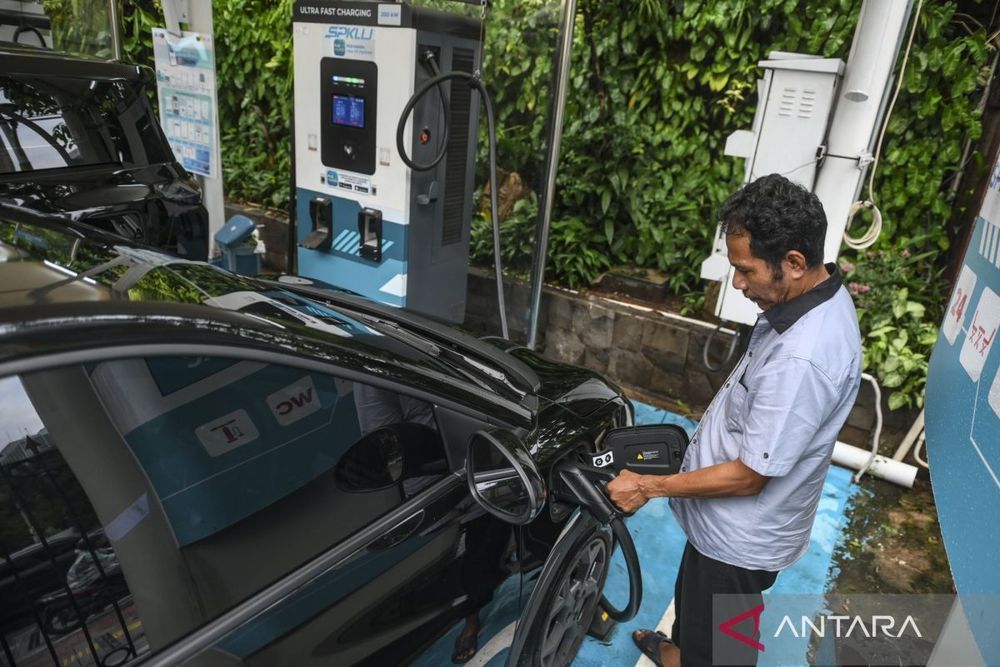
The Indef director also underscored the importance of developing adequate infrastructure, particularly recharging stations, to boost public confidence in EV adoption. As of May 2026, the number of public EV charging stations built across Indonesia had reached 5,000 units at 3,162 locations.
Astuti suggested the government extend incentives to manufacturers to encourage mass production of affordable EVs with high domestic component levels, a move that could help Indonesia capture more value from its natural resource advantages while building a competitive domestic automotive industry.