
Indonesia streamlines waste-to-energy investment with comprehensive support package
New presidential regulation provides land, permits and power infrastructure to attract investors as Indonesia tackles waste crisis affecting 75 percent of its 51.8 million tons of annual waste.
Indonesia streamlines waste-to-energy investment with comprehensive support package
Indonesia has introduced sweeping reforms to attract investment in waste-to-energy infrastructure, offering investors land, streamlined permits and electricity transmission support under a new regulatory framework designed to address the country's mounting waste crisis.
PT Daya Energi Bersih Nusantara (Denera), the clean energy subsidiary of Danantara Indonesia, confirmed that Presidential Regulation No. 109 of 2025, signed by President Prabowo Subianto on October 10, 2025, fundamentally improves the commercial environment for waste-to-energy projects by providing greater business certainty and government backing.
The regulation represents a dramatic shift from previous policy. Under the earlier framework established by Presidential Regulation No. 35 of 2018, which targeted development in 12 cities, only two operational facilities were completed due to budget constraints, procurement challenges and insufficient waste supplies. The new regulation expands the program to 33 cities and allows any city or regency to qualify if it meets criteria including a minimum daily waste supply of 1,000 tons.
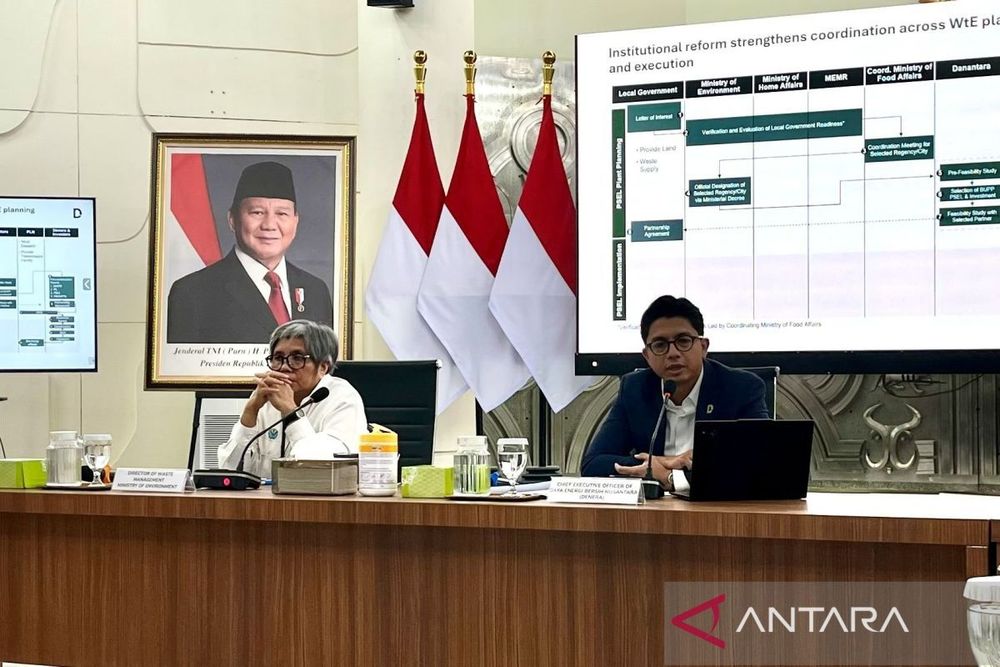
Denera CEO Fadli Rahman outlined the enhanced support package during a press conference in Jakarta on Monday. Local authorities will now provide land for waste-to-energy facilities, while PT Perusahaan Listrik Negara (PLN), Indonesia's state-owned electricity monopoly, will develop transmission infrastructure. Danantara, established on February 24, 2025, as Indonesia's sovereign wealth fund with assets approaching one trillion US dollars, will coordinate permits alongside other ministries.
This contrasts sharply with previous requirements that forced investors to secure land and build transmission facilities themselves, Rahman noted. The centralized permit process eliminates the need for investors to pursue approvals individually from multiple local authorities.
Commercial incentives strengthen investment case
The new framework establishes a fixed electricity tariff of 0.20 US dollars per kilowatt-hour for all project capacities, a substantial increase from the previous sliding scale of approximately 0.13 US dollars per kilowatt-hour. Power purchase agreements with PLN will run for 30 years, providing long-term revenue certainty. While the regulation eliminates tipping fees that previously provided operators with up to 500,000 Indonesian rupiah per ton of processed waste, the higher electricity tariff compensates for this change and simplifies the financial structure.
Rahman emphasized that commercial terms would remain stable for at least 30 years in accordance with operating contracts, with minimal room for renegotiation. Local authorities are mandated to guarantee a minimum supply of 1,000 tons of waste daily to ensure facility operations.
The reforms address an acute waste emergency. In 2023, approximately 60.99 percent of Indonesia's waste remained unmanaged and was disposed of through open dumping systems. In 2026, national waste is projected to reach 51.8 million tons, with approximately 75 percent still managed improperly. The country's current waste management rate stands at around 24 percent.
Institutional reforms accelerate project timelines
Rahman identified institutional reforms as the strongest element of the presidential regulation, noting they streamline bureaucratic requirements and accelerate project timelines. Under the previous arrangement, local governments handled most legal requirements for waste-to-energy projects. The current system centralizes the process through relevant central government institutions.
Danantara, which was established to consolidate nearly 900 state-owned enterprises down to 200 under its operational holding entity, owns 99 percent of shares in state-owned enterprises while the Ministry of State-Owned Enterprises retains one percent. This institutional capacity enables coordinated permit processing across multiple agencies.
Local governments now focus primarily on providing land and ensuring waste supplies for facilities. Rahman remarked that this explains why progress is faster than before.
Environment Minister Mohammad Jumhur Hidayat has stated that waste-to-energy facilities are expected to process around 22.5 percent of Indonesia's waste under the national roadmap, primarily in metropolitan areas and urban agglomerations. The facilities form part of a broader integrated strategy to achieve the national target of 100 percent managed waste by the end of 2029.
According to Indonesia's National Medium-Term Development Plan for 2025-2029, the proportion of waste managed in 2026 is targeted at 63.41 percent, rising progressively toward full coverage within three years.