
Indonesia launches employment program for drug rehabilitation graduates
The Manpower Ministry will provide training and job placement for people completing drug rehabilitation as part of a multi-agency initiative addressing the needs of 3.3 million narcotics users nationwide.
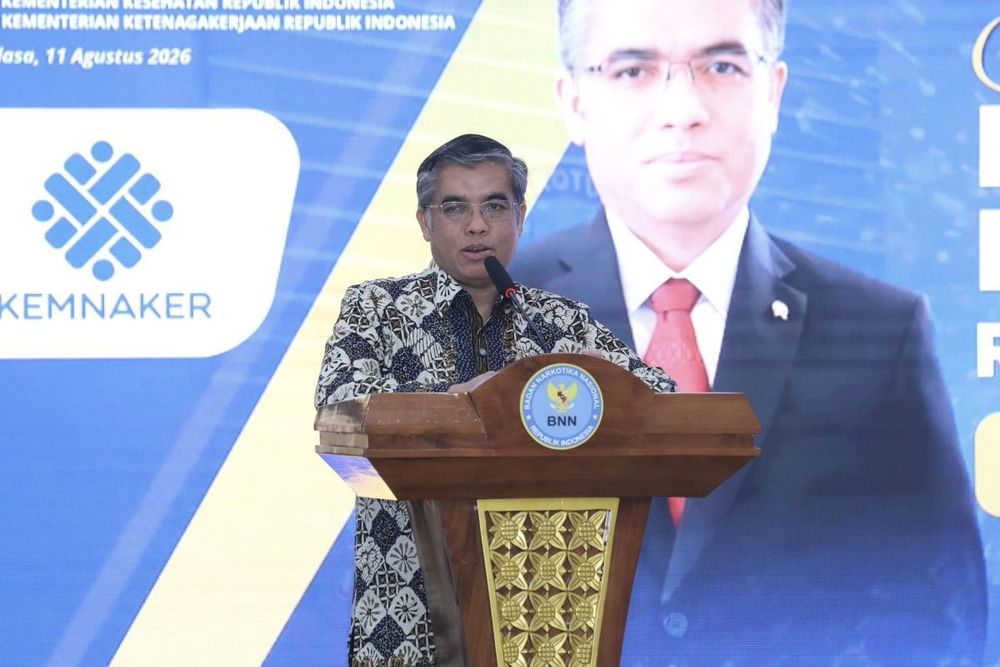
Ministry to facilitate training, employment for drug abuse survivors
Indonesia's Manpower Ministry announced Wednesday it will provide vocational training and employment opportunities for individuals who have completed drug rehabilitation, marking a significant expansion of government support beyond treatment.
The initiative addresses the needs of an estimated 3.3 million narcotics users as of July 2025, a figure that has declined from 3.66 million in 2021. Methamphetamine and marijuana remain the most commonly abused substances among users aged 15 to 64.
"Recovery is not the end of the process. After rehabilitation, they need opportunities to return to work, be productive, and live independently," Manpower Minister Yassierli said Wednesday.
The program operates under a memorandum of understanding signed Tuesday at the National Narcotics Board's Human Resources Development Center in Bogor, West Java. The agreement unites the Manpower Ministry, National Narcotics Board, Social Affairs Ministry and Health Ministry in coordinating rehabilitation and post-rehabilitation services.
Legal framework supports employment access
The initiative builds on Indonesia's 2009 Narcotics Law, which mandates rehabilitation for drug users while directing dealers to incarceration. This legal distinction has shaped the country's approach to addressing substance abuse as a health issue rather than purely a criminal matter.
Yassierli emphasized that all citizens should have equal access to decent employment without discrimination, a principle enshrined in Indonesia's ratification of ILO Convention No. 111 through Law No. 21 of 1999. The country's Manpower Law guarantees equal employment opportunities regardless of background.
"Rehabilitation should not be measured solely by physical and psychological recovery," the minister said, adding that continued support helps people rebuild their lives and confidence.
Three-track support system
The ministry will offer competency-based training aligned with labor market demands, preparing participants for positions matching their abilities and interests. For job seekers, officials will facilitate placement by connecting skills with employer requirements.
Those pursuing self-employment can access entrepreneurship training covering technical skills, business knowledge and mentoring customized to their ventures.
The program draws on infrastructure including more than 400 addiction treatment facilities across hospitals, government narcotics clinics and privately-run centers. Indonesia introduced national standards for drug treatment services in 2022 through Standar Nasional Indonesia 8807:2022, establishing unified protocols for rehabilitation quality.
National Narcotics Board Chief Suyudi Ario Seto stressed that comprehensive drug control requires coordinated action.
"BNN cannot work alone in this matter. Collaboration and support from relevant ministries and agencies are crucial," Seto said.
The board, established in 2002, coordinates 25 government agencies in prevention, interdiction and rehabilitation activities. More than 147,000 drug offenders currently constitute 53 percent of Indonesia's prison population.
Yassierli, who was appointed minister in October 2024 under President Prabowo Subianto's administration, holds a doctorate from Virginia Polytechnic Institute and State University and previously specialized in industrial engineering as an academic.