
PT Impack Pratama launches polymer training institute with German partner to address Indonesia's skills gap
PT Impack Pratama Industri invests Rp250 billion to develop the Impack Polymer Science Institute in partnership with SKZ German Plastics Center, aiming to provide internationally standardized training and reduce skills mismatch in Indonesia's growing polymer industry.
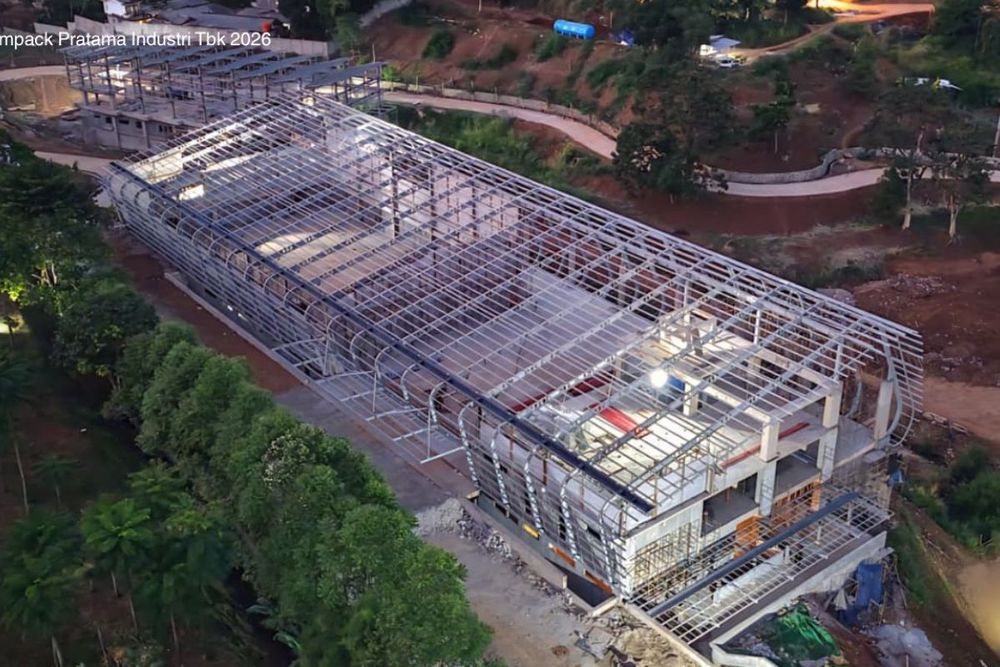
IMPC develops international-standard polymer training center
PT Impack Pratama Industri Tbk is developing the Impack Polymer Science Institute (IPSI), a specialized polymer training facility established in collaboration with SKZ – German Plastics Center, Europe's largest plastics institute. The initiative represents a Rp250 billion investment aimed at strengthening Indonesia's workforce capabilities in the rapidly expanding polymer sector.
Founded in 1981 and currently employing approximately 2,984 people, PT Impack Pratama has positioned itself as a regional building materials player with manufacturing facilities across Indonesia, New Zealand, Australia, Malaysia, and Vietnam. The company now seeks to address a critical challenge facing Indonesia's plastics industry: the significant gap between vocational education outputs and actual industry requirements.
Skills mismatch has been identified as one of the primary drivers of unemployment in Indonesia, where the open unemployment rate stood at 4.68% in February 2026, equivalent to approximately 7.24 million people. The disconnect between technical education programs and enterprise needs has contributed to both unemployment and underemployment, particularly among young workers.
Partnership with European leader
IPSI's collaboration with SKZ brings substantial expertise to Indonesia. Founded in 1961, SKZ serves more than 10,000 participants annually in training programs and is recognized as the largest plastics institute of its kind in Europe. This partnership ensures that IPSI will deliver internationally benchmarked education aligned with global industry standards.
Between May and July 2026, IPSI conducted an extensive Training of Trainers program for its instructors. The program included 12 days of online training in May and June, followed by five days of in-person instruction from SKZ experts from July 27 to 31. This comprehensive preparation equipped IPSI instructors with advanced technical knowledge, teaching methodologies, and international best practices.
Addressing industry demand
The timing of IPSI's launch aligns with significant growth in Indonesia's polymer sector. The country's plastics market is projected to expand at a compound annual growth rate of 5.1% from 2026 to 2033, reaching an estimated USD 13.09 billion by 2033. The polypropylene segment alone reached 1.93 million tons in 2026 and is forecast to grow at 5.38% annually to reach 2.51 million tons by 2031.
Despite this growth, Indonesia remains heavily dependent on imports. During the first quarter of 2026, the country imported 1.65 million tons of plastics and plastic products valued at approximately IDR 44.11 trillion. Annual polymer consumption stands at 7-8 million metric tons, yet domestic production covers only a fraction of this demand.
IPSI's strategic location in the West Java industrial corridor positions it at the heart of Indonesia's plastics manufacturing hub. The Bekasi, Cikarang, Karawang, Tangerang, and Cikande corridor represents the country's largest concentration of plastics converters, with hundreds of polypropylene, polyethylene, and PVC processing facilities.
Three-tiered training approach
IPSI will offer three specialized programs designed to meet evolving industry needs. The Fundamentals of Polymer Science and Manufacturing program provides foundational knowledge, while two Operator Training Programs focus on production operations and maintenance operations respectively. These courses deliver practical, industry-relevant skills ranging from polymer science basics to advanced manufacturing equipment operation and maintenance.
The programs are open to senior high school and vocational high school graduates, newly hired entry-level operators, and professionals seeking to deepen their expertise in polymer manufacturing and maintenance.
President Director Haryanto Tjiptodihardjo emphasized the strategic importance of the initiative.
The development of IPSI represents the Company's long-term investment in improving the quality of Indonesia's human capital. Through our collaboration with SKZ, we are committed to providing internationally standardized training to support the Government's efforts to reduce unemployment while creating greater opportunities for improved livelihoods and income, particularly for communities in underserved regions.
IPSI is expected to strengthen the availability of job-ready talent while contributing to the sustainable growth of Indonesia's polymer industry by ensuring workers possess competencies aligned with industry requirements. The institute aims to become an internationally benchmarked polymer learning center, creating pathways for career development and improved economic opportunities across the sector.