
Indonesia launches triple skilling strategy to prepare workforce for AI transformation
The Manpower Ministry unveils upskilling, reskilling and cross-skilling programs to equip young workers with AI-era competencies, as the nation races to capitalize on its demographic bonus before 2031.
Indonesia launches triple skilling strategy to prepare workforce for AI transformation
Indonesia's Manpower Ministry has rolled out a comprehensive workforce development strategy targeting young workers as artificial intelligence reshapes the nation's labor market. The triple skilling initiative, known as 3S, combines upskilling, reskilling and cross-skilling programs designed to align worker competencies with rapidly evolving industry demands.
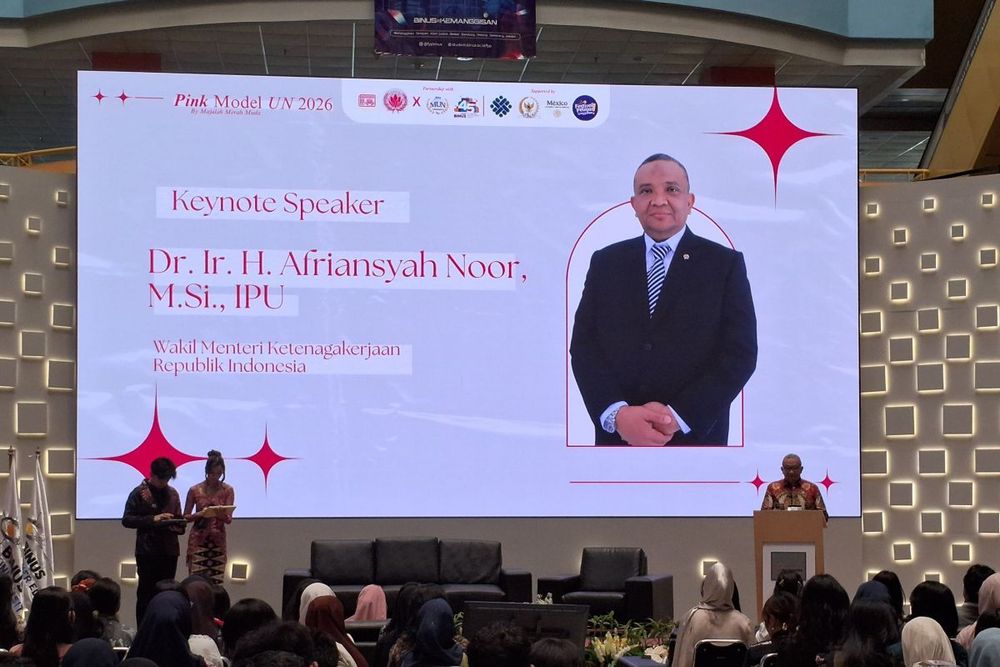
Deputy Minister of Manpower Afriansyah Noor outlined the strategy at the Pink Model United Nations 2026 at Binus University in Jakarta on Saturday, emphasizing that AI represents an opportunity rather than a threat to Indonesia's workforce.
"The Ministry of Manpower views AI transformation not as a threat to be feared, but as a golden opportunity to accelerate the productivity and competitiveness of our national and global workforce," Afriansyah said.
The timing of the initiative reflects demographic urgency. Indonesia's working-age population currently comprises 69.3 percent of the total population, totaling 201.06 million people out of 290.13 million. However, the nation faces a decisive window of approximately ten years to capitalize on this demographic advantage, as the dependency ratio is projected to begin climbing after 2031 when the elderly population expands.
Addressing skill mismatch and youth unemployment
The strategy directly responds to persistent workforce challenges. Youth unemployment stands at 16.26 percent among those aged 15-24 as of November 2025, the highest rate among all age groups despite overall unemployment dropping to 4.74 percent. International Labour Organization data reveals that at least 60 percent of Indonesian workers currently work in fields misaligned with their educational background, highlighting the scale of the skill mismatch problem.
"This extraordinary potential in numbers could become a boomerang if there is a skill mismatch between the skills possessed by young graduates and the actual needs of the modern labor market," Afriansyah warned.
Under the 3S framework, upskilling programs will enhance workers' existing capabilities, while reskilling will enable those affected by technological disruption to transition into new sectors. Cross-skilling will combine competencies from different fields to provide workers with greater career flexibility in an increasingly fluid job market.
Modernizing vocational training infrastructure
The ministry is reorienting vocational training curricula to incorporate AI literacy, data analysis and automation skills alongside critical thinking, work ethics, adaptability and leadership qualities. Afriansyah stressed that human capabilities such as critical thinking and leadership cannot be replaced by machines or algorithms.
Vocational training and productivity centers, as well as community vocational training facilities, are being upgraded with technology-based infrastructure. Instructor capabilities are being enhanced to keep pace with industry requirements, while maintaining close connections between training programs and business sector needs.
Participants in these programs are encouraged to obtain national competency certification from the National Professional Certification Agency, an independent government institution established under Law No. 13 of 2003 on Manpower. The agency is responsible for implementing professional competency certifications based on Indonesia's National Work Competency Standards.
Balancing opportunity and disruption
The initiative addresses both the promise and challenges of AI adoption. McKinsey projects that AI could contribute up to 366 billion US dollars annually to Indonesia's GDP by 2030. However, the World Economic Forum predicts that automation and AI could displace up to 23 million jobs in the same timeframe.
International research from the ILO suggests that AI is more likely to augment than destroy jobs by automating specific tasks rather than replacing entire roles. The study indicates that the greatest impact will likely be on job quality, including work intensity and autonomy, rather than wholesale job destruction.
Beyond technical skills development, the ministry plans to strengthen worker protections as flexible work arrangements, including freelance employment, become more prevalent. The program also aims to expand inclusive access to vocational training, with particular focus on increasing women's participation in science, technology, engineering and mathematics fields, creating disability-friendly facilities, and broadening access for young people in Indonesia's underdeveloped, frontier and outermost regions.
The 3S strategy aligns with the Golden Indonesia 2045 Vision, launched by President Joko Widodo in May 2019. The national development framework targets Indonesia becoming the world's fifth largest economy with a GDP of 7.3 trillion US dollars and per capita income of 25,000 US dollars by 2045, the country's centennial year of independence.
Afriansyah urged young Indonesians to embrace continuous learning as technology advances.
"Be an adaptive generation, keep improving your competencies, make use of all training facilities provided by the state, and most importantly, safeguard together the vision of Golden Indonesia 2045," he said.