
Indonesia's Education Minister Says Free Meals Encourage School Attendance
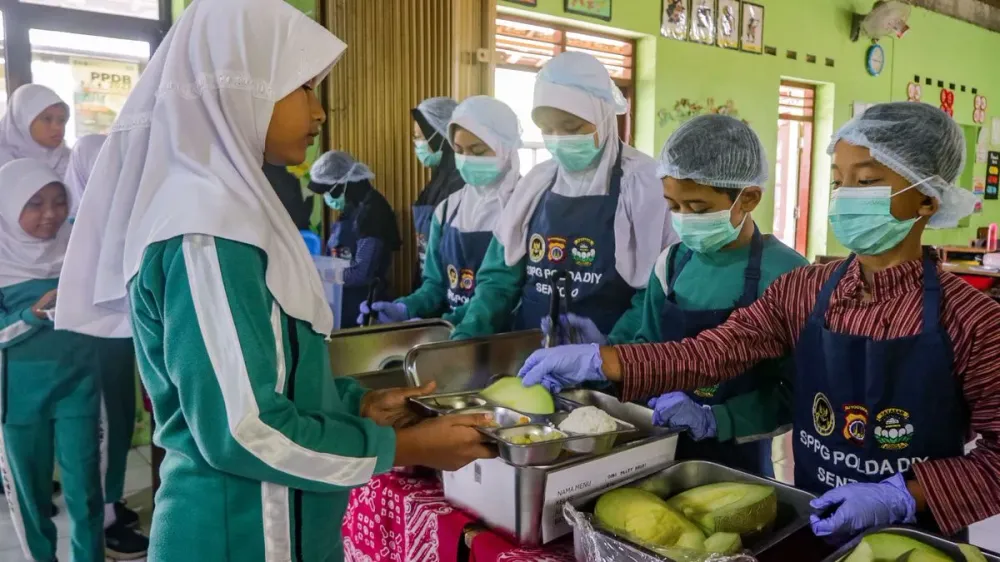
Indonesia's Free Nutritious Meals Program (MBG) gives children an incentive to attend school and participate in lessons, Minister of Basic and Secondary Education Abdul Mu'ti said on October 31. He also described school meals as an opportunity to teach everyday habits, from waiting in line to keeping clean.

Attendance and meal quality
In a press release, Mu'ti cited studies linking MBG to school attendance. "Many children go to school to have healthy, nutritious meals," he said. He compared that attraction to food offered through the Friday Blessings program at mosques, while noting that MBG operates on school days, not just Fridays.
A National Economic Council (DEN) study presented to President Prabowo Subianto on October 20, 2026, found lower absenteeism among MBG recipients than among students who did not receive the meals. According to the Cabinet Secretariat, the difference was greatest for children in the poorest households, the lowest welfare decile. More frequent meal distribution at schools was associated with a further decline in absenteeism.
The study drew on a dedicated MBG module in the National Socioeconomic Survey (Susenas). Developed with Statistics Indonesia (BPS), the module has been implemented nationwide since September 2025.
Students' assessments of the food also varied with their reported motivation to learn. Among those who gave meal quality a "very good" rating, 95 percent reported greater motivation. That share was significantly lower among students who rated the meals poorly.
Building habits around school meals
Mu'ti said the program could teach character and values from an early age through routines such as lining up in an orderly manner, maintaining cleanliness, praying before and after eating, and appreciating the food provided. He expressed hope that repeating these activities at school would strengthen students' character and that MBG would support both their nutritional needs and their enthusiasm for learning, helping improve education quality.
He has also linked MBG to the "Seven Habits of Great Indonesian Children" character program. Its seven habits are getting up early, religious observance, exercise, healthy eating, a love of learning, community engagement, and going to bed early.
Coverage and recipient records
Mu'ti reported on June 11, 2026, that MBG had reached 80.7 percent of students nationwide as of June 10: about 43 million out of roughly 53 million students.
In his October 31 statement, he said all students were included in the Basic Education Data system, known as Dapodik. He said officials were continuing to refine the integration of recipient data with that system to ensure beneficiaries were officially registered students.
Coverage has not been evenly distributed geographically. September 2025 Susenas data cited by DEN showed a greater concentration of recipients in urban areas than in rural communities. The council recommended giving priority to rural and low-income communities, as well as underdeveloped, frontier, and outermost regions.
Funding, distribution and food safety
According to Wikipedia's entry on MBG, the program began nationwide on January 6, 2025. It has a 2026 budget of IDR 335 trillion, about US$21 billion, and a government target of 82.9 million beneficiaries by 2029. Central kitchens, known as SPPG, prepare the meals for delivery to schools.
The entry also records a March 2026 government announcement that MBG would be scaled down because of "fiscal efficiency" concerns stemming from the 2026 fuel crisis. In August, authorities instructed that meals be eaten within four hours of cooking to help prevent food poisoning.