
Indonesia and Germany consider shared research funding and expanded academic exchanges
Indonesia and Germany are exploring ways to jointly fund research, expand academic exchanges and strengthen universities' capabilities after an October 21, 2026, meeting in Jakarta. The discussions included a possible working group to identify priorities and participating institutions.

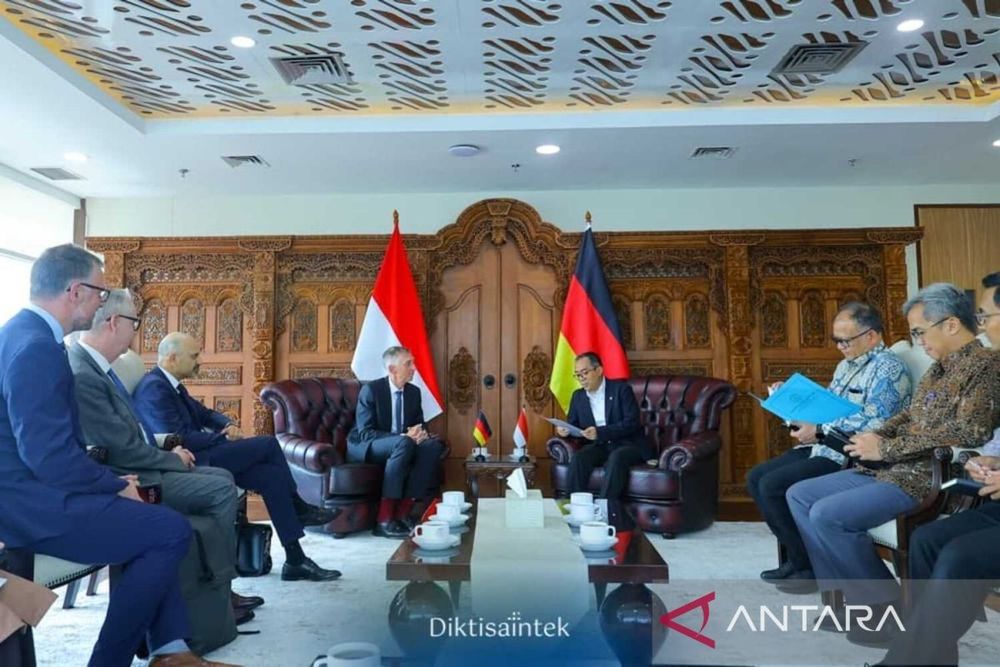
Research funding and university cooperation
Higher Education, Science, and Technology Minister Brian Yuliarto hosted German Ambassador Ralf Beste and German Academic Exchange Service (DAAD) President Joybrato Mukherjee at the ministry's office. In a statement on October 22, Yuliarto outlined a possible funding arrangement involving contributions from both countries.
"We are considering the development of joint research. We could provide funding from the Indonesian side, with the German side also contributing funding," Yuliarto said.
Yuliarto said closer cooperation could give Indonesian students and researchers more opportunities for international academic experience and support research with meaningful impact. The proposed partnership would also seek to improve access and mobility for students and professors, with universities exchanging knowledge and culture.
Mukherjee emphasized that cooperation should benefit both countries, identifying biodiversity research and urban development as areas where Indonesian and German expertise could complement each other. Beste pointed to Germany's affordable education costs as an advantage for Indonesians considering study abroad.
The two sides discussed forming an operational Joint Working Group to set priorities, identify university partners and work out feasible arrangements for cooperation. They envision the initiative as a starting point for sustained international collaboration supporting higher education, research and national development.
Earlier discussions set out a broader agenda
Joint research funding was also on the agenda when Yuliarto and Beste met in Jakarta on February 18, 2026. According to the ministry, those talks covered higher education, research and skilled workforce development, including joint-degree and double-degree programs, an expansion of doctoral programs and academic exchanges.
The February discussions linked cooperation to Indonesia's national priorities: food security, renewable energy, clean water, industrial downstreaming, digitalization and national defense. Beste described educational cooperation and student exchanges as a top priority for the German Embassy in Jakarta. He also raised the planned visit by the DAAD president, who serves as rector of the University of Cologne.
Scholarships and institutional partnerships
The proposed cooperation comes alongside established scholarship ties. DAAD Indonesia marked its 35th year of operation in 2025. DAAD first awarded scholarships to Indonesian students in 1952 and says it has since supported thousands of Indonesian scholars during study and research stays in Germany.
A recent university agreement provides another example of bilateral academic cooperation. In September 2026, RWTH Aachen University signed a university-wide agreement with Universitas Diponegoro (UNDIP) in Semarang, Indonesia. The agreement is RWTH's second formal partnership with an Indonesian university.
Central to that partnership is the Circular Economy Scholarship Program (CESP), which began in spring 2025 and is scheduled to continue through at least 2028. Indonesia's Ministry of Education, Culture, Research, and Technology funds participating Indonesian doctoral candidates, who train at RWTH with supervisors from both countries. Their work covers mechanical pretreatment of electronic waste, innovative plastic recycling and the socioeconomic aspects of the circular economy.