
Forest Fire Haze Limits Visibility in Palangka Raya as Health Warnings Continue
Drivers in Palangka Raya, Central Kalimantan, faced thick smoke from forest fires on Saturday, October 24, 2026. Residents described hazardous visibility as health authorities urged people to limit time outdoors and weather officials forecast increasing chances of rain.

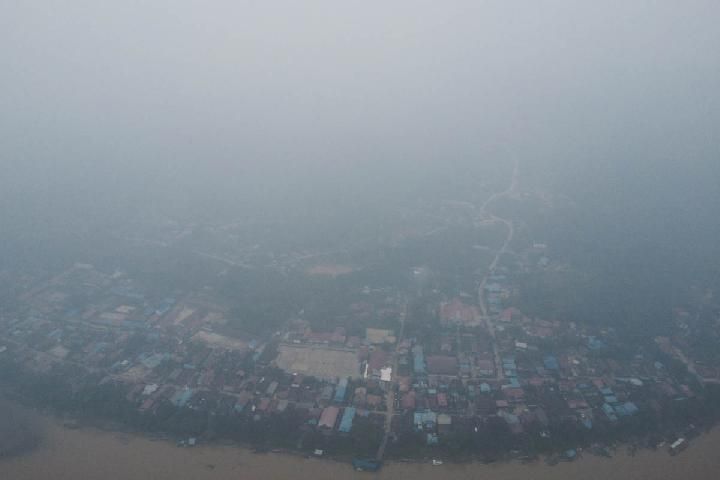
Smoke disrupts travel as fire totals mount
Wina, a Palangka Raya resident who needed to go out on errands, told ANTARA she slowed down and drove cautiously through the smoke. "The haze is very thick today, and visibility while driving is becoming increasingly limited," she said. Another resident, Edy, also warned that poor visibility made driving dangerous and required extra care.
The Central Kalimantan Forest and Land Fire Emergency Response Command Post put the province's cumulative fire count at 6,952 as of October 23, with 20,108.18 hectares burned. Within that total, Palangka Raya had recorded 957 fires covering 1,286.94 hectares.
The report also listed 51 fires affecting 140.31 hectares across the province as of 6 p.m. local time on October 23. Three of those fires were in Palangka Raya, where they burned 15.95 hectares.
Health officials urge precautions
Health Minister Budi Gunadi Sadikin had urged residents to avoid unnecessary trips outside, particularly toddlers, pregnant women and older people. During a visit to Palangka Raya's healthcare facilities, he also recommended KN95 masks to reduce exposure to airborne particles and immediate care at a community health center for anyone experiencing shortness of breath.
Budi's inspection included Doris Sylvanus Regional General Hospital, Menteng and Panarung community health centers, the Oxygen House at Bundaran Besar Green Open Space, and other oxygen facilities. He said the visit was intended to check that facilities were ready and medical support was available to haze-affected communities.
In an October 20 report, BBC News said PM2.5 concentrations in Palangka Raya had reportedly exceeded 3,000 µg/m³ at times, more than 200 times the level considered acceptable by the World Health Organization. The city's health office had also recorded a 25% rise in acute respiratory infection cases.
Earlier national figures showed the wider health burden. Indonesia's health ministry said 113,336 people had received treatment for wildfire-related respiratory conditions by September 9, up from 50,891 on September 1. More than 12.5 million people across seven provinces had been exposed to haze.
Weather operations show uneven results
Central Kalimantan is one of five provinces prioritized for fire response by Indonesia's National Disaster Mitigation Agency, or BNPB, alongside South Sumatra, South Kalimantan, Jambi and West Kalimantan. The agency reported that it had dispersed 3,100 kilograms of dry ice over five sorties since October 20, with a further 800 kilograms deployed in one sortie over South Sumatra.
BNPB reported that weather-modification operations coincided with visibility in Palembang, South Sumatra, improving from 700 meters to 7,000 meters, while PM2.5 pollution declined.
Central Kalimantan had not seen comparable visibility gains. Indonesia's Meteorology, Climatology and Geophysics Agency, known as BMKG, said on October 23 that weather-modification efforts there had not yet produced optimal results. It attributed the difference from South Sumatra partly to Central Kalimantan's much larger area, though it said the PM2.5 index had fallen between morning and afternoon.
Peat fires and a trial below ground
Indonesia holds about 36% of the world's tropical peatlands, according to Down To Earth. The publication cited a 2025 study finding that peat fires release roughly three times as much fine particulate matter as other tropical forest fires. More than 210,000 hotspots were detected in Indonesian peatland areas from January through August 2026.
In South Kalimantan, authorities tested an approach called "undercooling." The technique uses pipes inserted as deep as two meters into peat to deliver water and a firefighting liquid directly to underground hotspots.
Police said a trial near Banjarbaru brought underground temperatures down from about 120°C to 30°C. Follow-up thermal images no longer showed hotspots, they said.
Regional disruption and the rain forecast
The effects extended beyond Indonesia. BBC News reported on October 20 that toxic haze had affected Indonesia, Malaysia, Singapore and parts of the Philippines for weeks. Indonesia had canceled more than 2,600 domestic flights, Malaysia had closed schools, and Singapore had issued notices to at least 10 Indonesian companies suspected of links to the fires.
A study by Indonesia's Center of Economic and Law Studies estimated that the 2026 fires could cause nearly 30 trillion rupiah, or about $1.7 billion, in economic losses. Health-related costs could exceed 100 trillion rupiah. BBC News noted that the region's losses during the 2015 haze episode were around $20 billion.
BMKG forecast a greater chance of rain in Central Kalimantan starting October 24, with rainfall expected to reach the moderate category at about 20 millimeters or more. Rain potential was forecast to increase further across most of the province from October 25 through 27. The government hoped to make the most of those conditions to help extinguish active fire hotspots.