
Indonesia names two more companies as suspects in wildfire investigations
Indonesia's Forestry Ministry charged two companies on Saturday in investigations into forest and peatland fires in Kalimantan and Sumatra. The cases involve a palm oil company with a Singapore-based parent and a forest concession holder in West Kalimantan.

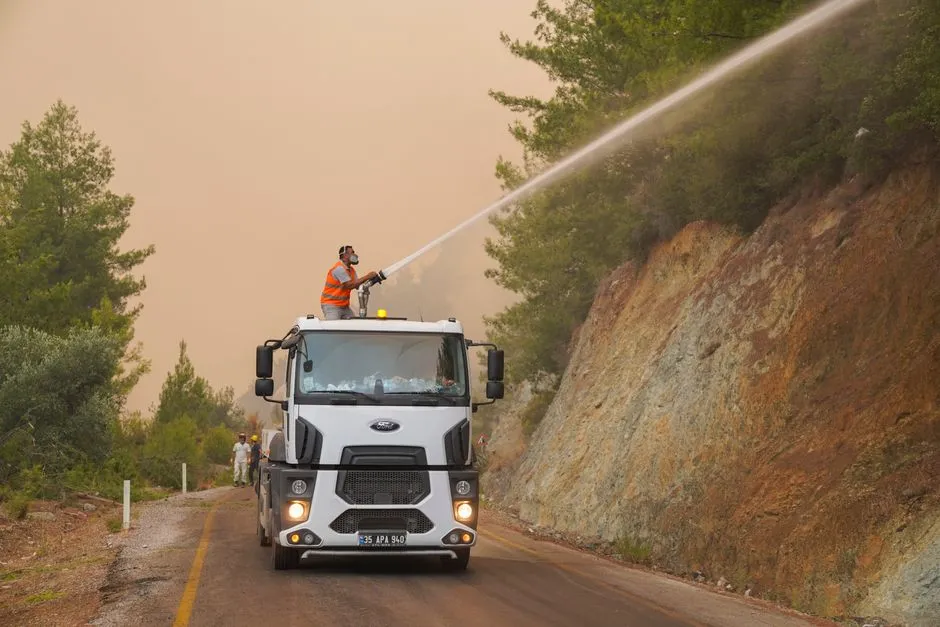
Allegations against GAP and MAP
The ministry accused palm oil company GAP of causing fires in East Kotawaringin, Central Kalimantan, that spread into a nearby forest during 2025 and 2026, The Jakarta Post reported. It put the burned area at 901 hectares, roughly equivalent to 1,260 standard soccer fields.
The other company, identified as MAP, allegedly used fires to clear land, burning its concession in a forested area near West Kalimantan's Mempawah River. MAP operates under a forest utilization permit, known as a PBPH, a type of permit typically leased for timber and pulpwood plantations.
The charges came amid growing demands for accountability over haze pollution. During the preceding week, wildfire cases had implicated individuals and companies across 10 provinces in Kalimantan, Sumatra and Sulawesi.
"Laws in Indonesia apply equally to every company operating in the country, whether they use domestic or foreign capital investments," Dwi Januanto Nugroho, the ministry's director general of law enforcement, said in a statement.
Wider police investigations
President Prabowo Subianto directed police and prosecutors at an Oct. 21, 2026, Cabinet meeting to pursue both corporate and individual responsibility for the fires. According to The Straits Times, he described the fires as a crime against humanity and compared them to environmental terrorism.
At an Oct. 29 briefing, National Police Criminal Investigation Agency (Bareskrim) chief Commissioner General Asep Safrudin said 20 companies had been named suspects in forest and land fire cases in 2026. The Straits Times and The Malaysian Reserve reported that 16 were domestically invested businesses and four had foreign investment from Singapore, Malaysia and South Korea.
Police were conducting criminal investigations into 97 companies, including 22 with foreign backing. The 20 corporate suspects were drawn from that group, and police said further investigations could lead to more companies being named.
The Malaysian Reserve reported that police had received 104 reports involving corporations by the briefing date, accounting for 29,168.78 hectares of burned land. Another 287 reports concerned individuals and covered 5,859.12 hectares; police had named 245 people as suspects.
The corporate investigations fall under Articles 98, 99 and 108 of Indonesia's 2009 Environmental Protection and Management Law. These provisions address intentional or negligent environmental offenses and land burning, with maximum penalties of 15 years in prison for individuals found liable and fines of 15 billion rupiah.
Permit action and restoration orders
Police also recommended that authorities revoke 23 corporations' business licenses, The Straits Times reported. The reasons cited included recurring fires within concessions, fires starting on company land, insufficient firefighting facilities and burned areas larger than 500 hectares.
Separately, Forestry Minister Raja Juli Antoni said administrative sanctions had been imposed on 32 companies, according to Jakarta Globe. The measures included revoking forest-utilization permits and requiring companies to restore damaged ecosystems.
Those companies' concessions span 1.93 million hectares, with 18,489 hectares recorded as burned. The Forestry Ministry was also handling about 120 fire-related cases.
Smoke exposure and cross-border enforcement
About 202,000 hectares burned in Indonesia between January and July 2026, an area three times the size of Jakarta, Tempo reported. That total excludes land burned during the following three months. Haze from the fires reached Singapore, Malaysia, Cambodia and the Philippines.
Indonesia's Health Ministry attributed 283,270 acute respiratory infection cases across seven provinces to wildfire smoke as of Oct. 14, 2026. The tally included 63,711 cases among children younger than five, according to Tempo.
Singapore's National Environment Agency issued notices to 10 Indonesian companies under the Transboundary Haze Pollution Act 2014, Jakarta Globe reported. Seven were linked to fires in Sumatra; the remaining three held Kalimantan concessions associated with smoke that may have reached Singapore.
Convictions under the Singapore law can bring fines of up to S$100,000 a day, subject to a S$2 million cap.