
Nusantara Authority and Volunteers Plant About 1,000 Seedlings in Fire-Damaged Forest
About 1,000 endemic tree seedlings were planted across two hectares of Bukit Soeharto Grand Forest Park in East Kalimantan on October 31, 2026. Indonesia's Nusantara Capital Authority (OIKN) joined roughly 400 to 500 volunteers for the effort, organized by local youth group Borneo Kind.

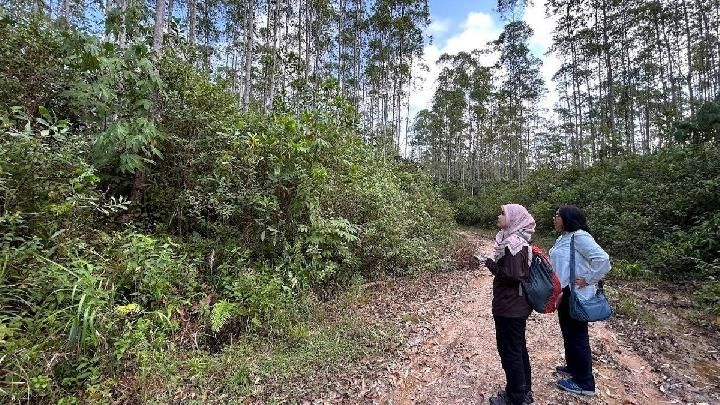
A community-funded restoration effort
The planting site lies in protected forest within the development area of Nusantara, Indonesia's future capital, which covers parts of Kutai Kartanegara and North Penajam Paser districts. Speaking in Kutai Kartanegara, OIKN Head Basuki Hadimuljono said the initiative supported Nusantara's vision of becoming a forest city.
Public donations paid for the project, while OIKN, the East Kalimantan provincial government and other local stakeholders supplied infrastructure and facilities, according to Borneo Kind representative Wawan Irawan. He said the group chose the park because it needed help recovering from past fires.
Hadimuljono described the event, which brought together volunteers from different parts of society, as cooperation between government and the community. He urged people to make tree planting an ongoing part of their lives and said he hoped the initiative would inspire similar environmental efforts elsewhere in East Kalimantan.
The former public works minister also emphasized the role of young people in sustaining Nusantara's forests. He said OIKN would continue exploring ways to work with them as it develops the future capital into a green, sustainable city.
Fire damage and wildlife habitat
The park was among the areas affected by recent fires. ANTARA News reported that Hadimuljono said on October 21, 2026, that forest and land fires across East Kalimantan had burned about 1,600 hectares. Roughly 900 hectares were inside Bukit Soeharto Grand Forest Park, and about 600 hectares were in oil palm plantation concessions. All identified hotspots had been extinguished, he said, and Nusantara's construction zone was unaffected.
The forest's rehabilitation needs extend beyond those fires. According to the International Parks visitor guide, a 2018 assessment classified 71 percent of the park as being in critical condition and needing rehabilitation after decades of logging, repeated fires and other degradation.
The guide puts the park's size at roughly 61,850 hectares, or about 618 square kilometers. Also known as Taman Hutan Raya Bukit Soeharto, it spans the corridor between Samarinda and Balikpapan in Kutai Kartanegara and North Penajam Paser districts. It was reclassified as a grand forest park in 2004 and is managed by the East Kalimantan provincial government in cooperation with the Ministry of Environment and Forestry.
Irawan said the planting effort was intended to restore habitat for wildlife endemic to Kalimantan, including orangutans. The park also has a history of orangutan rehabilitation: the International Parks guide says the Wanariset Samboja rehabilitation center operated there before relocating. The Borneo Orangutan Survival (BOS) Foundation established the program in 1991; it later became the Samboja Lestari center.
Nusantara's broader restoration plans
The planting adds to restoration work elsewhere in Nusantara. In remarks reported by ANTARA News on July 31, 2026, Hadimuljono said about five million trees had been planted there from 2022 through 2026. He also said OIKN's goal was to designate 65 percent of Nusantara's total area as protected land.
OIKN describes its approach as "rewilding," with the aim of recovering ecosystem functions rather than only replacing trees, according to ANTARA News. Two wildlife corridors have already been built along the Balikpapan-Nusantara Toll Road to reconnect fragmented habitats.