
Indonesia urges three-step ecological transition with Muhammadiyah
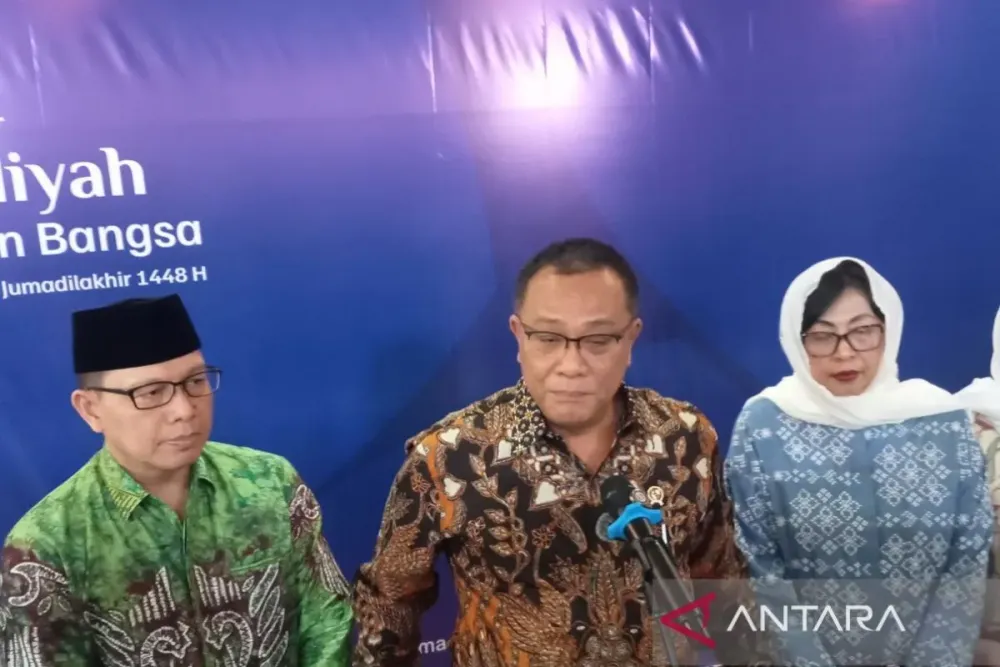
Indonesia's Environment Minister Jumhur Hidayat called for acknowledging past environmental mistakes, stopping destructive practices and repairing damaged ecosystems as part of a joint initiative with Muhammadiyah. Speaking in Yogyakarta on October 30, 2026, he said government, businesses and the public each had responsibilities in carrying out the transition.

A restoration movement with religious and legal dimensions
Jumhur discussed the initiative during a visit to Muhammadiyah's head office, where he met the organization's chairman, Haedar Nashir. According to Muhammadiyah.or.id, the Ministry of Environment and Muhammadiyah's Central Board presented "ecological conversion," or tobat ekologis, as a national restoration movement bringing together moral, religious and law-enforcement approaches.
The initiative builds on cooperation already underway, including environmental education and waste management at several Muhammadiyah campuses.
"An ecological conversion is not merely an expression of regret. It requires the courage to change how we live, do business, and make decisions," Jumhur said after the discussion.
Haedar advocated a national approach of building without destroying, which he connected to the Islamic principle of Ihsan. He also warned against an extreme environmental romanticism that would prohibit all use of nature, arguing instead for empowering communities to manage it responsibly.
As an example of Muhammadiyah's conservation work, Haedar described its expanding Wakaf Hutan, or forest endowment, movement. The organization is replanting trees on vacant land, particularly its waqf land.
Government enforcement and business obligations
Jumhur said the government must change its own practices rather than simply demand changes from citizens. He called for reviewing policies, tightening oversight, responding quickly to public grievances and enforcing environmental laws firmly. Approvals must carry obligations beyond paperwork: authorities should enforce and audit commitments to environmental management and monitoring.
Businesses, he said, need to make environmental responsibility part of everyday operations, not a ceremonial activity. That includes managing waste, controlling emissions, using resources efficiently and restoring ecosystems.
For households, he recommended using fewer single-use products, separating waste, avoiding open burning, saving water and keeping local surroundings clean. But he said those efforts require adequate services and infrastructure; asking people to sort waste is insufficient if collection and processing are unavailable.
"Every party's responsibility must be proportional to the impact they create. Major polluters must not be let off the hook," he said.
Jumhur linked environmental damage to health, livelihoods and quality of life, citing polluted air and water, poorly managed waste and damaged ecosystems. He said the public should not bear the costs of environmental destruction while others benefit from nature, nor should current profits come at the expense of future generations' right to a healthy environment.
He said progress should be assessed through results people can experience: cleaner surroundings, reduced pollution, improved waste management and ecosystems that have been restored.
Forest loss and the health toll of pollution
The call comes against a backdrop of worsening forest loss. In satellite analysis published in April 2026, the NGO Auriga Nusantara estimated that Indonesia lost 433,751 hectares of forest in 2025, a 66% increase from the previous year and the highest level in eight years. The increase reversed a downward trend that had reached a historic low in 2021.
Auriga attributed part of that reversal to policy choices and government-backed projects, including the food estate program. It warned that continued losses could threaten Indonesia's goal of making its forestry and land-use sector a net carbon sink by 2030.
A separate assessment released October 29 by the Centre for Research on Energy and Clean Air (CREA) estimated 5,310 air pollution-related deaths in September 2026, up 42% from 3,740 in August. Of the September total, CREA attributed 3,560 deaths to forest and land fires, known as karhutla, and 1,750 to chronic pollution from non-fire urban and industrial sources.
CREA also reported that a record 57.8 million people encountered air quality ranging from "unhealthy" to "hazardous" in September. The national population-weighted average concentration of PM2.5 was 36 micrograms per cubic meter, more than seven times the World Health Organization's annual guideline of 5 micrograms per cubic meter.
Disaster funding and calls for an emergency declaration
According to CREA, the National Disaster Management Agency's budget fell 75%, from IDR 2 trillion in 2025 to IDR 491 billion in 2026. The assessment said the reduction severely limited the agency's response to the year's fire and haze crisis.
As of CREA's October 29 publication, President Prabowo Subianto had refused to declare the forest and land fires a national state of emergency despite appeals from parliament and environmental advocates. Protesters in Jakarta and Central Kalimantan had demonstrated on October 20, calling on the government to put public health first and designate karhutla a national disaster.