
Indonesia's haze dispute raises concerns over nationalist deflection
Indonesian officials' increasingly combative responses to Singapore and Malaysia over cross-border haze have prompted concerns that the government is using appeals to national loyalty to divert attention from its handling of the fires.

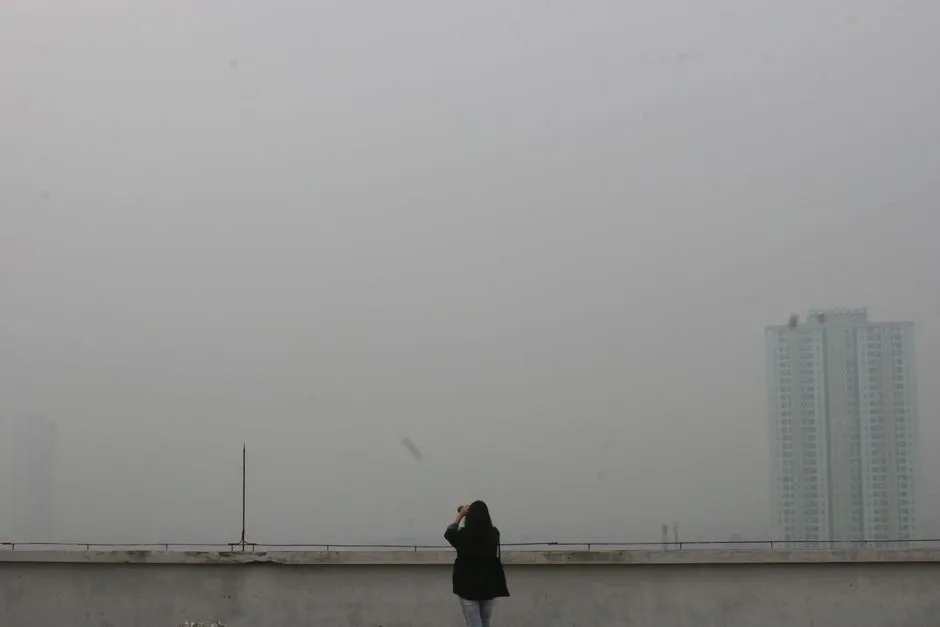
Health toll and pressure at home
Smoke from this year's forest and peatland fires in Sumatra and Kalimantan has spread to Singapore, Malaysia and the Philippines, degrading air quality and raising the risk of respiratory illness. East Timor has also been affected, The Independent reported.
Nusantara Atlas, which monitors deforestation, recorded more than 1.9 million hectares burned in Indonesia during the nine months through September 2026. The health ministry reported that more than 333,470 people across seven provinces had suffered acute respiratory illnesses since mid-August.
The government's response has drawn protests by thousands of students across Indonesia, according to The Independent. On Oct. 23, more than 500 demonstrators gathered outside the Central Kalimantan governor's office to demand that the fires be declared a national disaster.
The dispute has also reached ASEAN, which has convened a meeting on the crisis. Malaysian Environment Minister Arthur Joseph Kurup said Malaysia reserved the right to demand effective action from Indonesia and would bring the issue to an ASEAN meeting in Manila.
Company scrutiny and nationalist responses
Earlier in October, Singapore's Sustainability and Environment Minister Grace Fu announced plans to warn seven companies operating in Indonesia about the fires and haze. Some are registered in Singapore. The scrutiny concerns hot spots within their concessions during a severe drought linked to El Nino.
Singapore has also issued legal notices to 10 Indonesian companies suspected of contributing to the fires under its Transboundary Haze Pollution Act, and pledged legal action against those responsible. Separately, the Singapore stock exchange asked seven listed agricultural companies about potential connections to the fires.
President Prabowo Subianto directed police, prosecutors and the forestry ministry to investigate the companies behind the fires. He also challenged foreign critics, saying: "For certain countries that like to insult the Indonesian nation, in time we will reveal the companies."
As the diplomatic dispute has intensified in recent weeks, current and former Indonesian officials and other political figures have responded with nationalist rhetoric extending beyond the fires. The concern is that criticism of the government's response is being treated as a question of patriotism rather than accountability.
Some Malaysian consumers began boycotting Indonesian products after Indonesia's government communications chief, Syahganda Nainggolan, asserted that Singapore and Malaysia receive their oxygen from Indonesia's forests, the Straits Times reported.
Gas reductions and electricity plans
Following Fu's announcement, Coordinating Downstream and Energy Transition Minister Bahlil Lahadalia said last week that Indonesia might reduce gas exports to Singapore to prioritize domestic consumers. On Monday, he also indicated that the government was reviewing its planned electricity sales to Singapore.
Gas reductions began on Saturday, Oct. 24. SKK Migas head Djoko Siswanto put the cut in pipelined supplies at 31 million standard cubic feet per day: 15 million from the Natuna field in the Riau Islands and 16 million from Sumatra. He said the purpose was to keep domestic gas supplies reliable for electricity generation.
Singapore's Energy Market Authority said the reduction represented less than 2 percent of the country's total daily gas demand and that contingency plans were in place.
Natural gas supplies up to 95 percent of Singapore's electricity generation, according to its trade ministry. Indonesian gas arrives mainly through pipelines under contracts due to expire at the end of 2028. US Energy Information Administration data show that Indonesia supplied Singapore with 145.3 billion cubic feet of gas in 2024.
Diplomacy alongside the rhetoric
Analysts from the ISEAS-Yusof Ishak Institute, the S. Rajaratnam School of International Studies and NUS told Channel NewsAsia that domestic political and economic frustrations, along with political posturing, appeared to explain the sharp rhetoric better than a change in Indonesia's approach to its neighbors.
They noted that Singapore and Malaysia had refrained from criticizing Prabowo. In early October, Prabowo called Malaysian Prime Minister Anwar Ibrahim and agreed to take action on the haze.
Cooperation also advanced at an Oct. 27 meeting in Jakarta between Singapore Foreign Minister Vivian Balakrishnan and Indonesian Foreign Minister Arrmanatha Nasir. They agreed to create a joint task force to strengthen business responsibility for the fires. Its work would connect information sharing and financial intelligence with cross-border evidence gathering and, where possible, asset recovery.