
Indonesia's Forest Fire Crisis Deepens: Over 283,000 Suffer Respiratory Illness as Authorities Name Corporate Suspects
Forest and land fires continue to ravage Central Kalimantan and South Sumatra, affecting hundreds of thousands with respiratory infections. Police have named 223 individuals and 9 corporations as suspects, while firefighting efforts intensify.

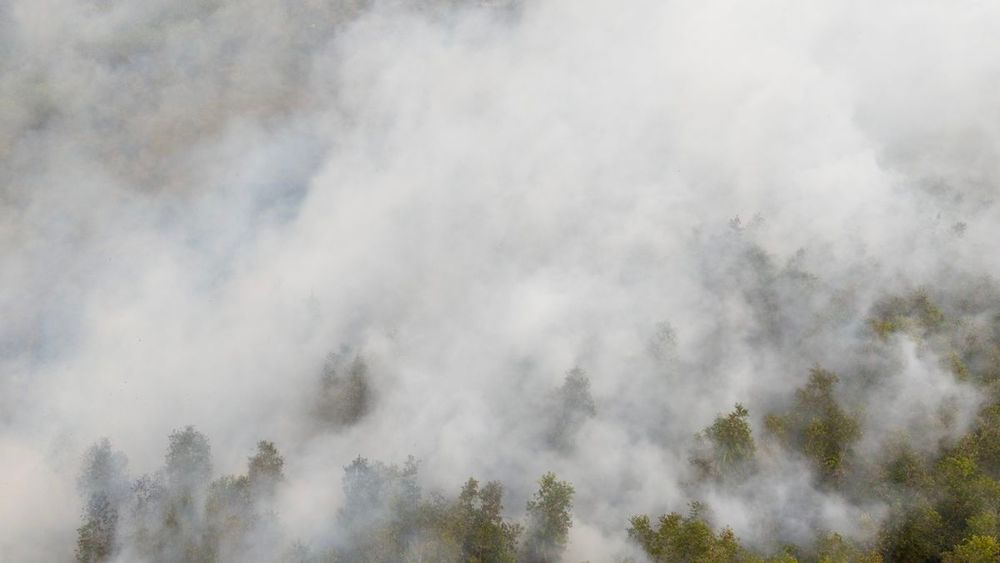
Forest and Land Fires Persist: 283,270 Residents Affected by Acute Respiratory Infections, 9 Corporations Named Suspects
Indonesia's battle against forest and land fires continues as authorities report 283,270 residents affected by acute respiratory infections across fire-ravaged regions. Police have named 223 individuals and 9 corporations as suspects in connection with the blazes, with more than 25,600 hectares of burned land linked to corporate cases.
The National Disaster Mitigation Agency (BNPB) identified Central Kalimantan and South Sumatra as the most severely affected provinces, while conditions in West Kalimantan, South Kalimantan, Riau, and Jambi have shown significant improvement.
"As of October 13, our focus in handling forest and land fires is on Central Kalimantan and South Sumatra, where the situation remains critical," said Berton SP Panjaitan, Acting Head of the Data, Information, and Disaster Communication Center of BNPB, during a press conference at the Coordinating Ministry for Political, Legal, and Security Affairs in Jakarta on Wednesday.
By the end of August 2026, the cumulative area burned across Indonesia reached 895,657 hectares, affecting regions from Kalimantan and Sumatra to Sulawesi and Papua. Ministry of Forestry data showed that 107,465 hectares were affected from January through June 2026, representing a 110 percent increase compared with the same period in 2023 when El Niño last impacted Indonesia.
Corporate Involvement and Legal Action
Environmental data reveals the extensive role of corporate concessions in the fires. The Indonesian Forum for the Environment (Walhi) reported that 74 percent of hotspots in Kalimantan were located within corporate concession areas, including 10,739 hotspots in oil palm plantation areas, 7,880 hotspots in mining concessions, and 6,905 hotspots in Forest Utilization Business Permits areas.
Indonesia is pursuing legal action against approximately 30 companies over forest and land fires, with potential state and environmental losses approaching Rp 15 trillion ($846.7 million). This comprises Rp 5 trillion in financial losses and nearly Rp 10 trillion in environmental restoration costs.
Ground Operations Prioritized
Berton emphasized that ground operations remain the priority for extinguishing fires, particularly in peatland areas.
"Aerial operations can provide immediate suppression but don't penetrate into the peat. So, ground operations are indeed more effective," he stated.
Indonesia holds approximately 36 percent of the world's tropical peatlands, which produce about three times more fine particulate matter than regular fires when they burn underground during droughts. This explains why peatland fires in Central Kalimantan and South Sumatra are particularly severe and difficult to extinguish.
Central Kalimantan's provincial Emergency Alert extends through October 31, 2026, while South Kalimantan declared an emergency alert for fire and drought from July 6 through October 31, 2026. West Kalimantan has held provincial alert status since February 2.
Weather Modification Operations
BNPB is optimizing weather modification operations to induce rainfall, though implementation depends on the availability of suitable clouds for seeding. Indonesia's meteorological agency (BMKG) has carried out 17 weather modification projects to address forest and land fires in 2026, covering 169 operational days and 290 flight sorties in fire-prone areas.
The operations involve seeding clouds with sodium chloride dispersed from aircraft to maximize rainfall potential. However, Berton noted that success in firefighting efforts could be observed through decreased burned area and improved air quality, while emphasizing that
"the only way to completely resolve this is through consistent rainfall."
Regional Cooperation
The government has clarified that it has not rejected assistance offered by Malaysia for handling the forest and land fires. The offer comes within the framework of the ASEAN Agreement on Transboundary Haze Pollution, which Indonesia ratified in 2014, becoming the last of 10 ASEAN member states to join the treaty originally signed in 2002.
The agreement establishes regional cooperation mechanisms for addressing transboundary haze pollution, reflecting the cross-border impact of Indonesia's forest fires on neighboring countries.