
Indonesia Faces Criticism Over Indigenous Leadership Role at CBD COP17
Indonesia's objections to including Indigenous peoples and local communities in the leadership of a permanent UN biodiversity body have drawn criticism from civil society representatives, who say the position reverses earlier progress. The dispute centers on how representatives would be selected for the Subsidiary Body on Article 8(j), or SB8(j).
Participation and government authority
Indonesia raised its objections on the third day of the Convention on Biological Diversity's COP17 talks, taking place October 19-30, 2026, in Yerevan, Armenia. Its negotiating team has not agreed on a process for selecting representatives of Indigenous peoples and local communities, often referred to as IPLCs, for the body's leadership.
In an October 23 written statement, Pikul Foundation Executive Director Torry Kuswardono criticized the position as a retreat from earlier CBD conferences. "The government ought to place Indigenous peoples in a position of full and effective participation," he said. He argued that Indigenous peoples and local communities are the groups most severely affected by the climate and biodiversity crises and should have a role in decisions made under SB8(j).
Torry suggested that concerns about displacing government representatives or threatening national sovereignty might explain the resistance. He rejected that connection, describing SB8(j)'s role as that of an observer that develops recommendations for states to adopt through the COP. Indigenous participation, he said, would neither replace government authority nor make community representatives the ultimate decision-makers.
The Earth Negotiations Bulletin, published by IISD, identifies a similar tension in the negotiations. Its October 23 coverage notes that the decision creating SB8(j) recognizes both government leadership of the body and the requirement for full and effective IPLC participation. COP17 negotiators are working through how to accommodate both.
Selection rules remain unresolved
At its creation, SB8(j) had agreement only on broad procedural questions, including the appointment of session chairs. Torry said COP17 must address the body's operating rules, including how to choose an Indigenous Co-Chair, allocate regional representation and respect Indigenous governance and representative structures.
The Article 8(j) contact group began examining a non-paper on those rules on October 19, according to the Earth Negotiations Bulletin. Jennifer Tauli Corpuz of the International Indigenous Forum on Biodiversity (IIFB) and Sikeade Oluwakemi Egbuwalo of Nigeria co-chair the group.
One unresolved choice is whether nominations for the Indigenous Co-Chair should follow the five UN regions or the seven sociocultural regions of the UN Permanent Forum on Indigenous Issues (UNPFII). The latter approach follows the practice of the former Article 8(j) working group. Negotiators deferred the question for further discussion amid concerns about accurate and balanced representation.
The ICCA Consortium set out its preferred arrangement in an October 18 statement: two co-chairs, one nominated by governments across UN regional groups and the other nominated directly by IPLCs. It said IPLCs should choose their co-chair and Bureau nominees through their own governance processes, without requiring state endorsement. It also urged negotiators to retain seven regional Friends of the Bureau, designated by IPLCs from the seven UNPFII sociocultural regions.
June Rubis, speaking for the IPLCs Caucus, also known as the IIFB, urged delegates to build on earlier participation practices rather than retreat from the COP16 agreements. She described SB8(j) as a milestone for full and effective participation, particularly in Southeast Asia. "We call upon the ASEAN member nations to support the Modus Operandi and to respect our voices and rights throughout the decision-making process," she said.
Decades of work toward a permanent body
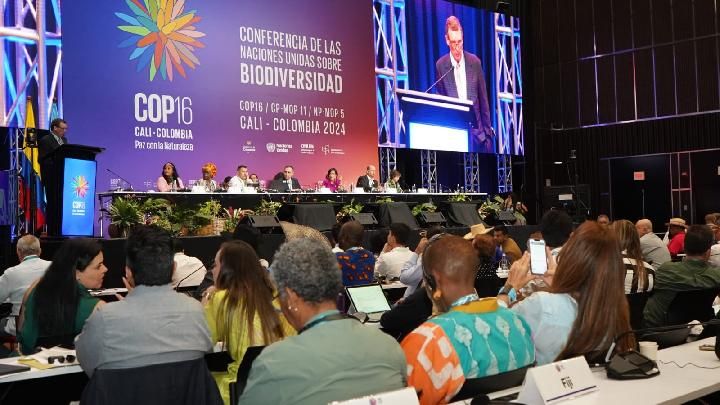
SB8(j) was established at COP16 in Cali, Colombia, in 2024 to give Indigenous rights, traditional knowledge and community contributions a permanent place across the CBD's three pillars: conservation, sustainable use, and fair and equitable benefit-sharing. The Earth Negotiations Bulletin describes it as the first subsidiary body of its kind among multilateral environmental agreements.
Indonesia initially opposed its creation but changed its position following civil society advocacy and ultimately supported the permanent body, Torry said. He described that outcome as part of a decades-long effort by Indigenous peoples and civil society to secure formal inclusion in the CBD.
The ICCA Consortium traces Article 8(j) to the first CBD conference in Rio in 1992 and says it took about 30 years to become fully operational. Before SB8(j), the Ad Hoc Open-ended Working Group on Article 8(j) handled this work. That group was created at COP4 in 1998 and retired at COP16 in 2024.
According to the consortium and the Earth Negotiations Bulletin, the working group gave IPLC representatives enhanced participation rights. They could nominate an Indigenous Co-Chair, participate in the Bureau and had expanded opportunities to speak. A voluntary funding mechanism also helped IPLC representatives take part. Rubis called for strengthening these practices under the permanent body.
Indonesia's domestic measures draw comparisons
Critics contrasted Indonesia's negotiating position with steps taken at home. Torry pointed to the Environment Ministry's Coordination Team for the Promotion, Protection, and Recognition of Local Wisdom in Biodiversity Conservation and Environmental Management. He described the team as part of Indonesia's implementation of SB8(j) and said such domestic progress should carry through to multilateral negotiations.
Marko Mahin of JPH-AKKM said an environment minister's decree issued in September established a coordination team to promote and protect local wisdom. It serves as a "friends of the focal point" group for Indonesia's work on Article 8(j) and related provisions.
Marko welcomed the national effort and urged Indonesia to maintain a consistent position internationally. Calling on the government to remain open and support the SB8(j) negotiations, he said communities would bear the consequences of decisions made at forums such as COP17, citing forest and land fires in Indonesia.
The wider Article 8(j) agenda
The representation debate is part of COP17 agenda item 10, which also covers the Article 8(j) work program through 2030. According to the CBD provisional agenda, this includes guidelines for implementing Targets 2 and 3 of the Kunming-Montreal Global Biodiversity Framework under Tasks 1.1 and 1.2, and a process for reviewing and updating the Voluntary Glossary of Key Terms under Task 5.4. An in-depth dialogue on Article 8(j) and recommendations from the UN Permanent Forum on Indigenous Issues are also scheduled under the item.
Broader concerns about rights were raised before the conference in an October 5 open letter to CBD governments and negotiators from Indigenous, community, women's, Afro-descendant and civil society organizations. The letter called for preventing backsliding on established rights. It said Indigenous Peoples, Afro-descendant Peoples and local communities have legal rights to less than half the area they customarily manage, putting that customary area at nearly 19 percent of the world's terrestrial land mass.