
Indonesia launches 194-kilometer Green Hydrogen Corridor linking Jakarta, Karawang and Patimban
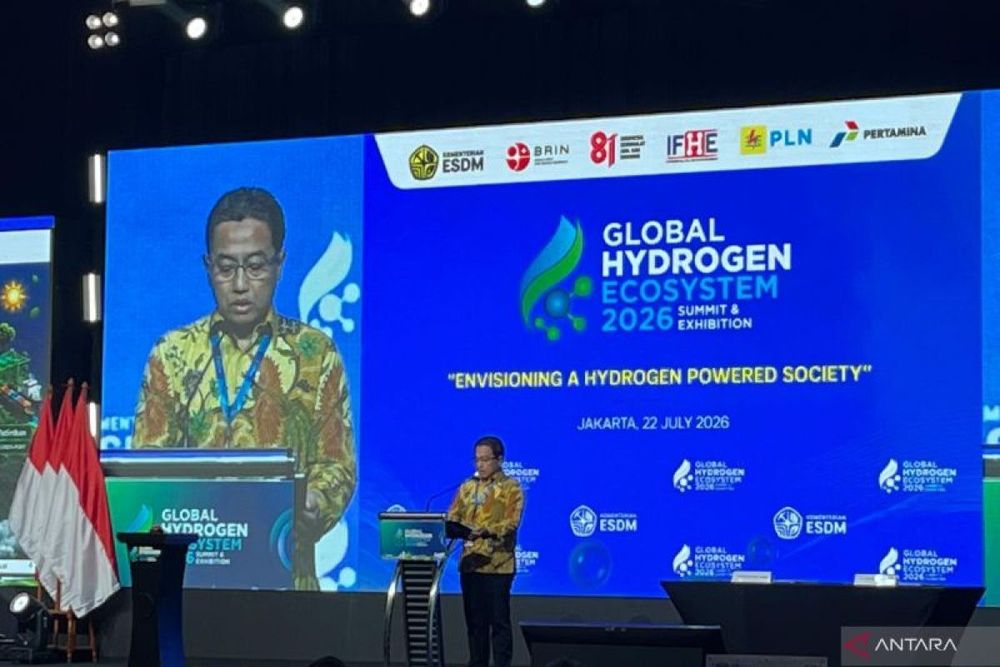
Indonesia announced a 194-kilometer Green Hydrogen Corridor connecting Jakarta, Karawang and Patimban at the 2026 Global Hydrogen Ecosystem Summit, establishing integrated infrastructure to support the country's transition toward net-zero emissions by 2060.
Indonesia launches 194-kilometer Green Hydrogen Corridor linking Jakarta, Karawang and Patimban
Indonesia unveiled plans for a 194-kilometer Green Hydrogen Corridor on Wednesday, establishing strategic infrastructure linking Jakarta, Karawang and Patimban to advance the country's low-carbon economic transition. The announcement was made at the 2026 Global Hydrogen Ecosystem Summit in Jakarta.
The corridor will connect clean energy production facilities with major industrial zones, key ports and economic centers, forming an integrated supply chain that includes Green Hydrogen Plants, Hydrogen Refueling Stations, industrial areas, logistics networks and end users within a single low-carbon economic framework.
Prahoro Nurtjahyo, Head of the Human Resources Development Agency at the Energy and Mineral Resources Ministry, emphasized that the project represents the foundation for a broader national hydrogen network. The corridor was designed through spatial, technical, economic and logistical analyses to maximize operational efficiency, with officials identifying 12 potential locations across the supply chain for phased development.
Government policy framework drives hydrogen development
The Green Hydrogen Corridor forms part of Indonesia's comprehensive National Roadmap for Hydrogen and Ammonia, launched on June 1, 2025, which outlined 215 action plans across regulatory, infrastructure and export development phases. The roadmap targets 4.2 million tons of hydrogen consumption annually for power generation by 2060, supporting the country's commitment to achieving net-zero emissions by that date.
Under Government Regulation No. 40 of 2025, Indonesia designated hydrogen and ammonia as strategic new energy sources, targeting a 10 to 12 percent contribution to the national primary energy supply. The government is currently advancing 93 hydrogen ecosystem development initiatives with a total investment value of 32 trillion IDR, approximately 2.05 billion US dollars, as announced at the summit.
Infrastructure deployment and industrial partnerships
The initial phase will focus on deploying on-site hydrogen refueling stations equipped with Proton Exchange Membrane electrolyzers capable of producing 100 kilograms of green hydrogen per day. State-owned electricity company PT PLN has developed a Green Hydrogen Plant and refueling station in Muara Karang, alongside additional stations in Senayan and Duren Tiga to service the Jakarta metro area. The Muara Karang facility, inaugurated in October 2023 as Indonesia's first Green Hydrogen Plant with a production capacity of 51 tons per year, was later joined by 20 additional plants across Indonesia in November 2023, bringing combined national capacity to 199 tons annually.
PT Toyota Motor Manufacturing Indonesia is constructing a hydrogen refueling station in Karawang, a major automotive manufacturing hub where Japanese companies including Toyota, Hyundai, Mitsubishi and Daihatsu operate production and export facilities. The strategic positioning of Karawang Industrial Estate, located 70 kilometers from Patimban Port and 145 kilometers from Jakarta, makes it a critical node in the corridor.
Patimban Greenport and Toyota Tsusho are collaborating under the Eastern GX Corridor framework to integrate sustainable port logistics into the national grid. Patimban Port, one of Indonesia's largest with a planned capacity of 7.5 million TEUs upon full completion by 2027, serves as the corridor's eastern terminus. The partnership builds on the Indonesia-Japan Memorandum of Cooperation signed in January 2022 for collaboration on decarbonization technologies including hydrogen and ammonia, which was strengthened through the Hydrogen-Ammonia Development Acceleration Forum in May 2024.
Economic imperatives and cost challenges
The corridor launch coincided with the debut of a Hydrogen Diesel Dual Fuel pilot bus project, both supporting President Prabowo Subianto's Asta Cita vision for energy self-sufficiency. Energy and Mineral Resources Minister Bahlil Lahadalia underscored the strategic urgency of shifting toward clean, domestically produced hydrogen amid volatile international markets.
Bahlil said hydrogen represents a crucial alternative energy source, particularly given current global geopolitical uncertainties such as ongoing conflicts in the Middle East that threaten traditional energy supplies. He added that developing a domestic hydrogen framework is central to Indonesia's broader goals of energy self-sufficiency, industrial downstreaming and long-term decarbonization.
Green hydrogen production costs in Indonesia currently range between 6 and 12 US dollars per kilogram, significantly higher than grey hydrogen at 1 to 3 dollars per kilogram, though costs are expected to decrease substantially by 2030. Indonesia's renewable energy contribution to the national power generation mix reached 17.89 percent as of April 2026, surpassing the government's 2026 target of 16.46 percent and providing capacity to support green hydrogen production using excess renewable power.