
Indonesia positions itself as Asia-Pacific hydrogen production and trade hub
With vast renewable energy resources, ambitious policy frameworks, and growing regional demand, Indonesia is advancing its goal to become a central player in Asia's hydrogen ecosystem by 2060.
Indonesia positions itself as Asia-Pacific hydrogen production and trade hub
Indonesia is strategically positioning itself to become a leading hub for hydrogen production, trade, and development in Asia as the region experiences rapid growth in low-carbon energy demand, infrastructure expansion, and cross-border hydrogen commerce.
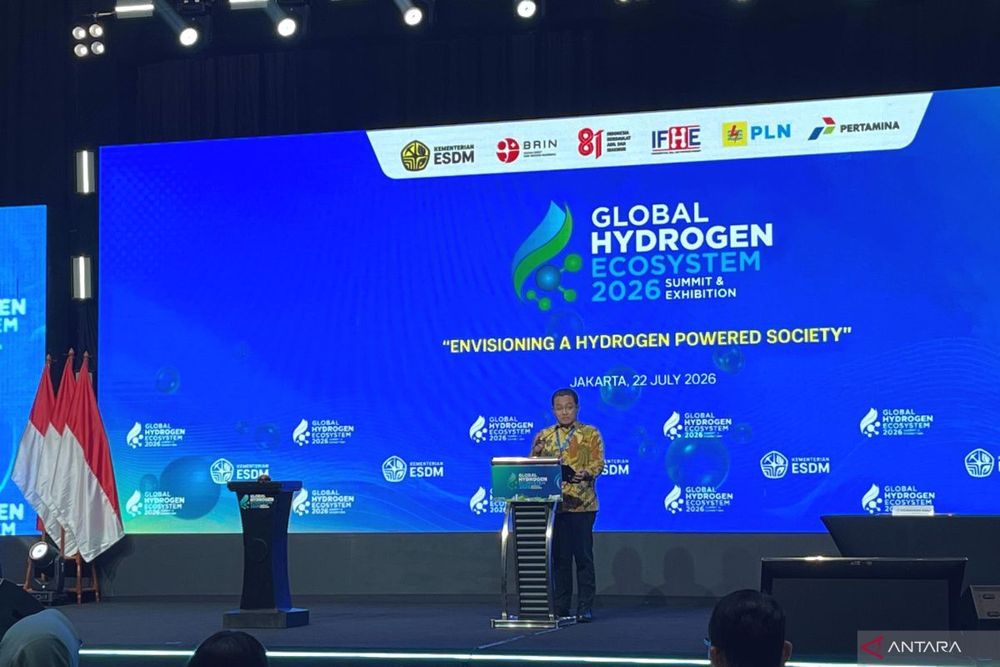
Prahoro Nurtjahyo, head of the Human Resources Development Agency at the Ministry of Energy and Mineral Resources, stated on Wednesday that the global energy transition has entered a critical new phase. This shift extends beyond merely expanding renewable power capacity to encompass the delivery of clean energy solutions to sectors traditionally difficult to decarbonize, including heavy manufacturing, maritime shipping, logistics operations, and transportation networks.
Hydrogen serves as a pivotal enabler in this transformation, functioning as a bridge that integrates the energy, industrial, and transportation sectors within a unified low-carbon framework. For Indonesia, hydrogen development represents more than an emissions reduction strategy—it directly supports national priorities including energy independence, industrial value chain enhancement, and economic competitiveness on the global stage.
Policy Framework and Economic Potential
The Indonesian government officially released its National Hydrogen and Ammonia Roadmap in April 2025, establishing a comprehensive strategic framework for the sector. This roadmap, alongside Government Regulation No. 40 of 2025 on National Energy Policy—which extends the country's energy policy framework to 2060 and replaces the previous regulation from 2014—designates hydrogen and ammonia as fundamental new energy sources supporting decarbonization across multiple economic sectors.
The roadmap outlines 215 specific action plans targeting annual hydrogen consumption of 4.2 million tons for power generation. These initiatives are projected to create 300,000 jobs and generate USD 70 billion in revenue, demonstrating the substantial economic impact of Indonesia's hydrogen ambitions.
Prahoro emphasized that hydrogen development accelerates Indonesia's path toward its 2060 net-zero emissions target, first announced at the UN Climate Change Conference in 2021. This commitment is integral to the nation's broader goal of becoming an advanced economy by 2045. The hydrogen strategy also aligns directly with President Prabowo Subianto's Asta Cita vision, particularly the mission promoting national self-sufficiency in food, energy, and water resources.
Abundant Resources and Current Market Position
Indonesia's potential as a regional hydrogen hub is underpinned by its exceptional renewable energy resources, estimated at 3,687 GW of capacity. This vast renewable potential provides a significant foundation for developing green hydrogen production at scale.
The country already maintains a substantial presence in regional hydrogen markets. As of 2023, Indonesia's hydrogen consumption stood at approximately 1.75 million tons annually, with 88% utilized for urea production, 4% for ammonia manufacturing, and 2% for petroleum refining. Indonesia accounts for over one-third of Southeast Asia's total hydrogen demand, which reached 4 million tons in 2024—representing nearly 4% of global consumption.
The broader Asia-Pacific hydrogen market presents substantial growth opportunities. Valued at USD 101.75 billion in 2025, the regional market is projected to reach USD 217.90 billion by 2035, expanding at a compound annual growth rate of 7.91%. The Asia-Pacific region currently accounts for approximately 36% of the global hydrogen market.
Building an Integrated Ecosystem
Prahoro underscored that achieving success in the hydrogen sector requires more than production capacity alone. The industry depends fundamentally on establishing an integrated ecosystem that seamlessly connects production facilities, storage infrastructure, distribution networks, and end-use applications across multiple sectors.
Indonesia has already demonstrated progress in developing international hydrogen trade capabilities. In November 2025, Marubeni Corporation completed a green hydrogen demonstration project linking Australia and Indonesia, marking the first international shipment of green hydrogen in the Asia-Pacific region and validating the feasibility of cross-border hydrogen trade corridors.
As infrastructure development continues and policy frameworks mature, Indonesia's combination of renewable resources, strategic geographic position, existing industrial base, and government commitment positions the nation to play a central role in Asia's emerging hydrogen economy through 2060 and beyond.