
University of Indonesia researcher creates AI system for automated road damage detection
A UI engineering researcher has developed an artificial intelligence method combining deep learning and 3D camera technology to automatically detect and measure road surface damage, offering a faster and more objective alternative to traditional manual inspections.
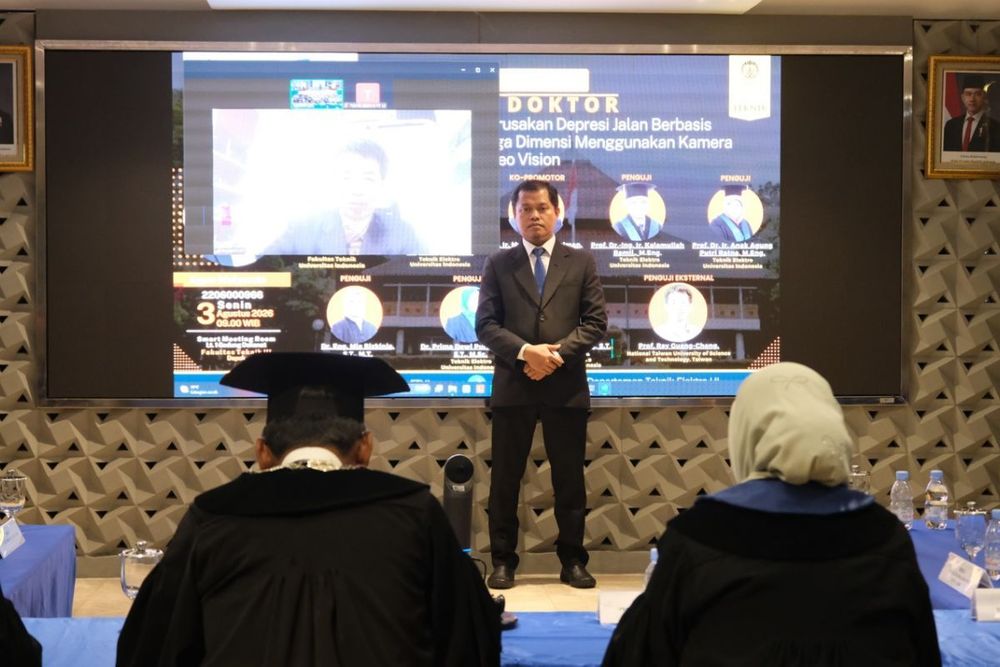
UI researcher develops AI method to detect road surface damage
A researcher at the University of Indonesia has developed an artificial intelligence system that could transform how the country inspects and maintains its extensive road network, addressing a critical infrastructure challenge in a nation where roads carry 70 percent of domestic freight and 82 percent of interurban passenger land travel.
Agus Mulyanto from UI's Faculty of Engineering created a method that integrates deep learning algorithms, three-dimensional geometric analysis and binocular stereo vision cameras to automatically identify and measure road surface deterioration. The system represents a significant advance over traditional manual visual inspections, which are labor-intensive, costly and lack consistency in complex roadway environments.
In his dissertation titled "Development of a Road Depression Inspection Method Based on Deep Learning and Three-Dimensional Geometric Analysis Using a Binocular Stereo Vision Camera," Agus outlined how the integrated approach works. The binocular cameras capture depth information from road surfaces, reconstructing them in three dimensions to extract precise geometric characteristics of defects such as cracks and potholes.
"I hope this research contributes to road inspection technology using artificial intelligence and three-dimensional analysis, supporting more effective infrastructure maintenance and safer, more sustainable transportation systems," Agus said Tuesday in Depok, West Java.
The technology addresses a pressing need in Indonesia, where road infrastructure faces constant degradation from factors including widespread truck overloading, which causes exponential pavement deterioration and increases infrastructure-related operating costs. The innovation could prove particularly valuable given that road crashes claimed an estimated 31,000 lives in Indonesia in 2021, accounting for 2.0 percent of all deaths in the country.
Agus's approach combines the proven effectiveness of deep learning models, which have demonstrated high precision in identifying surface defects, with the depth-sensing capabilities of binocular stereo vision. This dual-technology strategy enables more comprehensive damage assessment than either method could achieve alone, while offering practical advantages including ease of implementation, lower equipment costs and higher inspection efficiency compared to expensive laser-based systems and thermal imaging technologies.
Potential economic impact
The automated inspection system could help address broader economic challenges linked to road quality. Research has found that road maintenance and quality improvements in Indonesia have measurable impacts on local economic development, making efficient damage detection systems increasingly important for national competitiveness.
By improving the objectivity of inspection results and reducing errors associated with conventional assessments, the system could help policymakers, road operators and transportation companies monitor road conditions more rapidly, identify damage earlier and prioritize maintenance based on reliable data. This capability aligns with the country's efforts to improve infrastructure efficiency and accelerate digital transformation across the transportation sector.
Agus's work joins a growing global research trend in AI-based road inspection. A comprehensive systematic review compiled 85 contributions published between 2011 and mid-2024 on AI-based three-dimensional automated damage detection of pavement using technologies including stereo cameras, underscoring the field's rapid development.
The research reflects the University of Indonesia's commitment to applying digital technologies and academic innovation to challenges facing national development. The AI-based monitoring system aims not only to improve inspection efficiency but also to support the creation of safer, more reliable and sustainable transport infrastructure throughout Indonesia.