
Indonesia's Communication Minister champions 'Meaningful AI' to deliver societal benefits
Communication and Digital Affairs Minister Meutya Hafid introduced the concept of 'Meaningful AI' at an international congress in Bali, emphasizing that artificial intelligence development must deliver tangible benefits rather than focusing solely on technological sophistication.
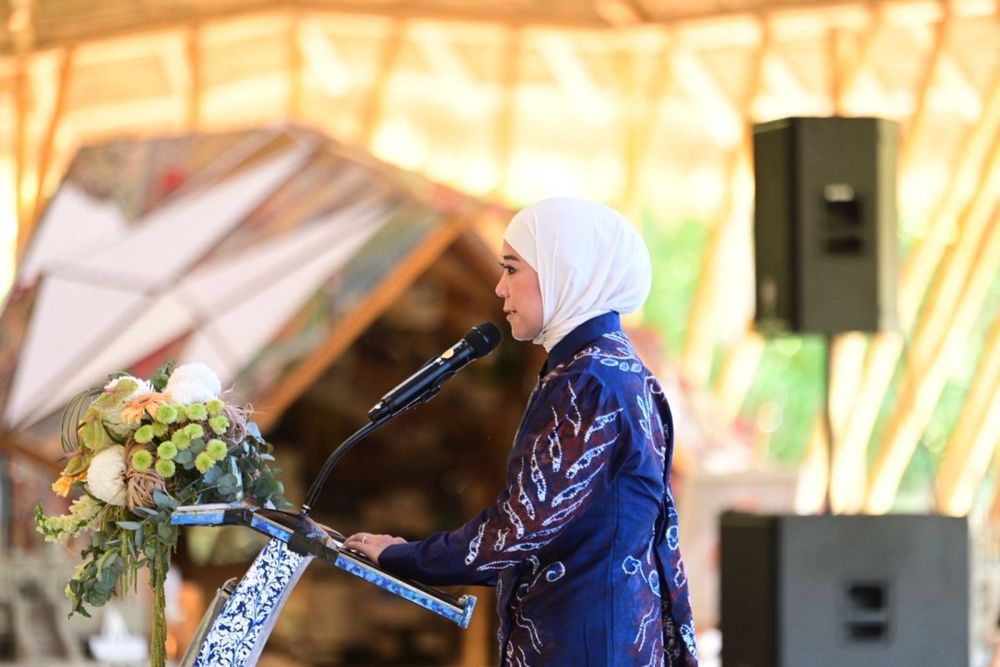
Minister urges deployment of "Meaningful AI" for public benefit
Communication and Digital Affairs Minister Meutya Hafid called for artificial intelligence development in Indonesia to prioritize concrete societal benefits over pure technological advancement, introducing the concept of 'Meaningful AI' at the 11th International Scholas Chairs Congress 2026 in Bali.
Speaking at the three-day congress at Kura-Kura Bali, which ran from September 4-6 and focused on 'Artificial Intelligence and Human Meaning,' Hafid outlined a vision for AI that addresses real-world community needs. The event also commemorated the second anniversary of Pope Francis' apostolic visit to Indonesia and the signing of the Istiqlal Declaration.
'Our shared goal is to develop Meaningful AI—AI that provides tangible benefits for society. The question is no longer simply what machines can do, but whether humans and institutions are ready to direct AI toward meaningful goals.'
Hafid, who was appointed as the first woman to lead the Ministry of Communication and Digital Affairs by President Prabowo Subianto on October 21, 2024, emphasized that AI has rapidly transitioned from experimental stages into daily applications across health, education, and public services.
Five core dimensions of implementation
The minister detailed five essential dimensions of Meaningful AI: enhancing workforce productivity, promoting public good, expanding digital inclusion, building national competitiveness, and strengthening resilience against cyber and climate threats. These priorities align with the National AI Roadmap 2026-2029, which operationalizes the broader National AI Strategy (STRANAS KA) 2020-2045 focusing on ethics and governance, talent development, infrastructure, research and innovation, and investment.
The long-range strategy, initially launched in August 2020, targets progress through 2045 and aligns with Indonesia's 'Golden Indonesia 2045' vision of becoming a high-income nation. The current roadmap projects that successful AI implementation could boost GDP by 12 percent by 2030, estimated at approximately $366 billion.
Hafid highlighted measurable impacts already achieved through digital technologies. Internet of Things applications in agriculture have reduced fertilizer usage by more than 40 percent, while digital tools in fisheries have increased production by over 40 percent. Research demonstrates that IoT-based smart agriculture in Indonesia can reduce consumption of water, fuel, fertilizers, and pesticides by up to 30 percent while improving crop productivity and sustainability.
Workforce development and MSME empowerment
The ministry has trained 150 micro, small, and medium enterprises in Wonogiri and Banyuwangi to utilize AI for business planning, branding, and digital marketing. This initiative forms part of broader digital transformation efforts, as Indonesia's digital economy is projected to grow fourfold by 2030, with 64.2 million MSMEs expected to benefit from digitalization.
The National AI Roadmap sets ambitious human capital targets, aiming to produce 100,000 AI talents annually—30 percent developers including AI specialists and practitioners, and 70 percent end-users—while working toward 20 million AI-literate citizens by 2029.
Regulatory framework and cyber resilience
To ensure safe implementation, the government is preparing the 2026-2029 National AI Roadmap alongside risk-based AI ethics regulations prioritizing data protection, transparency, and human safety. A Presidential Regulation on AI Ethics and Safety, reported to be 90 percent complete in late 2025, represents a shift from voluntary guidelines to a mandatory governance framework and is expected to be finalized in early 2026.
The emphasis on cyber resilience reflects mounting security challenges. Indonesia's National Cyber and Crypto Agency recorded approximately 3.64 billion cyberattacks and traffic anomalies between January and July 2025, underscoring the urgency of strengthening digital defenses.
'The future of AI is not only determined by algorithms, computing capacity, or the amount of investment. The future of AI is also determined by the values we uphold, the choices we make, and the responsibilities we assume.'