
Indonesia removes 5 million underage accounts under child protection regulation
Indonesia has deactivated approximately five million underage accounts across digital platforms since implementing PP Tunas in March 2026, surpassing Australia's enforcement scale while pursuing a risk-based approach rather than a total ban.
Indonesia removes 5 million underage accounts under child protection regulation
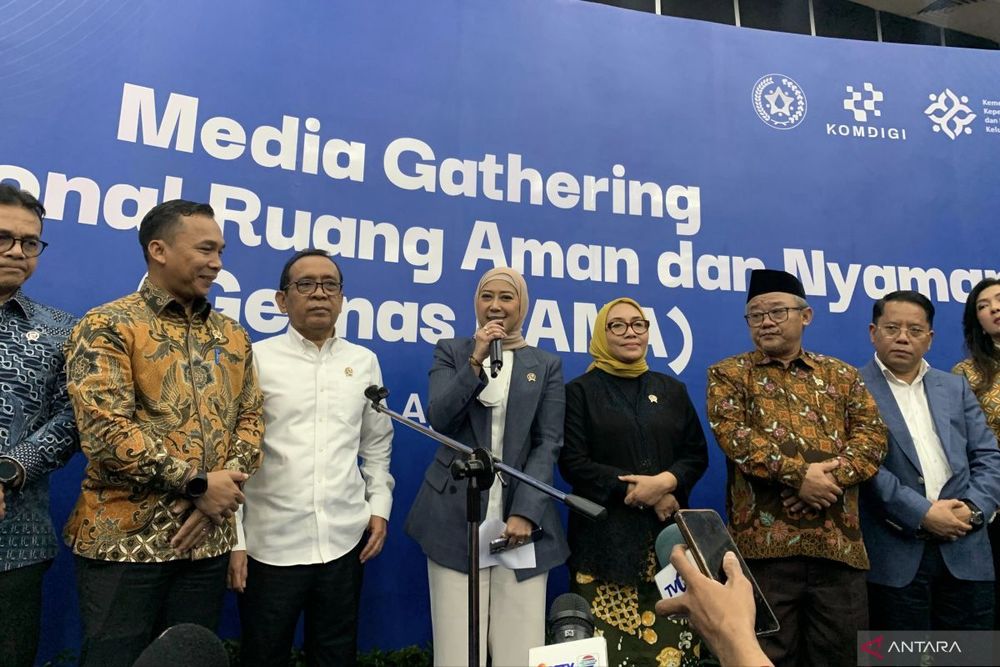
Indonesia has removed approximately five million underage accounts from digital platforms under Government Regulation No. 17 of 2025, known as PP Tunas, Communication and Digital Affairs Minister Meutya Hafid announced on Tuesday.
The regulation, which took effect on March 1, 2026, with staged implementation beginning March 28, represents a significant step in protecting children in digital spaces where nearly half of the country's internet users are under 18.
Speaking at her office in Jakarta on August 4, Meutya noted that the five million account removals have exceeded the scale achieved in Australia, where approximately 4.7 million underage accounts were removed in the first month after its social media ban took effect in December 2025.
"Together with the platforms, we have reduced five million child accounts. Although five million users is still small compared to our target, in global terms, this has surpassed what TikTok achieved in Australia," she said.
Risk-based approach versus total ban
Indonesia's strategy differs fundamentally from Australia's complete prohibition for all users under 16, which came into force on December 10, 2025, with platforms facing fines up to A$49.5 million (US$32 million) for non-compliance. Instead, Indonesia has adopted a risk-based framework that restricts children under 16 specifically from platforms categorized as high-risk.
"Australia implements a total ban, whereas we conduct a risk assessment. What we prohibit for children under 16 is access to high-risk platforms," Meutya explained.
Under Ministerial Regulation Komdigi Number 9 of 2026, social networking and social media platforms are classified as high-risk unless assessed otherwise. The eight platforms initially targeted include YouTube, TikTok, Facebook, Threads, Instagram, X, Bigo Live, and Roblox.
The risk-based criteria evaluate features such as direct messaging, exposure to inappropriate material, addictive design patterns, mental health impacts, data privacy safeguards, and commercial profiling. This approach addresses pressing safety concerns in Indonesia, where approximately 25.8% of internet users are children according to a 2020 National Economic Survey.
Platform compliance and transformation
The regulation aims to push tech companies to modify their services for the Indonesian market. Gaming platform Roblox, which has identified 23 million accounts belonging to users under 16 in Indonesia, has disabled its chat feature by default for Indonesian users under 16 and implemented mandatory facial age verification. Parental consent is now required to reactivate the feature.
"We hope that going forward, it will not just be a ban on children creating accounts, but a broader movement encouraging platforms to transform," Meutya said.
Age verification challenges
Despite progress, the minister acknowledged that enforcement faces significant hurdles, particularly regarding age verification technology standards. Tech companies have yet to deploy industry-leading verification methods such as age inference algorithms, facial verification, or behavioral analysis.
"Not all platforms have provided evidence that they have adopted the best technology for age verification, which we believe could be implemented if they invested," she said.
The challenge of effective age verification is not unique to Indonesia. Australia's recent eSafety report found that more than 8 in 10 Australian under-16s continue to use social media despite the ban, with platforms' failure to implement effective age assurance measures cited as the main reason.
Self-assessment framework
Under the current setup, companies submit self-assessments detailing their risk profiles. To date, the Communication and Digital Affairs Ministry has processed submissions from 200 platforms across 79 Electronic System Providers, with eight platforms self-identifying as high-risk.
Meutya compared the self-assessment framework to media content ratings, expressing optimism that voluntary risk declarations will foster transparency and strengthen child safety in the digital space.
Indonesia's approach comes as several other countries consider similar restrictions, with Malaysia and New Zealand advancing proposals to ban social media for children under 16, and the European Parliament passing a non-binding resolution in November 2024 advocating for a minimum age of 16.