
Indonesia targets nationwide 5G coverage by 2029 to support AI-driven economy
The Ministry of Communication and Digital Affairs aims to achieve full national 5G network coverage by 2029, providing the digital infrastructure needed to power artificial intelligence applications and boost the digital economy's contribution to GDP from 6.8 percent to 12-13 percent.
Indonesia targets nationwide 5G coverage by 2029 to support AI-driven economy
Indonesia's Ministry of Communication and Digital Affairs has set an ambitious target to achieve complete national 5G coverage by 2029, establishing the digital foundation required for an artificial intelligence-driven economy in Southeast Asia's largest mobile market.
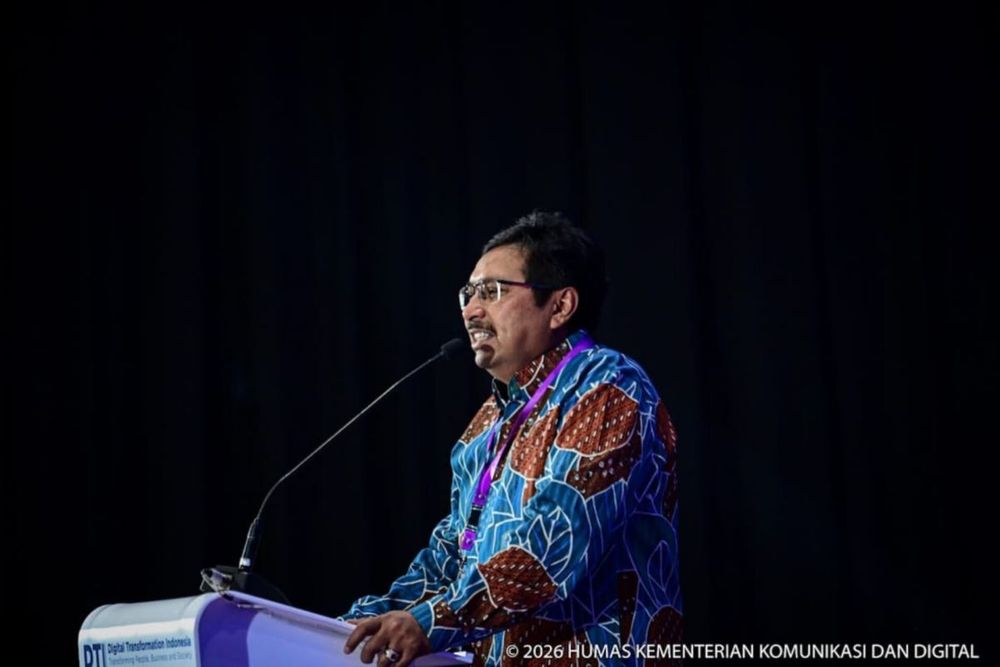
Secretary General Ismail emphasized the urgency of accelerating the national 5G roadmap to keep pace with rapid global technological transformation. "We must accelerate the 5G roadmap. We hope that by 2029, 5G coverage in Indonesia will continue to expand, reaching even the most remote corners of the country," Ismail said on Thursday. "This is crucial because the world is moving toward an AI-based economy, so digital infrastructure must be able to keep pace with these needs."
The target represents a substantial leap from current conditions. As of late 2025, Indonesia's 5G network coverage remained below 10 percent, significantly trailing regional competitor Malaysia, which has achieved 80 percent coverage. Despite this gap, Indonesia has demonstrated its capacity to deploy nationwide telecommunications infrastructure, with 4G connectivity reaching 97 percent of residential areas.
The expansion plan aligns with broader economic objectives. Indonesia's digital economy currently contributes 6.8 percent to national GDP, with the government targeting an increase to 12-13 percent by 2029, matching the 5G deployment timeline.
Spectrum allocation drives network expansion
In 2026, the government completed auctions for the 700 MHz and 2.6 GHz radio frequency spectrums, with three major operators—Telkomsel, Indosat, and XLSmart—winning allocations under more affordable cost schemes. The auction winners face binding obligations to achieve 51 percent 5G population coverage as part of their license requirements.
These new spectrum allocations address a critical technical constraint. Indonesia lacks access to the 3.5 GHz spectrum band, currently occupied by satellite services, forcing operators to rely on Dynamic Spectrum Sharing technology with 2100 MHz and 2300 MHz bands, which limits 5G network performance.
"The government must be present to provide space for digital infrastructure investment to grow more rapidly," Ismail noted, highlighting the regulatory support behind the spectrum auctions.
Infrastructure upgrade for AI applications
Ismail explained that the rapid rise of artificial intelligence has fundamentally reshaped the national approach to telecommunications infrastructure. Digital networks are no longer viewed merely as basic communication channels, but as vital drivers of productivity, innovation and national competitiveness.
Indonesia already possesses a baseline fiber-optic backbone spanning over one million kilometers, including submarine cable systems connecting islands across the archipelago. Future development will focus on upgrading network capacity, signal quality and operational resilience to meet high-demand digital services.
"Our challenge is no longer simply expanding the basic network. What we are building now is infrastructure capable of supporting the growth of an AI-based digital economy," Ismail stated.
The transformation is forcing telecommunications operators to evolve their business models. "Operators used to sell bandwidth. Now, infrastructure must be able to support AI cloud services and various productive applications that provide added value to society and industry," Ismail explained.
Market scale and investment trajectory
Indonesia's telecommunications sector operates at substantial scale, with over 310 million cellular connections making it one of Southeast Asia's largest mobile markets. Leading operator Telkomsel, which launched the country's first commercial 5G services in May 2021, operates more than 3,000 5G base stations across 56 cities.
Mobile operators are expected to invest approximately USD 18 billion between 2024 and 2030 to support advanced connectivity and new digital services. Industry revenue is forecast to grow at a compound annual growth rate of 3.7 percent during 2024-2029, driven by rising mobile data usage and accelerating fiber adoption.
Independent forecasts from GSMA indicate that 5G could account for more than 30 percent of mobile connections in Indonesia by the end of the decade, driven by expanding network coverage and increasing affordability of 5G-enabled smartphones.
Beyond affordable spectrum allocations, the ministry is establishing regulatory frameworks to encourage long-term private sector investments across key economic sectors, including agriculture, mining, manufacturing, healthcare, education and finance.