
TSMC asks suppliers to explore rare-earth-free motors amid China export curbs
Taiwan Semiconductor Manufacturing Co. is exploring whether its factory automation equipment can use motors without rare earths, Reuters reported, as the chipmaker seeks to limit production risks from China's export restrictions. The effort remains preliminary, with no widespread adoption of the alternatives so far.

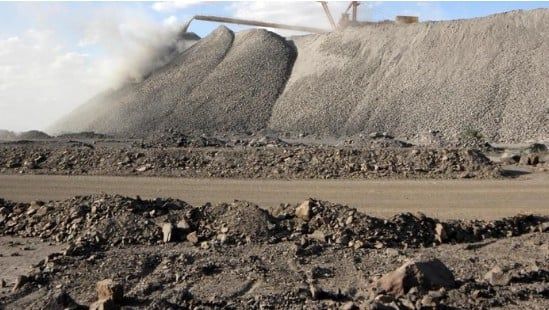
Alternatives for factory equipment
Three people familiar with the matter told Reuters that TSMC had asked suppliers to evaluate rare-earth-free motors. Two sources said the discussions had not yet led to broad use of such equipment. TSMC declined to comment.
The concern centers on magnets used in motors that power industrial machinery, including automation equipment in TSMC's factories. A shortage of those components could interrupt production of chips used in smartphones, artificial intelligence systems, data centers and defense supply chains.
Several technologies offer ways to build motors without rare-earth magnets, according to Tom's Hardware. Induction motors produce torque through electromagnetic induction, while switched-reluctance motors provide another option. Some permanent-magnet motors can use ferrite magnets instead of rare-earth versions. Each approach involves trade-offs in efficiency, dimensions, power density, precision and control requirements.
China dominates the supply chain for the magnets now used in such machinery. The US Geological Survey puts its share of global rare-earth mining at roughly 70%, while International Energy Agency figures place its share of refining at about 90% and finished permanent magnets at approximately 95%.
Licensing rules and a suspended expansion
China introduced export licensing requirements for rare-earth materials, magnets and processing technologies in 2025. The European Parliamentary Research Service describes two rounds of restrictions: the first, on April 4, covered seven heavy rare earths and their related compounds, metals and magnets.
A second round, announced on October 9, 2025, added holmium, erbium, thulium, europium and ytterbium, taking the number of restricted elements to 12. It also covered related products, equipment and technologies.
The October rules reached beyond Chinese exporters. They required foreign companies to secure Chinese approval before exporting magnets containing Chinese-origin rare earths at levels as low as 0.1% by value, or magnets made using Chinese mining, processing or magnet-making technology.
On November 7, 2025, Beijing announced that it would suspend the second round until November 10, 2026. As of October 2026, that suspension had reportedly been extended by another 90 days, according to Tom's Hardware.
Taiwan's reliance on Chinese supplies
Taiwan sources more than 95% of its rare-earth imports from China, according to the Australian New Zealand Chamber of Commerce in Taiwan's 2025 White Paper, released December 3, 2025. The report put annual purchases for manufacturing at around 3,000 tons. Taiwan produces no rare-earth raw materials itself, and only one or two domestic companies refine or process them.
Responding to China's October 9, 2025, restrictions, Taiwan's Ministry of Economic Affairs said the affected rare earths differed from those used in chip manufacturing. The ministry nevertheless pledged to continue monitoring the issue.
Electronic components, led by semiconductors, generated $177.2 billion in Taiwan's exports in 2024, representing 37.3% of the total, according to its Ministry of Finance. In urging Taiwan to diversify its supply sources, the chamber cited China's 2023 export controls on gallium, a material used in advanced chips, which triggered a 27% rise in global prices.
US and Taiwanese supply initiatives
TSMC's search for different components comes alongside US and Taiwanese efforts to reduce reliance on Chinese rare earths and other critical minerals. In February 2026, the Trump administration announced plans for a $12 billion critical minerals stockpile to address supply-chain risks from China.
In June, Raymond F. Greene said Washington was working with Taiwan and other partners to find alternative supplies, increase processing capacity and make supply chains more resilient. Greene is director of the American Institute in Taiwan, the de facto US representative office there.
Taiwan is also pursuing domestic rare-earth technology. Economic Affairs Minister Kung Ming-hsin said in February that the government would support development work at the Industrial Technology Research Institute, or ITRI, a Taiwanese research organization. The government aims to establish a pilot production line within three years; that facility is expected to supply about half of Taiwan's domestic rare-earth needs.
A source at a US-based think tank told Reuters that Washington officials had taken particular interest in ITRI's research and had discussed critical mineral supply diversification with the institute. The US State Department did not immediately answer Reuters' request for comment.
ITRI said it was planning rare-earth projects with the Department of Industrial Technology under Taiwan's Ministry of Economic Affairs, but disclosed no further details.