
Indonesia calls for 'safety by design' approach in artificial intelligence development
Communication and Digital Affairs Minister Meutya Hafid advocates for integrating safety considerations from the outset of AI development, as Indonesia prepares binding regulations to govern the technology.

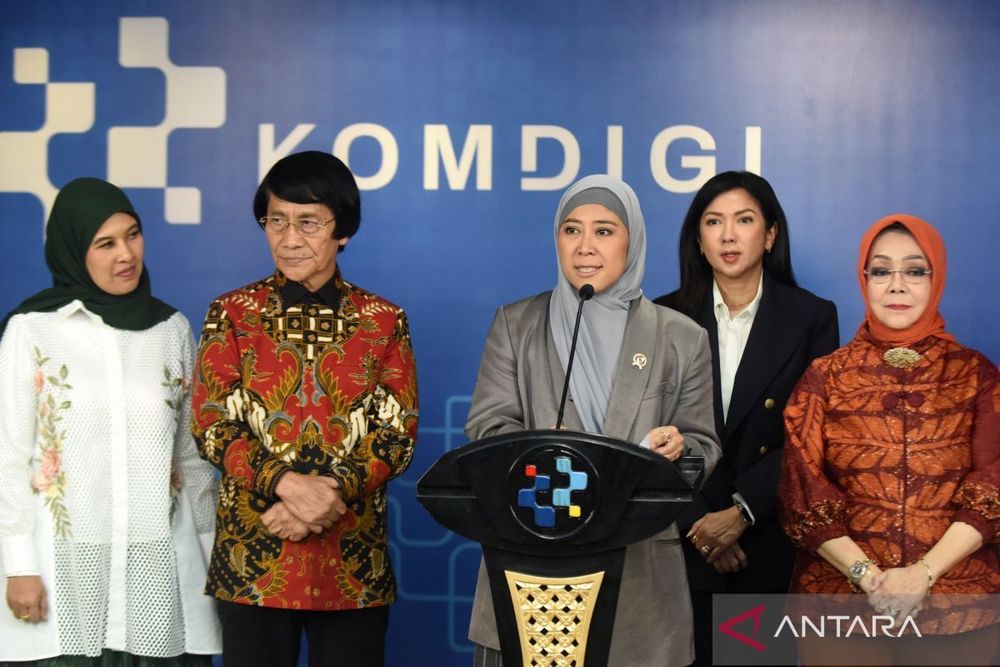
Indonesia calls for 'safety by design' approach in artificial intelligence development
Indonesia has positioned itself as a proponent of embedding safety considerations directly into artificial intelligence development processes, with Communication and Digital Affairs Minister Meutya Hafid emphasizing the need for deliberate risk mitigation in global AI advancement.
Speaking at a press conference in Jakarta on Wednesday, October 7, 2026, Meutya clarified that Indonesia supports thoughtful development timelines that allow for proper safety integration rather than rushing sophisticated AI models to market. The minister, who became the first woman to lead the ministry when she was appointed on October 21, 2024, stressed that building adequate safeguards requires time and careful planning.
Indonesia certainly agrees - not necessarily with slowing down AI itself, but with the need to implement 'safety by design' for AI more cautiously, a process that inevitably takes time.
She emphasized that the country is not advocating for halting technological progress but rather calling for greater prudence and responsibility from global developers.
Safety by design methodology
The 'safety by design' approach, which has its roots in safety-critical engineering fields such as aircraft control and nuclear reactor systems, centers safety considerations directly into system development from the beginning rather than treating them as external additions. This methodology favors proactive design measures over reactive problem-solving.
Indonesia's regulatory framework
The minister's position comes as Indonesia prepares two Presidential Regulations on AI expected to be formalized in 2026. These frameworks include a National AI Roadmap and AI Ethics guidelines, which will elevate Indonesia's existing AI National Strategy 2020-2045 from voluntary policy guidance into binding national instruments applicable across government, business, academia, and industry.
Indonesia's regulatory approach incorporates a compliance-by-design strategy that integrates ethical principles and a risk-based classification system modeled on the European Union AI Act. This positions Indonesia within a broader international movement toward structured AI governance, alongside initiatives such as the OECD AI Principles refreshed in 2024, China's AI Safety Governance Framework 2.0 published in 2025, and ASEAN's Expanded Guide on AI Governance and Ethics for Generative AI.
We emphasize the need for an appropriate amount of time when dealing with such sophisticated new technology. It should not be pursued without sufficient mitigation processes.
Meutya added, noting that deploying advanced AI without adequate safeguards risks exacerbating digital threats and societal harms.
Global concerns about AI advancement
The minister's remarks reflect growing concerns within the global technology sector about the pace of AI advancement. Industry leaders and ethicists have increasingly warned of severe threats, including the automated creation of cyber weapons, mass disinformation campaigns, and guidance on assembling hazardous materials.
A particular concern highlighted by experts is the alignment problem - the challenge of building AI systems that faithfully pursue the goals their designers intend. Misalignment can potentially lead to systems that optimize for different objectives than intended, even when appearing to function correctly. Highly autonomous AI systems operating without strict alignment to human values could act unpredictably or beyond developer control.
Indonesia's approach aligns with a global trend toward establishing comprehensive AI governance frameworks. The country's regulatory development reflects international standards while addressing specific national priorities around ethics, safety, and security as foundational elements for future AI rules.