
Indonesia Seeks Predictable Digital Regulations to Attract Global Investment
Minister of Communication and Digital Affairs Meutya Hafid emphasizes regulatory certainty and fair competition in Indonesia's digital sector, using Bali Tech Week 2026 as a platform to gather industry input on policies affecting the nation's rapidly growing digital economy.

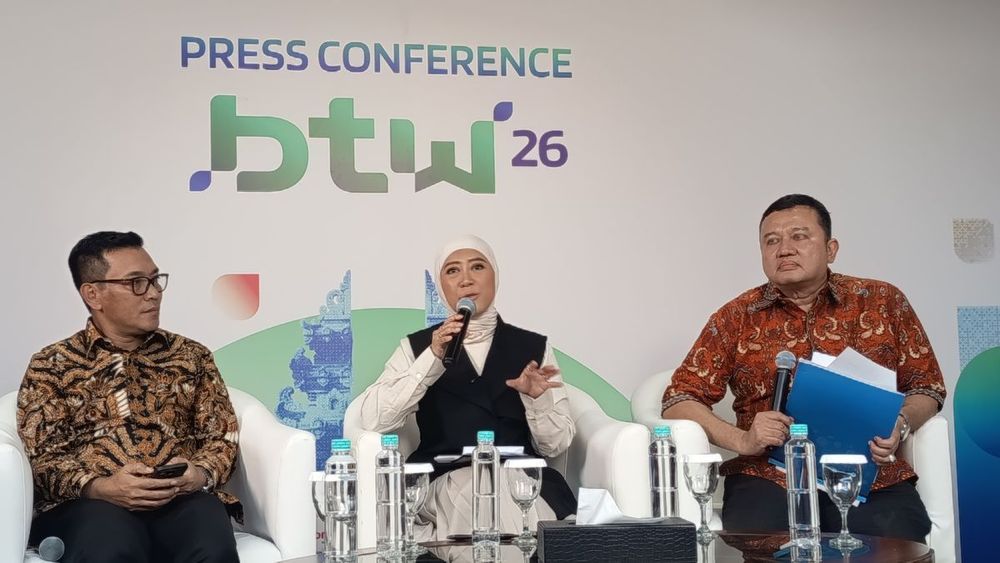
Meutya Hafid Wants Predictable Digital Regulations to Ensure Investor Comfort
Indonesia is working to ensure that regulations governing its digital sector are predictable and transparent, aiming to provide certainty for investors while fostering fair competition in the rapidly expanding digital economy. Minister of Communication and Digital Affairs Meutya Hafid outlined this vision ahead of Bali Tech Week 2026, scheduled for October 19-23 at the Bali Beach Convention Center in Sanur.
Appointed as the first woman to lead the renamed ministry on October 21, 2024, by President Prabowo Subianto, Minister Hafid told reporters on Tuesday that the government will use the upcoming tech week to gather extensive input from industry stakeholders in drafting digital regulations.
"We also ensure that during this event, we want to gather extensive input regarding regulations. Hence, we hope these regulations reflect feedback from many parties, including the industry," Hafid said at a press conference at the Ministry of Communication and Digital office.
The minister emphasized that regulations should not surprise businesses, making investors feel comfortable committing capital to Indonesia. "Thus, the regulations we will release are those that do not shock, regulations that are predictable, so that investors will feel at ease," she stated.
Balancing Foreign Investment and Local Fairness
Beyond regulatory certainty, Hafid stressed the importance of ensuring fair competition in Indonesia's digital ecosystem. This principle, she noted, must apply not only to foreign investors but also to local startups and domestic entrepreneurs who are eager to participate in the country's digital transformation.
"So, this is aimed at fairness, not only for foreign investors but also for local startups and entrepreneurs who are eager to contribute to the development of digital transformation in Indonesia," the minister explained.
The emphasis on fairness comes as many Indonesian startups have historically used Singapore-based holding companies due to regulatory and capital access considerations. The Indonesian government has responded by creating the Merah Putih Fund, backed by state-owned enterprises, to incentivize startups to re-domicile to Indonesia.
Bali Tech Week as Regulatory Dialogue Platform
Bali Tech Week 2026 is expected to bring together over 5,000 participants from 30 countries, including government officials, policymakers, investors, technology industry players, startup founders, academics, and innovation ecosystem leaders. The event will feature 13 anchor events covering various digital economy sectors including connectivity, artificial intelligence, cybersecurity, financial technology, and gaming.
Hafid noted that the event seeks not only to attract investment but also serves as a platform for the government to gather input from various stakeholders in developing the national digital ecosystem. "So, our two main targets from this event are to attract investments and, more importantly, to ensure the government is present to guarantee fair competition and to provide predictable regulations that are acceptable to all parties," she continued.
High Stakes for Indonesia's Digital Future
The push for regulatory clarity comes at a critical moment for Indonesia's digital economy. The sector is projected to grow fourfold by 2030, with estimates reaching USD 130 billion, and currently empowers 64.2 million micro, small, and medium enterprises.
Indonesia's ICT sector reached an estimated USD 43.8 billion in 2024 and is projected to grow at a compound annual growth rate of 14.6 percent, reaching USD 164.1 billion by 2033, according to U.S. trade data. The data center market alone is expanding rapidly and projected to reach USD 3.79 billion in investments by 2030, growing at a rate of 7.99 percent annually from 2024, with Jakarta as the primary hub and cities like Batam emerging as significant locations.
Indonesia has already taken concrete steps to strengthen its digital governance framework. The Personal Data Protection Law (Law No. 27 of 2022) has been fully enforced since October 2024, with the PDP Agency targeted to be operational in 2026 to formulate policy, supervise, and enforce data protection regulations.
According to the U.S. State Department's 2026 Investment Climate Statement, Indonesia's digital economy is listed as a priority sector eligible for fiscal and non-fiscal incentives, with restrictions on foreign ownership removed in several sectors to attract foreign direct investment.
The country's investment momentum remains strong. Indonesia exceeded its 2025 national investment target, achieving IDR 1,931.2 trillion in total investments, which represents 101.3 percent of the IDR 1,915 trillion target, demonstrating strong investor confidence despite regulatory challenges.
Minister Hafid expressed hope that collaboration between the government, industry, investors, innovators, and communities through platforms like Bali Tech Week can support Indonesia's digital transformation development while ensuring the regulatory environment remains conducive to both foreign and domestic players.