
Indonesia allocates Rp427 billion to expand coconut processing areas by 151,554 hectares in 2026
The Indonesian government plans to develop 151,554 hectares of coconut downstreaming areas in 2026 with Rp427 billion in funding, aiming to strengthen raw material supplies and expand value-added processing across 28 provinces.
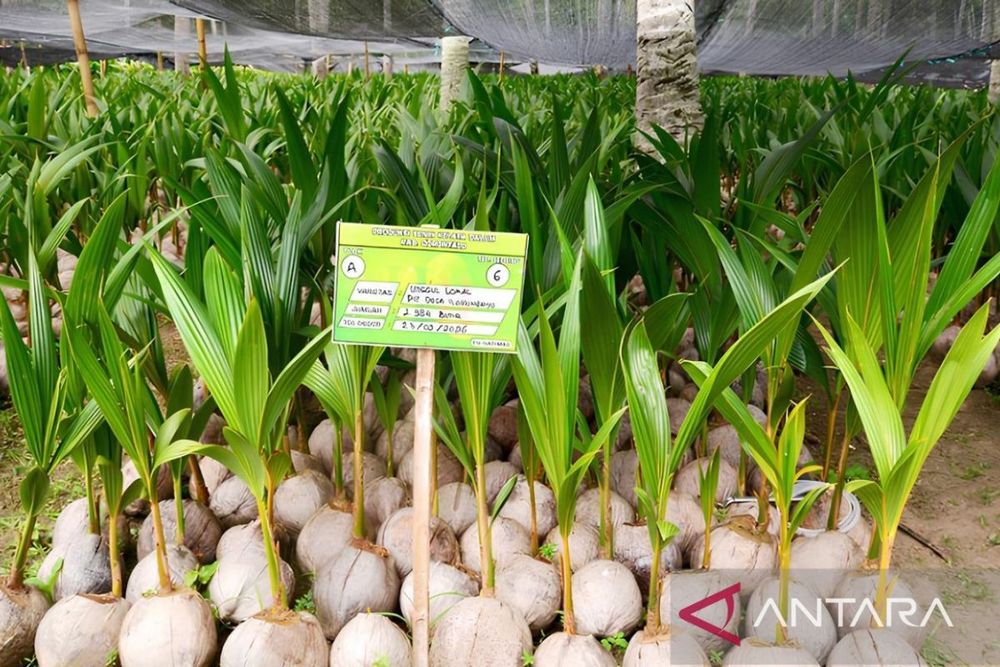
Indonesia allocates Rp427 billion to expand coconut processing areas by 151,554 hectares in 2026
Indonesia has allocated approximately Rp427 billion to develop 151,554 hectares of coconut downstreaming areas in 2026, marking a significant expansion of the country's efforts to strengthen its position as the world's largest coconut producer and enhance domestic processing capabilities.
The initiative, announced Wednesday by the Agriculture Ministry's Directorate General of Plantations, represents a sharp increase from last year's program, which covered only 1,975 hectares with funding of approximately Rp10.92 billion. The expansion is part of the government's long-term strategy under the 2025-2045 National Long-Term Development Plan to build a stronger domestic coconut processing industry.
"This year's target is 151,554 hectares with a budget of around Rp427 billion, excluding seeds," said Agus Rosyid, Agricultural Product Quality Supervisor at the Directorate General of Plantations, during a webinar on coconut downstreaming in Jakarta.
Downstreaming involves processing raw coconuts into value-added products such as copra, coconut oil, desiccated coconut, and coconut milk through industrial processes including extraction, concentration, and drying. The potential for value addition across the entire coconut value chain—from husk and shell to meat and coconut water—is estimated at USD 6.55 billion.
Expanding geographic reach and farmer support
The program encompasses 28 provinces and provides farmers with coconut seedlings, organic fertilizers, and financial support for land preparation and planting. The ministry has allocated an additional Rp154.38 billion to develop another 51,721 hectares of coconut downstreaming areas in 2027 as part of its longer-term expansion plan.
Indonesia produces approximately 17 million metric tons of coconuts annually, maintaining its position as the world's largest producer ahead of the Philippines. According to data from the Indonesian Coconut Processing Industry Association, national production in 2025 reached an estimated 15 billion nuts, representing about 23 percent of total global production. Currently, around 60 percent of domestic coconut production is processed into various derivative products.
The country's coconut plantations cover approximately 3.2 million hectares, with about 98 percent managed by smallholder farmers. However, national productivity remains relatively low at around 1.1 tons per hectare annually, well below the estimated production potential of 3.5 to 5 tons per hectare per year.
Growing export markets and economic impact
Indonesia's coconut product exports were valued at approximately USD 2.11 billion in 2022, growing to an estimated USD 2.48 billion in 2025. The country ranked second among the world's coconut oil exporters in 2025 with a 22 percent market share, behind the Philippines with 49 percent and ahead of the Netherlands with 10 percent.
Malaysia presents a particularly significant market opportunity, relying on Indonesia for approximately 80 percent of its coconut supply. Global demand for coconut-based products is expected to continue rising across various sectors, including food and beverages, health, cosmetics, textiles, and biofuels.
Agus noted that improving productivity remains one of the biggest challenges facing Indonesia's coconut industry, alongside aging plantations and limited domestic downstream processing capacity. To support the development of an integrated coconut downstream ecosystem, the government is partnering with state-owned plantation company PT Perkebunan Nusantara, private firms, and Indonesia's sovereign wealth fund Daya Anagata Nusantara.
Launched on February 24, 2025, Danantara was established to manage and optimize state-owned enterprises and drive economic growth with an initial fund of USD 20 billion, with investments targeted at downstream industries among other sectors.