
Indonesia's National Research Agency Develops Disease-Resistant Cocoa Varieties to Revive Sector
BRIN is developing high-yield cocoa varieties targeting 2-3 tons per hectare to address Indonesia's declining productivity and strengthen the country's position as a major global producer serving markets worth USD 3.5 billion annually.
Indonesia's National Research Agency Develops Disease-Resistant Cocoa Varieties to Revive Sector
Indonesia's National Research and Innovation Agency is advancing a breeding program to develop high-yield cocoa varieties resistant to major diseases and adaptable across the archipelago's diverse growing regions, addressing productivity challenges in a sector that generated USD 3.5 billion in export revenue last year.
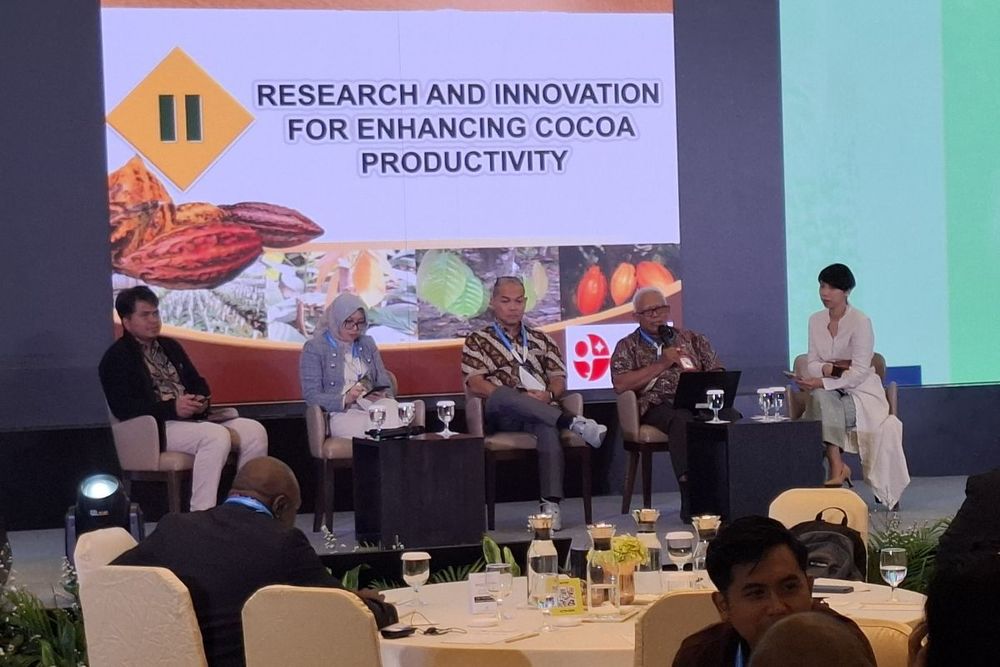
Rubiyo, principal researcher at BRIN's Research Center for Plantation Crops, outlined the initiative Thursday at the Regional Learning Forum on Sustainable Commodities in Jakarta, emphasizing the program's focus on creating varieties that smallholder farmers can readily adopt.
The breeding effort targets production levels of 2 to 3 metric tons of dry beans per hectare annually, a substantial increase from current national averages. This improvement is critical for Indonesia, one of the world's major cocoa producers, where more than 95 percent of output comes from smallholder farmers working plots of 2 hectares or less.
Addressing Production Decline
Indonesia's cocoa productivity has faced significant pressure over recent decades. According to Agriculture Ministry data, the country's 1.37 million hectares of cocoa plantations currently average about 715 kilograms per hectare per year, well below the yields achieved in the 1980s when production reached approximately 750 kilograms per hectare before declining to below 400 kilograms per hectare over the last twenty years.
The sector faces substantial threats from vascular-streak dieback caused by the basidiomycete Oncobasidium theobromae and Phytophthora pod rot caused by Phytophthora palmivora. Black pod disease incidence has reached 70 to 80 percent in some areas, making disease resistance a priority for the breeding program.
BRIN's varieties are designed to deliver good quality beans while withstanding these pest and disease pressures. The research incorporates molecular approaches to study genetic diversity and identify parent plant combinations likely to produce offspring with desired characteristics.
Long-Term Development Process
The breeding cycle spans 15 to 20 years, Rubiyo explained, as candidate varieties undergo extensive selection and testing. The process includes collecting genetic resources and germplasm, selecting parent plants, crossing, selecting clones or hybrids, and evaluating candidates to ensure they meet target specifications.
Regional adaptation presents a particular challenge. Rubiyo noted that clones such as Masamba Cocoa Clone 01 and 02 perform differently depending on location, with yields in Sulawesi diverging from those in Sumatra. This variation underscores the importance of developing varieties suited to Indonesia's varied growing conditions.
Sulawesi, which accounts for approximately 65 percent of Indonesia's total cocoa output, represents a key testing ground for new varieties. Central Sulawesi produces around 20 percent of national output, with Southeast Sulawesi contributing 15 percent and South Sulawesi 13 percent.
Economic Stakes and Market Context
The breeding program carries significant economic implications. Indonesia's cocoa exports reached USD 3.5 billion in 2025, marking a 36 percent increase year-on-year driven by rising global prices, even as export volumes declined by 2 percent. The United States and India each absorbed approximately 17 percent of exports, valued at USD 619 million and USD 618 million respectively.
Processed products now dominate Indonesia's export profile. Cocoa butter and cocoa oil contributed 62 percent of total exports in 2025, valued at USD 2.2 billion, reflecting the country's move toward value-added processing.
The Agriculture Ministry is targeting cocoa development across 174,260 hectares in 2026 through seedling provision for plantation rejuvenation and expansion, creating demand for improved planting material.
Collaboration and Farmer Focus
Rubiyo emphasized that successful innovation requires input from multiple stakeholders. BRIN is pursuing collaboration with research institutions, industry partners and other organizations to ensure new varieties meet the needs of farmers, producers, consumers and processors.
With smallholder farmers owning over 90 percent of Indonesia's cocoa production land, the agency's emphasis on easily adoptable technology addresses a fundamental requirement for sectoral improvement. The breeding program aims to provide varieties that can be successfully cultivated by small-scale operators who form the backbone of Indonesian cocoa production.
Rubiyo noted that cocoa provides income and employment for communities while contributing to national foreign exchange earnings, making the strengthening of cocoa research strategically important for Indonesia's agricultural sector.