
Komnas HAM Urges Coordinated Response to Scam-Linked Human Trafficking
Indonesia's National Human Rights Commission is pressing ministries and government agencies to work together to protect people trafficked into online scam operations, warning that the abuse is increasingly taking the form of cyber slavery.

Recruitment through false job offers
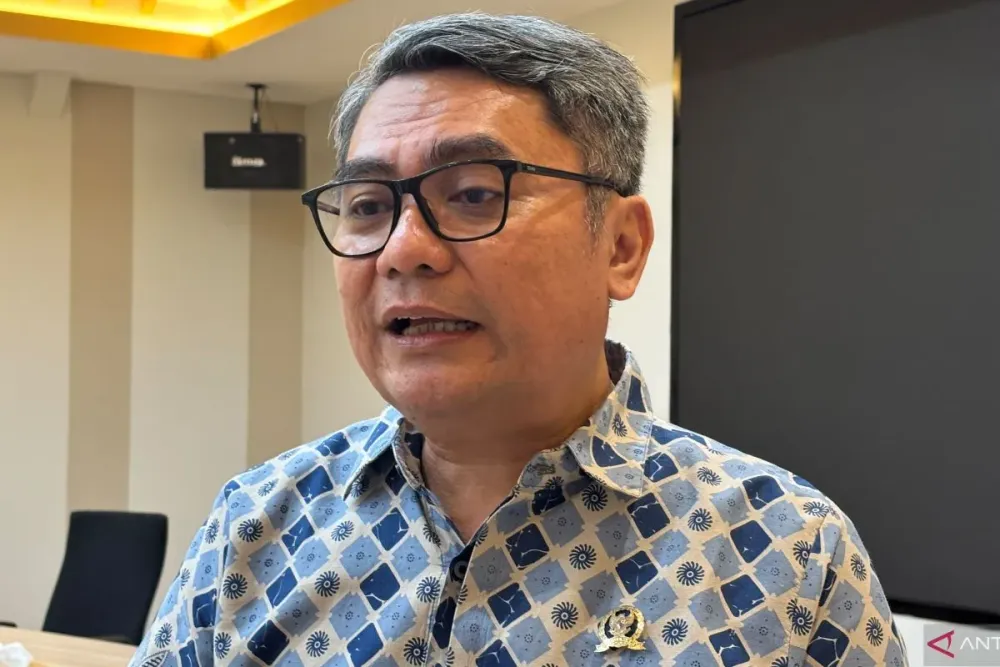
In a statement Sunday, November 1, Komnas HAM Commissioner for Research and Study Uli Parulian Sihombing cited the commission's latest findings of 7,628 trafficking cases linked to online scams in 2025. The commission had previously documented a sharp increase across Southeast Asia: in a July 30, 2025, press release, Chair Anis Hidayah said the count had risen from 15 in 2020 to 7,628 by March 2025.
Sihombing described recruitment aimed at highly skilled workers, particularly Gen Z and millennial men, who are lured by bogus offers of well-paid jobs. The syndicates operate in Cambodia, where more than 4,300 cases were recorded, as well as the Philippines, Laos and Myanmar.
Once trapped, victims reportedly faced torture, daily work shifts lasting 14 to 18 hours and denial of medical treatment. Separate Komnas HAM data reported in July 2025 showed that the Indonesian Embassy in Phnom Penh recorded 75 percent more deaths among Indonesian citizens in Cambodia during January-March 2025 than in the same period a year earlier.
Protection from prosecution and support after return
Sihombing urged law enforcement to apply the non-punishment principle when victims are compelled to commit crimes under life-threatening threats for missing scam targets. Prosecuting those victims would subject them to a second round of criminalization, he said. Komnas HAM also wants frontline officers trained in human rights so they can spot signs of scam operations and distinguish people being exploited from perpetrators.
The commission's recommendations extend from assessing victims' circumstances accurately to arranging their return to Indonesia, ensuring their civil registration rights and providing psychosocial care. It asked the Ministry of Social Affairs to broaden access to psychological support, trauma care, economic empowerment programs and job training, with local governments involved in economic reintegration.
Indonesia has already reported repatriation efforts. At a December 3, 2025, meeting of the UN Committee on Migrant Workers in Geneva, its delegation said the Cyber-Trafficking Response Team had identified and brought home 1,324 victims from Cambodia, Myanmar and Laos since 2024.
Prevention, financial losses and national enforcement
Komnas HAM asked the Ministry of Indonesian Migrant Worker Protection to improve workers' digital literacy. Sihombing also advocated wider cyber patrols and public awareness campaigns addressing the socioeconomic vulnerabilities behind recruitment. Investigators need stronger capabilities to follow digital evidence and expose transnational syndicates, he said.
The commission called for closer work with the Financial Services Authority (OJK), the Coordinating Ministry for Political and Security Affairs, and the Ministry of Communication and Digital Affairs. OJK's Indonesia Anti-Scam Centre recorded more than 411,000 reports and losses totaling Rp9.1 trillion, about $556 million, between November 2024 and December 2025.
A separate measure of exposure to fraud came from the Global Anti-Scam Alliance's "State of Scam in Indonesia Report 2025." It found that 66 percent of Indonesia's population had faced a digital fraud attempt, according to figures cited by ANTARA in October 2026.
On trafficking enforcement, Komnas HAM urged the Indonesian National Police (Polri) and the Directorate General of Immigration to take stronger action against people and groups helping Indonesian migrant workers leave the country without authorization.
National Police figures covering human trafficking nationwide showed 385 cases in 2025 and 98 from January through August 19, 2026. Coordinating Minister for Political and Security Affairs Djamari Chaniago cited those figures on September 9, 2026, when he called for a national trafficking database that different agencies could use together.
Cross-border investigations
The scale of consular work was outlined in Indonesia's December 2025 presentation to the UN Committee on Migrant Workers. The delegation said Indonesian embassies in 10 countries had handled roughly 12,500 online-scam-related cases during 2021-2025, including about 7,600 in Cambodia.
Komnas HAM wants the Ministry of Foreign Affairs to review agreements with destination countries, especially Cambodia, to establish safeguards for victims and facilitate joint investigations of trafficking syndicates using digital platforms.
Regional cooperation was also the focus of a September 2026 conference in Phnom Penh. The gathering, which brought together 28 nations and seven international organizations, ended with the Phnom Penh Declaration on Combating Online Scams, aimed at advancing law enforcement, information sharing, asset tracing and victim protection.
The commission called for stronger bilateral and regional diplomacy, including joint investigation task forces with destination countries, to protect victims and dismantle trafficking networks operating across borders.