
Germany Investigates Phone Surveillance Targeting Officials and Lawmakers
German authorities are investigating suspected mobile-phone surveillance after officials and lawmakers received spyware warnings. Whether Chancellor Friedrich Merz was targeted remains unclear, unlike earlier cases involving Angela Merkel and Recep Tayyip Erdogan.

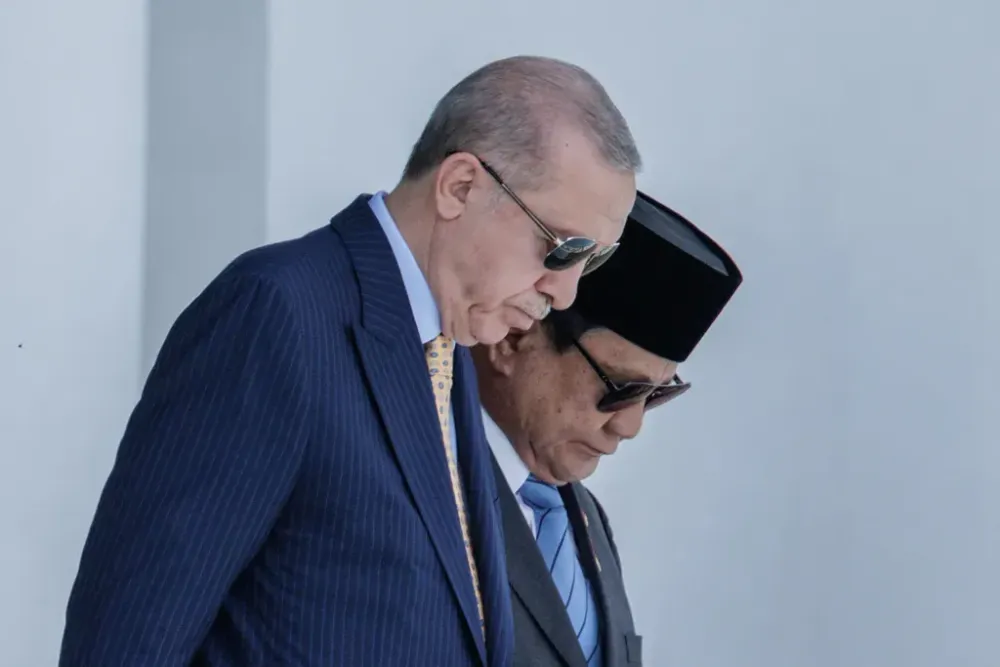
Spyware warnings reach German officials
Germany's Federal Office for Information Security, known as BSI, disclosed the investigation on November 1, 2026. It identified several senior officials and members of parliament as targets of surveillance involving software on their phones, without saying whether Merz was among them.
Apple had begun notifying iPhone users in 99 countries on October 29 that they might have been targeted by "mercenary" spyware. German government officials and Bundestag members were among the recipients. Franziska Brantner, the Green Party co-leader and a member of parliament's European Affairs Committee, publicly confirmed receiving a warning.
Digital Minister Karsten Wildberger said BSI sent warning letters to the affected officials, lawmakers and public figures within 24 hours. The agency advised recipients to treat their devices as compromised and replace them.
According to Der Spiegel, Apple notified federal ministry staffers, lawmakers and journalists accompanying Merz on a trip to South Korea, Japan and Singapore. The attacks became public ahead of the Pall Mall Process meeting scheduled for November 11-12, 2026, in Paris, where voluntary industry guidelines on spyware use were to be unveiled.
Merkel's surveillance and the Danish connection
An earlier surveillance operation against a German chancellor involved two of Germany's NATO allies. The United States monitored Angela Merkel from 2002 to 2013 with Danish assistance. Merkel served as chancellor from 2005 to 2021.
The operation ended after Edward Snowden, a contractor for the U.S. National Security Agency, exposed U.S. spying activities. "Spying on friends is absolutely unacceptable," Merkel told President Barack Obama after the disclosure. Obama apologized, but the affair prompted one of the worst diplomatic crises between Washington and Berlin. Germany expelled the CIA's chief in the country.
The Danish role was detailed in reports published in 2021, drawing on a confidential intelligence review called the Dunhammer report. Four specialized agents from the Danish Defence Intelligence Service, or FE, conducted the review after Snowden's disclosures. Completed in 2015, it examined cooperation between FE and the NSA during 2012-2014.
POLITICO Europe reported that the review found Denmark had knowingly allowed the NSA to use its eavesdropping systems on undersea internet cables. Other targets included German President Frank-Walter Steinmeier, former SPD chancellor candidate Peer Steinbrück and unnamed officials in France, Norway and Sweden.
Erdogan and the arrests of Turkish police
In Turkey, the illegal wiretapping case involving then-Prime Minister Recep Tayyip Erdogan grew out of a corruption scandal that broke on December 17, 2013, according to Human Rights Watch. Police announced arrests and investigations implicating senior government officials and their families. Recordings of calls involving Erdogan, ministers and their associates subsequently circulated on social media.
Erdogan and his circle characterized the corruption investigations as a Gülenist plot or attempted coup intended to remove him. Authorities accused those implicated in the wiretapping case of following Fethullah Gülen, a Turkish politician who fled to the United States and resides there. Gülen denied Ankara's allegations.
Turkish authorities arrested 114 police officers in July 2014 over illegal interception of communications involving thousands of people, including Erdogan. Human Rights Watch reported that, by late 2014, three waves of arrests had resulted in 180 police officers being detained. Forty were placed in pretrial detention, and five were held on suspicion of attempting a coup under Article 312 of the Turkish Penal Code.
Human Rights Watch also recorded an order by a newly appointed "judge of the peace" to detain 100 police officers on July 22, 2014. By 2015, arrests on illegal wiretapping charges had exceeded 200 police officers. Soldiers, prosecutors, judges and bureaucrats were also apprehended in connection with the case, which included allegations of coup plotting.
Pegasus and the limits of the evidence
A much broader surveillance case emerged in 2021, involving tens of thousands of people and 14 heads of state and government. Among the leaders targeted with Pegasus spyware were French President Emmanuel Macron and Morocco's King Mohammed VI. Who was behind the targeting of those leaders remained unclear.
Pegasus was developed by the Israeli company NSO, whose product exports all require approval from Israel's Ministry of Defense. NSO denied that the leaders were on its target list, saying their names appeared on an unofficial list.
The Pegasus Project examined a leaked set of 50,000 phone numbers belonging to potential surveillance targets. Forbidden Stories, a Paris-based nonprofit, coordinated the investigation with more than 80 journalists representing 17 media organizations across 10 countries. Amnesty International provided forensic support.
The leaked list included numbers for more than 600 politicians and government officials from 34 countries, as well as members of Jamal Khashoggi's family. Amnesty said it could not forensically examine the world leaders' phones to establish whether they had actually been targeted or infected.
Pegasus can use a zero-click attack: once delivered to a device, the malware can operate without the owner taking any action. The case under BSI investigation likewise involves attacks requiring no user interaction. A compromised phone can give outsiders remote access to its conversations, text messages and data while leaving its owner unaware of the intrusion.
A Cold War listening operation at the Vatican
Surveillance of senior political and religious figures predates mobile spyware. During the Cold War, the Soviet KGB installed electronic listening equipment in the apartment of Cardinal Agostino Casaroli, the Vatican's foreign minister. Pope John Paul II strongly backed Poland's Solidarity trade union toward the end of that period.
The Vatican wiretapping came to light in 1998. In its April 8 report that year, La Repubblica cited Italian intelligence documents and attributed the secret installation to a Czechoslovakian woman whom it described as married to her Italian brother.
The newspaper's account described the KGB's arrangements for operating the device as being in musical form. Agents from Czechoslovakia, then a Soviet satellite state, carried out the operation.
The listening equipment was intended to collect material to discredit and provoke the Catholic Church and the pope. It could also, if needed, be used to anticipate changes in the pope's health.