
Indonesia launches 'flying doctor' program to tackle healthcare gaps in remote archipelago
State Secretary Minister Prasetyo Hadi announced that Indonesia's flying doctor initiative will use helicopter-based rapid response to reach underserved communities across the vast island nation, where nearly two-thirds of the population lacks adequate access to healthcare facilities.
Indonesia launches 'flying doctor' program to tackle healthcare gaps in remote archipelago
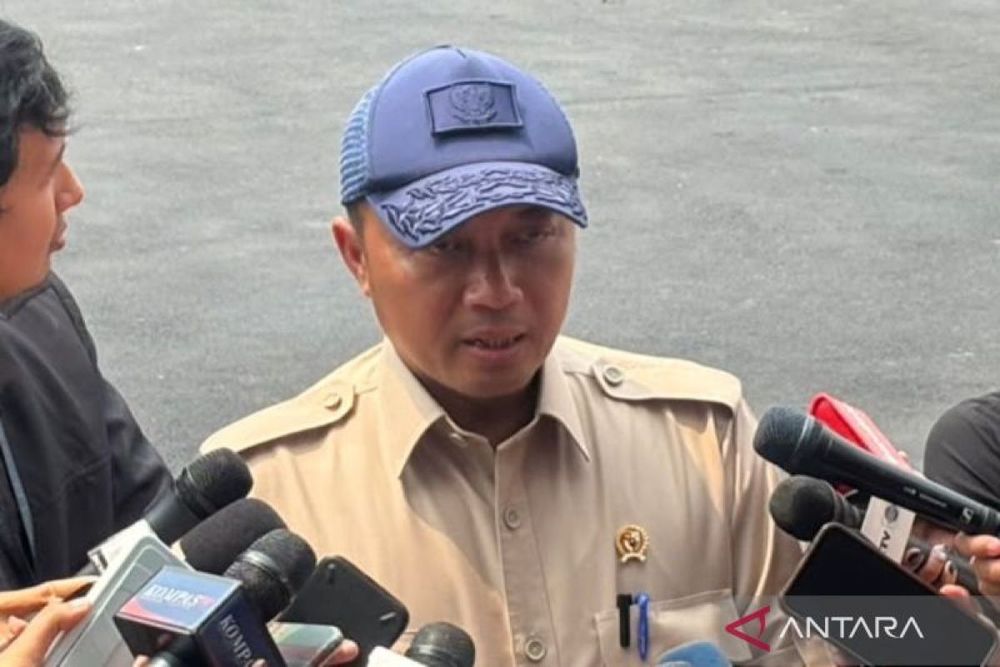
Indonesia is set to implement a flying doctor program targeting remote areas where medical facilities remain difficult to reach, State Secretary Minister Prasetyo Hadi announced on Saturday. The initiative, outlined by President Prabowo Subianto in his speech on the proposed 2027 state budget, will use helicopter-based rapid-response healthcare services rather than establishing air transport in every village.
Speaking at Merdeka Palace in Jakarta, Hadi explained that the concept emerged from observations during travels across Indonesia's vast archipelago of approximately 17,500 islands stretching 5,100 kilometers from east to west. With around 6,000 inhabited islands and about half the population concentrated on Java, Madura, and Bali—which together account for just seven percent of the country's land area—access to healthcare facilities remains severely uneven.
Addressing critical healthcare disparities
The flying doctor program responds to stark healthcare access gaps across Indonesia's geography. Remote regions cover 27.8 percent of the country's districts and municipalities, where doctor-to-population ratios average one physician per 6,180 people and one per 170 square kilometers. This contrasts sharply with non-remote districts, which have one doctor per 4,150 people and one per 20 square kilometers.
Despite Indonesia's network of approximately 10,180 community health centers known as Puskesmas, staffing challenges persist in remote areas. In Maluku Province alone, 65 percent of Puskesmas lack physicians, while 49 percent lack midwives. The maldistribution of medical professionals continues even as the country's 88 medical schools produce around 10,000 graduates annually, with only 8.9 percent of early-career doctors practicing in remote districts.
Hadi emphasized that the service would respond to specific medical conditions in remote areas.
It is not that every village or every urban ward would then have air transportation. That is not necessarily how it would work.
He clarified that the program would focus on areas where traditional healthcare access proves most challenging.
Following proven international models
Indonesia's initiative follows established precedents from countries that have successfully implemented flying doctor services. Australia's Royal Flying Doctor Service, established in May 1928, operates as the world's first and largest such program, currently running 79 aircraft from 23 bases across 7.69 million square kilometers and supporting more than 300,000 Australians annually in rural and remote areas.
Similar programs have operated in East Africa since 1957, when the African Medical and Research Foundation established its Flying Doctors Service, now functioning in Kenya, Tanzania, Ethiopia, Uganda, South Sudan, Senegal, and South Africa. Canada inaugurated the Saskatchewan Air Ambulance Service in 1947, demonstrating the model's viability across diverse geographic contexts.
Complementary mobile dental services
The government is simultaneously accelerating improvements to healthcare facilities, including community health centers and regional public hospitals, to reduce the distance and time people need to access medical services. President Prabowo has also instructed state-owned enterprises to prepare mobile dental services, which will use vehicles equipped with dental equipment to provide care directly to communities.
Hadi noted that development of the mobile dental units remains underway, with the government evaluating the program because dental services require equipment different from that used in general medical care. The mobile units aim to speed up treatment for dental health problems, particularly in underserved communities.
The combined initiatives reflect the government's broader strategy to address Indonesia's healthcare infrastructure challenges, where community health centers provide the foundation for primary care at the sub-district level but face persistent staffing and accessibility constraints across the archipelago.