
Indonesia to Complete Free Nutritious Meals Program Refocus by August 5
The Indonesian government plans to reorganize beneficiaries of the Free Nutritious Meals (MBG) Programme within a week, targeting regions with high stunting rates while standardizing menus and refining data systems.
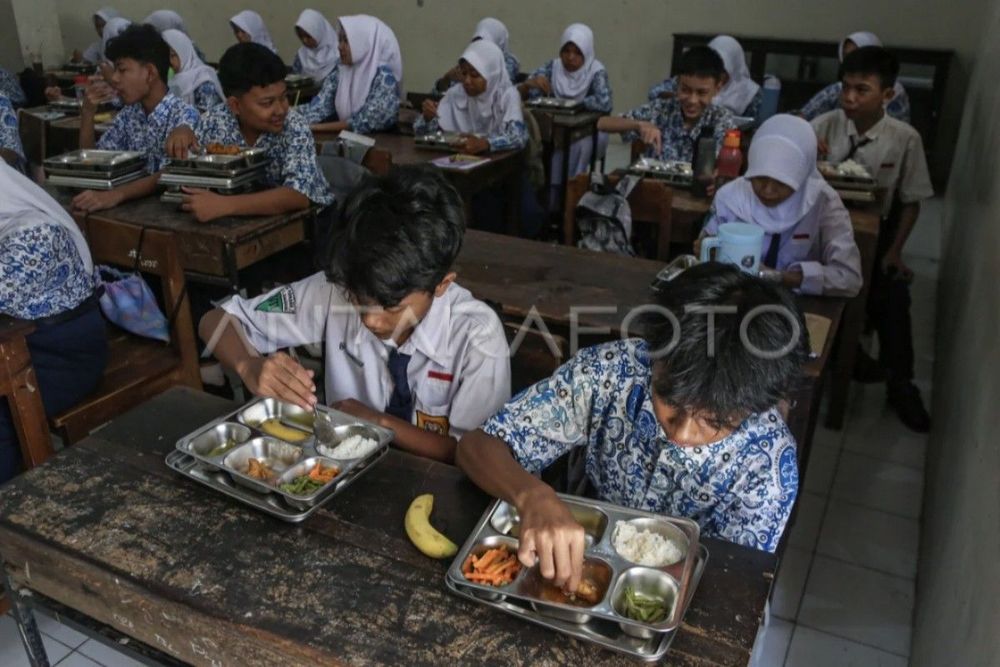
Indonesia to Complete Free Nutritious Meals Program Refocus by August 5
The Indonesian government has set an ambitious one-week deadline to complete a comprehensive refocusing of the Free Nutritious Meals (MBG) Programme, with the Ministry of Health and National Nutrition Agency (BGN) targeting August 5 to finalize beneficiary selection.
Health Minister Budi Gunadi Sadikin announced on Wednesday that his ministry and BGN will collaborate with leading nutrition experts to align beneficiaries with standardized menu requirements. The initiative comes as the government works to improve the effectiveness of the program launched in January 2025 as a flagship policy under President Prabowo Subianto's administration.
Our target is to refine eligible schools, age groups, locations, and focus on areas with stunting, among others. We also hope to finalise the selection of pregnant women and toddlers by August 5. Nutrition experts will provide inputs to the Ministry of Health and BGN to determine the targets.
Sadikin explained during a meeting on governance improvements at the Coordinating Ministry for Food Affairs in Jakarta.
Priority on High-Stunting Regions
The restructuring places particular emphasis on regions facing severe malnutrition challenges. East Nusa Tenggara and Highland Papua, which record stunting rates of 37% and 37.3% respectively, will receive priority attention in the first phase of improvements. These figures stand significantly above the national stunting prevalence of 19.8% recorded in 2024, down from 27.7% in 2019 according to the Indonesian Nutritional Status Survey.
The government aims to reduce stunting to 17.5% by the end of 2026, with a long-term target of 14.2% by 2029 as outlined in the National Medium-Term Development Plan.
Menu Standards and Nutritional Guidelines
The refocusing effort will also establish standardized menus for program beneficiaries across different age groups.
For example, whether we provide peanuts, milk, or other foods; those can all be incorporated as part of the adjustments. I am confident the new head of BGN will quickly and firmly resolve the data issues. Allow us to improve the programme, which I believe is very important for children's health.
Sadikin said.
The Ministry of Health plans to evaluate the program's impact through monthly monitoring at integrated health posts (Posyandu), tracking named children with complete address records.
We have complete records of stunting children by name and by address. We will be able to track them monthly through Posyandu monitoring. With such data, we know to improve which nutrient still lacking, protein or carbohydrates.
The minister noted.
Service Unit Overhaul
The government has committed to restructuring more than 13,000 MBG service units nationwide in a two-phase approach. Coordinating Minister for Food Zulkifli Hasan indicated the first phase would concentrate on high-stunting regions, with completion targeted within one month. The remaining Nutrition Fulfilment Service Units across Java and Sumatra will undergo evaluations over the next two months to verify operational readiness.
The program, established through the National Nutrition Agency formed in August 2024 via Presidential Regulation, aims to reach 82.9 million beneficiaries by year's end, including school students, early childhood participants, and pregnant and breastfeeding women. The initiative operates with a 2026 budget of Rp268 trillion (approximately US$14.7 billion), reduced from an initial allocation of Rp335 trillion following presidential directives to improve efficiency.
Recent leadership changes at BGN, with Sudaryono appointed as the new agency head on July 22, are expected to bring fresh momentum to addressing implementation challenges. The government has emphasized the importance of accurate data management and quality control as it works to expand the program's reach and effectiveness in combating childhood malnutrition across the archipelago.