
Government Provides Full Health Insurance Coverage for 96.8 Million Indonesians
President Prabowo Subianto announced that the government has fully covered National Health Insurance premiums for 96.8 million underprivileged citizens, while expanding healthcare infrastructure with 66 regional hospitals built or upgraded in remote areas.
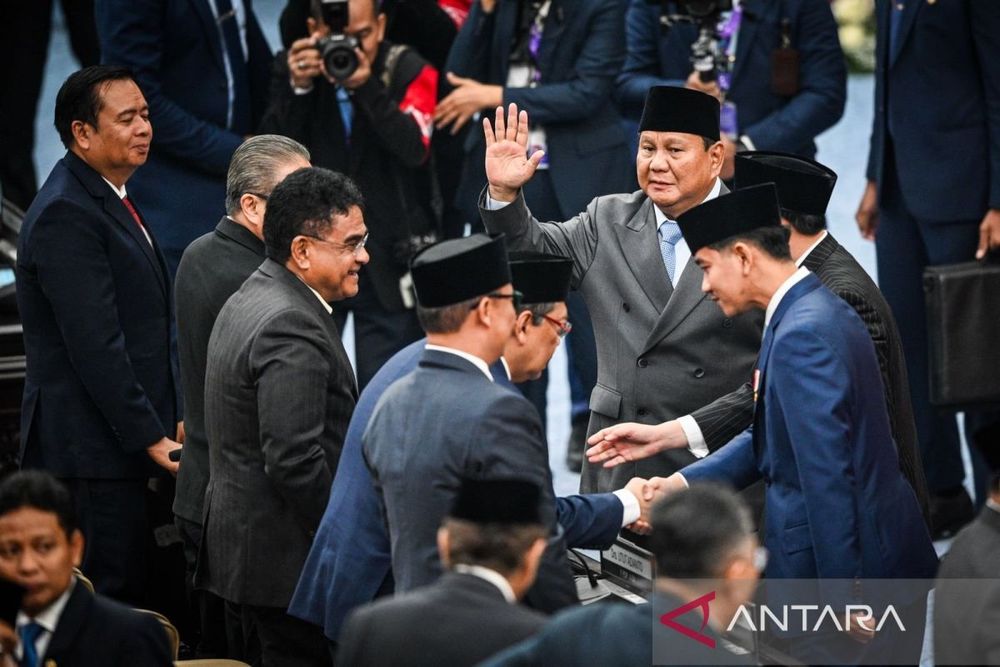
Government Provides Full Health Insurance Coverage for 96.8 Million Indonesians
The Indonesian government has assumed full responsibility for National Health Insurance (JKN) premiums covering 96.8 million underprivileged citizens, President Prabowo Subianto announced during his state address at the 2026 Annual Session of the People's Consultative Assembly on Friday.
Speaking at the Parliament Complex in Jakarta, the president highlighted JKN as one of the world's largest health insurance programs, reflecting the government's commitment to ensuring continued healthcare access for disadvantaged communities. The program, administered by BPJS Kesehatan, a state-owned agency responsible for member registration, premium collection, provider contracts, and claims processing, has grown substantially since its launch in January 2014 with 121 million members to reach 280 million participants by July 2025, covering 98 percent of Indonesia's population.
The government's premium coverage for nearly 97 million citizens represents a significant fiscal commitment within the 2026 health budget of IDR 244 trillion, which accounts for 5-6 percent of the total state budget. For context, current premium rates stand at IDR 150,000 monthly for Class I coverage, IDR 100,000 for Class II, and IDR 35,000 for Class III after a government subsidy of IDR 7,000, while Penerima Bantuan Iuran beneficiaries receive full premium coverage.
Expanding Healthcare Infrastructure in Remote Regions
President Prabowo emphasized that JKN coverage is complemented by substantial efforts to expand healthcare facilities, particularly in areas requiring improved services. The government has constructed and upgraded 66 regional general hospitals in underdeveloped, frontier, and outermost regions, known as 3T areas. These 62 regencies, designated under Presidential Regulation 63/2020, face significant healthcare challenges including limited infrastructure, restricted service access, and inadequate transportation networks across Indonesia's archipelago of over 17,000 islands.
Of the 66 hospitals, 20 newly constructed regional facilities are now fully operational. This initiative forms part of a broader three-year plan to build and renovate 300 to 400 hospitals across districts nationwide. The government constructed 22 regional general hospitals in 2025, with plans to complete another 22 facilities in 2026.
The president stated that equitable service delivery remains a priority, noting that the expansion addresses critical gaps in healthcare access across the vast Indonesian territory.
Comprehensive Health Policy Framework
The healthcare expansion aligns with broader preventive health initiatives under the current administration. The Free Health Checkup program covered more than 70 million people in 2025 and reached over 42.3 million participants across all 38 provinces by mid-2026, demonstrating the government's multi-faceted approach to public health.
The annual session, held to commemorate Indonesia's 81st Independence Day under the theme "Sovereign, Just, and Prosperous Indonesia," included the president's State of the Nation Address and a video presentation showcasing government achievements. The event brought together members of the People's Consultative Assembly, the House of Representatives, and the Regional Representatives Council to review institutional performance and national progress.