
Indonesia commits to restoring 12 million hectares as President Prabowo backs ecosystem recovery push
President Prabowo Subianto has pledged full support for Indonesia's ambitious plan to restore 12.3 million hectares of degraded land by 2030, as the government expands forest ranger forces and accelerates nationwide conservation efforts.
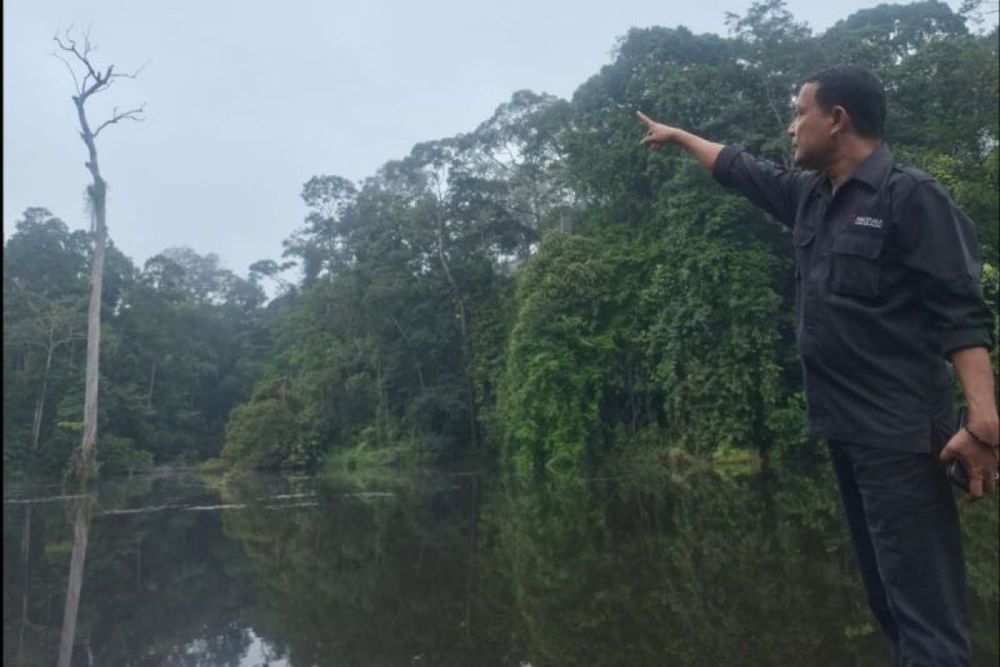
Prabowo supports nationwide ecosystem recovery efforts: Minister
President Prabowo Subianto has committed his administration to supporting Indonesia's ambitious ecosystem restoration program, as the government accelerates efforts to recover degraded forest areas nationwide, Forestry Minister Raja Juli Antoni announced Monday.
Speaking at the 2026 National Nature Conservation Day event at Jakarta's Angke Nature Tourism Park, Antoni emphasized the president's determination to achieve Indonesia's Land Degradation Neutrality target of restoring 12.3 million hectares by 2030, a commitment made under the United Nations Convention to Combat Desertification.
The minister revealed that Prabowo has repeatedly affirmed Indonesia's environmental pledges on the international stage, most notably during his address to the United Nations General Assembly last year, where he assured the global community of the nation's resolve to restore 12 million hectares of degraded land. This ambitious target encompasses 6.7 million hectares of forests and 1.27 million hectares of conservation areas.
Indonesia has already made significant progress toward these goals. By 2025, the country had rehabilitated over 2 million hectares of degraded land through multi-stakeholder financing involving government agencies, private sector partners, and international organizations. For 2026, the Ministry of Forestry has prioritized restoring 15,000 hectares of degraded ecosystems, with particular focus on oil-palm-encroached areas in Riau's Tesso Nilo National Park, alongside critical peatlands and coastal mangroves.
Major expansion of forest ranger force
A cornerstone of the restoration strategy involves dramatically strengthening surveillance and law enforcement capabilities in conservation areas. Antoni highlighted the president's directive to significantly expand the forest ranger corps, with the government setting a target of 21,000 personnel and planning to recruit at least 3,000 rangers in the near term.
The expansion addresses a severe staffing shortage that has hampered forest protection efforts. Indonesia currently employs approximately 4,800 forest police officers to oversee the archipelago's vast forested areas. Under present conditions, each ranger is responsible for approximately 25,000 hectares—an area one-third the size of Jakarta. The government aims to achieve an ideal ratio of one officer per 5,000 hectares, which would require raising the total force to 25,000 personnel.
Regional disparities underscore the urgency of this expansion. In Aceh province, just 63 forest ranger personnel are tasked with overseeing 3.5 million hectares of forest, illustrating the severe understaffing that exists across many parts of the country.
In February 2026, President Prabowo approved plans to add up to 70,000 forest rangers following two meetings with Minister Antoni focused on improving the ranger-to-forest-area ratio.
Restoration efforts face mounting challenges
The government's restoration push comes against a backdrop of mounting environmental pressures. Data from environmental NGO Auriga Nusantara indicates that deforestation surged 66 percent in 2025, reaching 433,751 hectares—the highest level in eight years. This spike underscores the scale of the challenge facing ecosystem recovery initiatives.
Indonesia's restoration framework builds on mechanisms established over the past two decades. Ecosystem Restoration Concessions, launched in 2004 as a market-oriented instrument to reverse deforestation in production forests, had generated 16 concessions totaling 622,826 hectares by 2019.
The nation's efforts align with the United Nations Decade on Ecosystem Restoration (2021-2030), a global initiative aimed at restoring one billion hectares of degraded ecosystems worldwide. Indonesia's commitment represents a significant contribution to this international framework.
Antoni acknowledged the formidable nature of the task ahead, noting that despite budgetary constraints and the vast geographic scope of intervention areas across the archipelago, the government remains committed to achieving its environmental sustainability objectives.
As a policymaker and regulator, the state faces limitations. Even so, we still have many options to pursue in this cause, including welcoming cooperation opportunities with any parties acting in good faith
the minister stated, signaling openness to partnerships that can support the restoration agenda.