
Indonesia imposes sanctions on six companies as Kalimantan fires contribute to nation's worst fire season in years
The Forestry Ministry has sanctioned six forest permit holders after fires burned 1,511 hectares across their concessions in Kalimantan, part of a wider enforcement effort as Indonesia faces its most severe wildfire crisis since 2019.
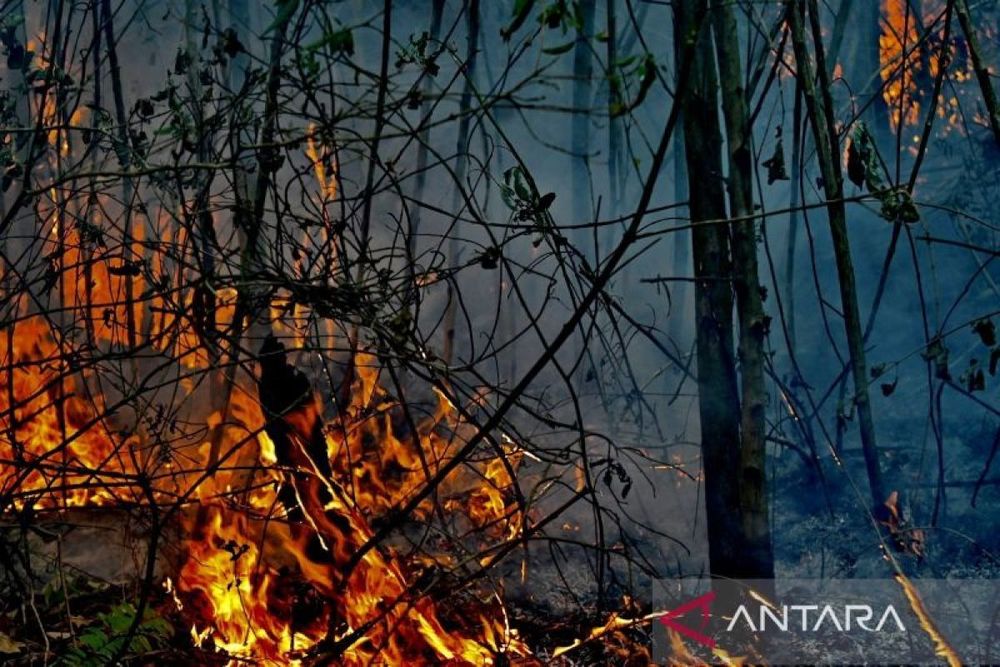
Indonesia sanctions 6 firms after 1,511 hectares burn in Kalimantan
Indonesia's Forestry Ministry has imposed administrative sanctions on six Forest Utilization Business Permit holders following fires that scorched 1,511.55 hectares across their concession areas in Kalimantan, as the nation confronts its most intense fire season in years.
The enforcement action targets four companies in West Kalimantan—PT WEL, PT FI, PT MPK, and PT WSP—along with PT NES in Central Kalimantan and PT PSR in East Kalimantan. The sanctions come as Indonesia battles an unprecedented surge in forest and land fires, with 202,004 hectares burned nationwide from January to July 2026, including nearly 94,000 hectares in July alone.
Ardi Risman, Director of Forestry Supervision, Imposition of Administrative Sanctions, and Civil Law, said the penalties followed repeated fires in the companies' working areas. The sanctions require firms to strengthen fire prevention systems and restore damaged areas within specified timeframes.
Government coercion requires companies to comply with specific obligations, including improving fire control systems and restoring affected areas. In the case of PT MPK, we have suspended its business permit and imposed government coercion due to the scale and repeated occurrence of fires.
The burned areas span approximately 760.51 hectares for PT WEL, 394.83 hectares for PT MPK, 107.7 hectares for PT WSP, 95.87 hectares for PT FI, 82.26 hectares for PT PSR, and 70.38 hectares for PT NES. Companies failing to meet restoration requirements face escalating penalties, including potential permit revocation.
Critical Fire Season Amid El Niño Conditions
The sanctions arrive during what Indonesia's weather agency identifies as the critical fire period running from August to September 2026, with El Niño conditions expected to persist into early 2027. Fire hotspot activity in 2026 has already exceeded levels recorded during the devastating fire seasons of 2019 and 2023.
Nearly two-thirds of this year's fire activity has occurred within peatlands designated as protected ecosystem functions, with West Kalimantan accounting for the largest share. The region contains approximately 4.78 million hectares of peatland, representing 32 percent of Indonesia's total peatland area of 14.91 million hectares.
For peatland restoration, sanctioned companies must improve hydrological functions through water management, canal blocking, peat rewetting, and groundwater level monitoring. These measures address the particular vulnerability of peatlands during El Niño-related drought, when fires generate substantial quantities of airborne fine particulate matter with severe health impacts.
Broader Enforcement Crackdown
The six company sanctions represent part of a larger government enforcement effort. Indonesian police have arrested 72 people suspected of starting forest and peatland fires as of August 2026, while four additional companies remain under investigation for allegedly using fire to clear land.
Dwi Januanto Nugroho, Director General of Forestry Law Enforcement, emphasized that permit holders must assume responsibility for protecting areas and preventing damage. He noted that while administrative sanctions address non-compliance through corrective measures and restoration, criminal proceedings will follow where intentional fire-setting is suspected.
We use administrative sanctions to enforce repairs, restoration, and compliance; but if criminal elements are found, the criminal process will continue. This is also a warning to anyone who intentionally burns forests or profits from fires and damage to the area.
The enforcement actions operate under Indonesia's regulatory framework governing forest fire prevention, including Government Regulation No. 60 of 2009 concerning Forest Protection, Government Regulation No. 22 of 2021 on Environmental Protection and Management, and Government Regulation No. 23 of 2021 on Forestry Administration.
Transboundary Impacts
The severity of the 2026 fire season has extended beyond Indonesia's borders. More than 100 schools were closed in Malaysia's Sarawak state in August 2026 to protect children from worsening haze caused by fires in neighboring Indonesian provinces, underscoring the regional consequences of inadequate fire prevention.
The government's aggressive stance reflects lessons from past fire disasters. The 2015 Indonesian forest fires cost an estimated 16.1 billion US dollars in damages and economic losses, equivalent to 3.3 percent of the nation's GDP, with more than 100,000 premature deaths attributed to the fires and resulting haze.
Companies now face clear expectations: strengthen fire control systems, restore damaged areas, and prevent future fires, or risk losing their operating permits entirely.